
Disastrous, but Committed
Paid to be dumb.

“We’re on this course that is long-term disastrous but we’re committed to it. We’re committed to printing a lot of money to prop up stuff that rich people own, so we’re gonna play that game until it collapses on itself, which seems like a very unwise thing to do, but that’s that’s the policy of the moment.”
Brandon Adams, December 2020



"S&P 500 now has the lowest PEG ratio in 30+ years"
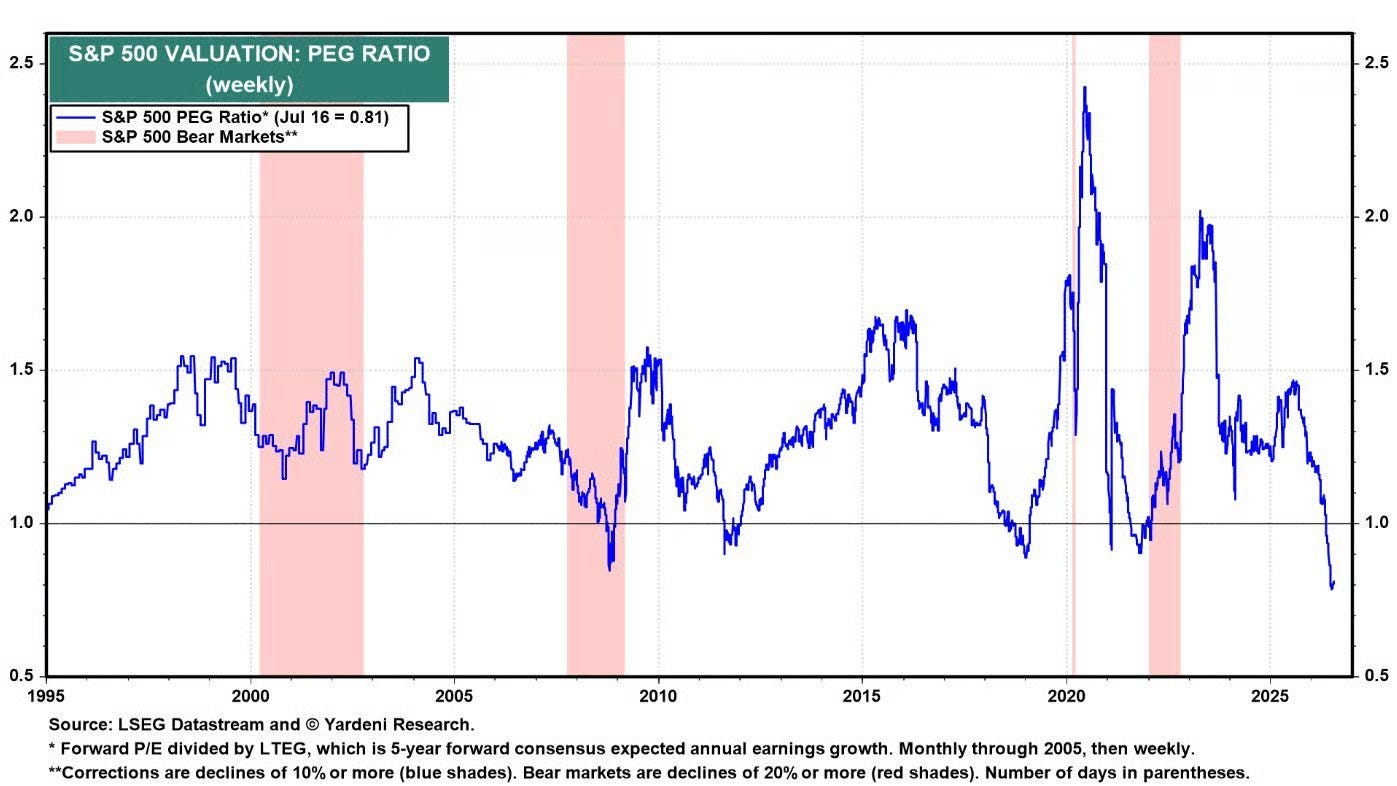
Stocks apparently have never been cheaper!
“Truth is stranger than fiction, but it is because Fiction is obliged to stick to possibilities; Truth isn’t.”
Mark Twain, “Following the Equator”
Nick Nemeth: The Next Financial Crisis Isn’t In Banks. It’s In Insurance & Private Credit.
Almost too much to quote. Just watch if interested.
“EBITDA? That's fake earnings.”
“I’m worried that people will lose trust in the system in a way that the Fed has to, you know, starts with a trillion, goes to two and a half, and then ultimately ten, and then you have to worry about the dollar.”
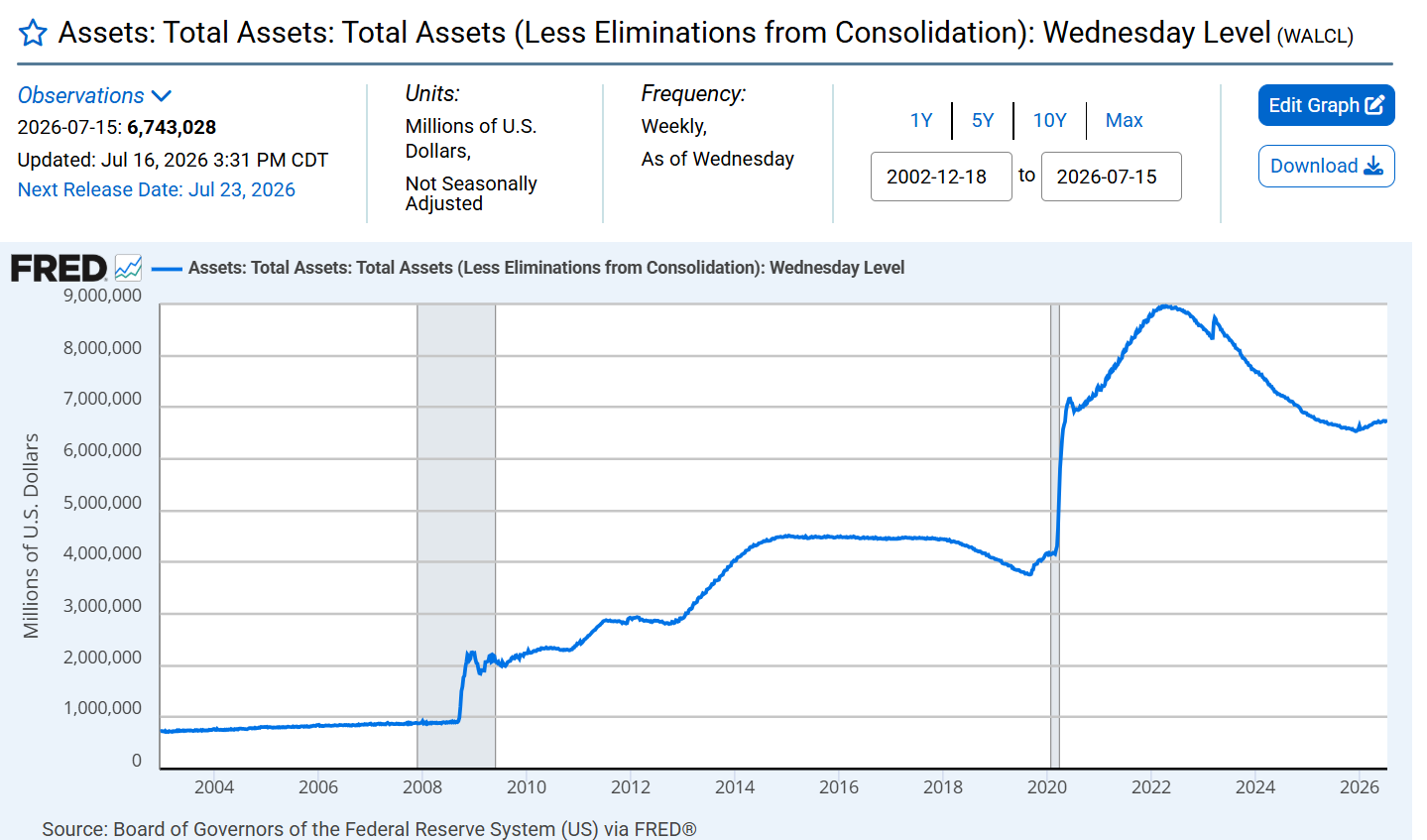
I assume Nick means an additional $1 trillion to $10 trillion. The Fed, right now - best economy ever(!) - is almost $7 trillion.
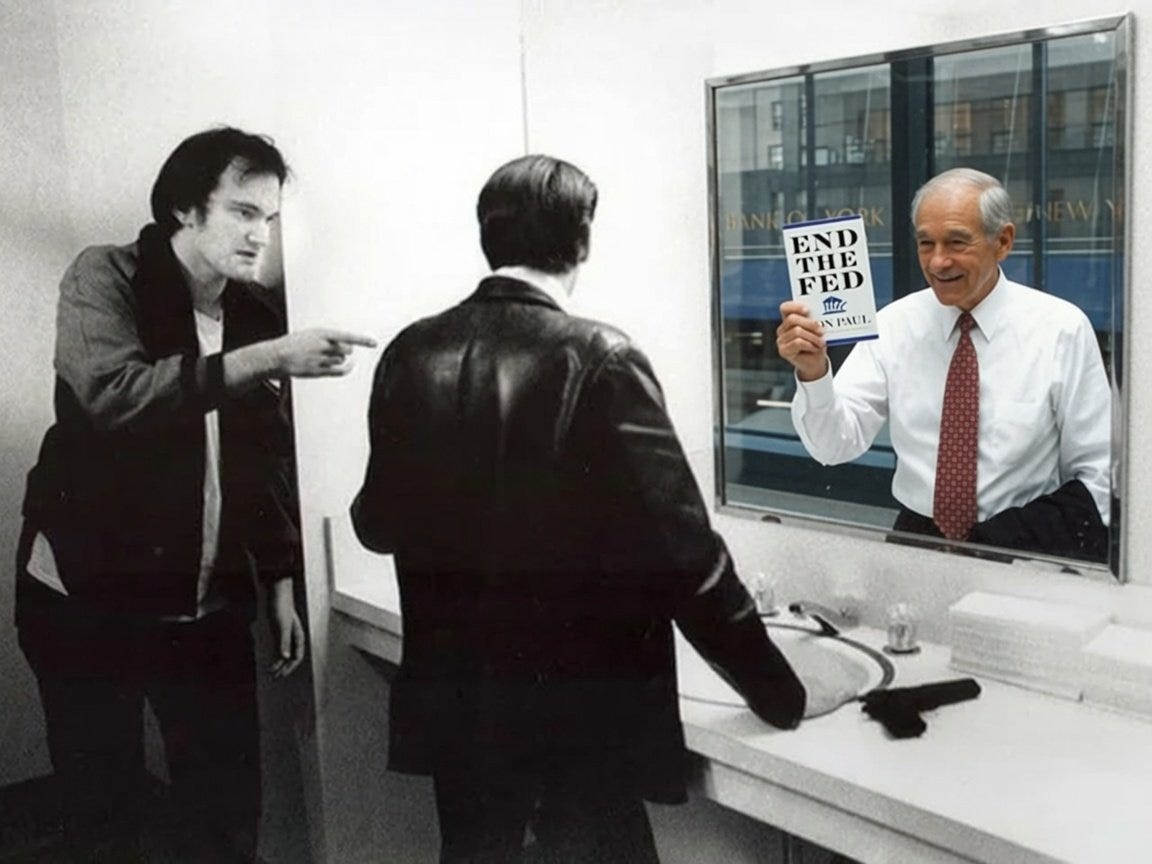
A reminder from 2010 with legendary Congressman Ron Paul and Citadel-intern Ben Bernanke:
“The companies that are in private markets are worse companies with less moats than their public market comps. The public market’s the best of the best. The software stocks that you’ve seen down 70%, 50%? Those are better than Thoma Bravo’s portfolio which included Medallia.”
That’s the one thing about private equity. You can’t short it. They’re not used to the heat. This year they kind of got ambushed by that. I think that there’s some $2 billion companies in these portfolios - I live in small-cap land and micro cap land - I think they would be 250 million dollar companies, some of them. The average would be down at least what the average software stock is this year.”
“Defaults are up, leverage is extreme.”
“It’s particularly bad when it happens in credit. A SPAC bubble, that’s not systemic. You know, people lose money…When it’s credit, it becomes
a problem, because it could seize up the what, in an economy like ours, is the lifeblood of the economy, which is debt.”
“They’ll take a car wash, they’ll sell the rent to related party REIT, they’ll be able to borrow against the REIT, and then they’ll pay below market rent on it so that they can borrow more from the bank, and then they’ll add back rent. So, people in the know use EBITDAR, EBITDA plus rent, so seven times can become nine times, and then you add PIK and it can become 10 and a half times. So we’re talking about you make a 100 grand, you have a million dollars of debt. That’s that’s how much leverage is running here.”
“It’s mostly borrowed money, but you’re also seeing Harvard go into debt. They’re going to debt capital markets. So is Yale. Yale’s 50% in privates right now. 50% of their money is in illiquid assets that they better get back based on the amount of money that they spend. So they’re actually selling bonds in order to fix the liquidity problem”
Farley: “Why do you say that this is 1929 and not 2008?”
Nemeth: “2008 hurt the little guy. In 1929 there was a lot of people that got extremely wealthy off the stock market, and they were the people that got wipedout.”
“The primary reason they like this capital [insurance] is because to them it’s permanent. They’ll call it permanent capital - it’s not permanent. Nothing in life is permanent, but they call it permanent, and they think that the duration is long, and the asset and liabilities are perfectly matched”
“I was talking to the Fitch guys. They’re not dumb. They are paid to be dumb, okay? It is the function and the model of those businesses.”

“What’s happening now is so ironic. We’ve all seen The Big Short. We grew up with that through the global financial crisis, and then the media that resulted from it that I think that people can’t believe it can’t be so similar. That’s what people believe. It can’t be so similar.”
“Dodd-Frank didn’t fix anything. It didn’t do anything. It pushed the risk, and then, even worse, it gave all of these institutions the understanding that one of us will go down and then everyone else will be declared systemically important. It’ll be an orderly wind-down. Assets will crash for a second because nobody wants to be the buyer first resort, and then the Fed will come and and backstop it.”
“You’ve got a lot of leeway in running a bank to not tell the truth for quite a while.’‘
Warren Buffett, May 2008
Rod Dubitsky
Former ratings analyst with Moody’s
Host: “You believe the risk now posed by private credit and private equity ecosystem poses a greater risk than the S&L crisis, the Dotcom bubble, and the subprime collapse all put together?”
Rod Dubitsky, former ratings analyst with Moody’s: “Yes”
“It’s exactly the same structure [as 2008]. Deeply junk-rated debt allowing you to issue AAA rated bonds.”
“Keep in mind, the U.S. government is double A+, so these CLOs are rated higher than the US government despite entirely being supported by junk loans.”
“These leveraged loans, when they default, recovery rates are collapsing far below what Moody’s assumed in their models”
Dubitsky mentions PHL Variable Life insurance: “Somebody will say, ‘I have a $3 million policy with PHL insurance.’ And this is a true story. ‘They’re only going to pay me out $250,000. Both of my parents died and I’m supposed to get $3 million in my life insurance, and now I’m only going to get $250,000, and I’m not even sure if I’m going to get that, because they say if you don’t keep paying your large premium, your policy will lapse and you’ll have no insurance.’”
“PHL Variable Insurance Co., a private equity-owned life insurer, collapsed in 2024 and is heading for liquidation. Benjamin’s account is frozen, and 100,000 other PHL policyholders face a $2.2 billion shortfall”
From Dubitsky’s substack: When even the safest insurance companies aren’t safe - MassMutual
Barry Knapp on ‘the Fed's pandemic policy panic’
The Federal Reserve “created the [housing] affordability crisis, and it’s almost impossible to unwind it.”
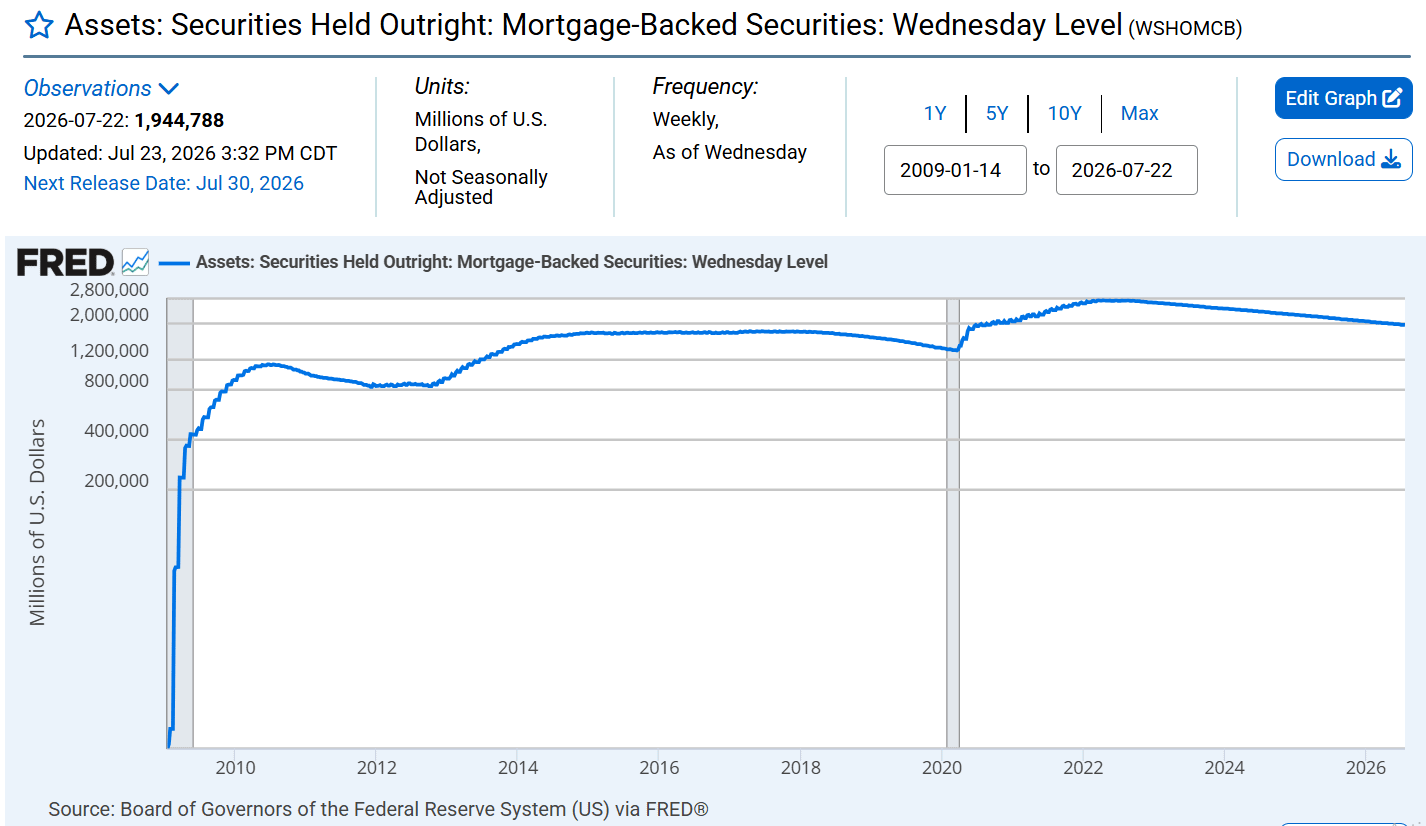
The Fed still owns almost $2 trillion of MBS, versus $0 in 2008!
This is what needs to happen in the U.S. (No hate-mail please)
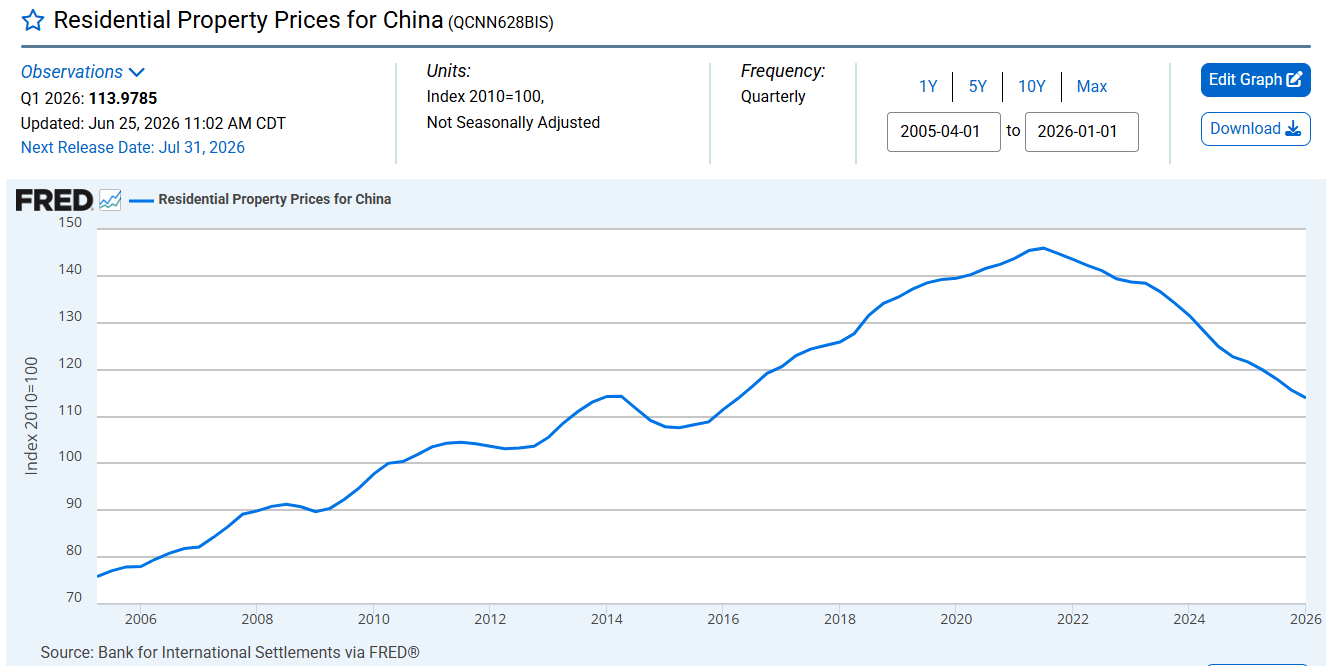
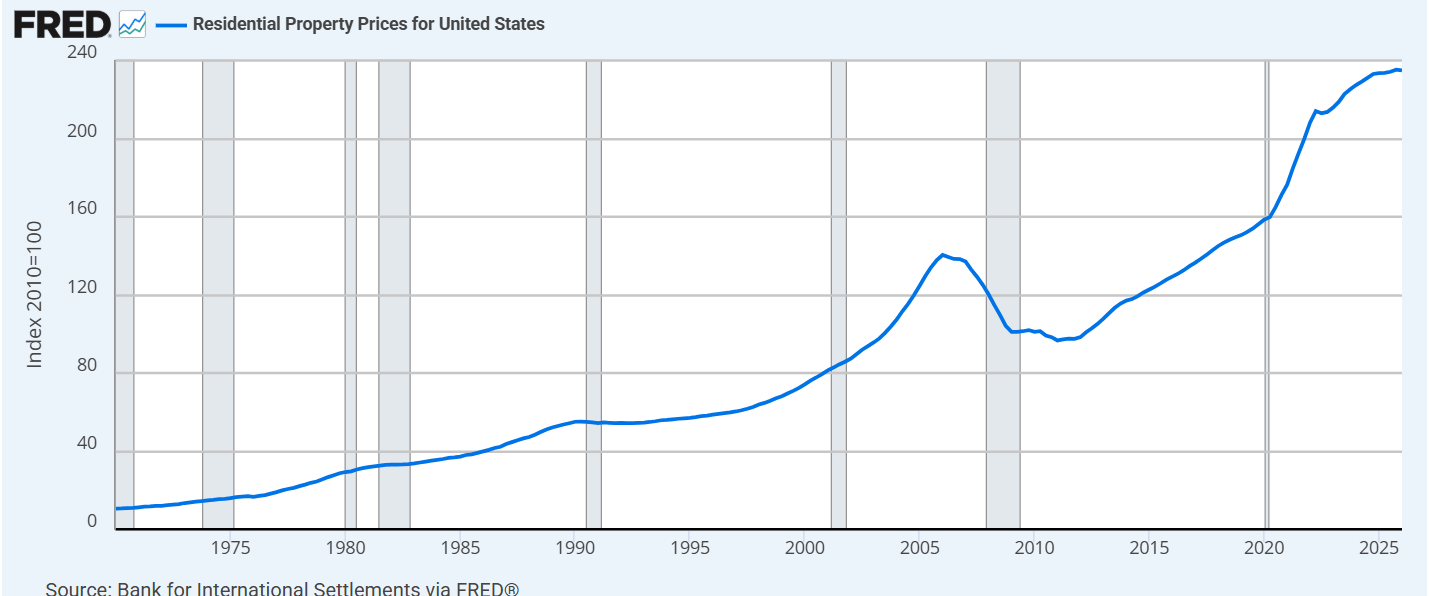
Meanwhile:
“The amount of luxury that has been built or is currently in progress in Miami and surrounding areas already is staggering. With migration slowing there, listings for sale have exploded. In June, Miami had the largest share of delistings of all of the 86 markets I track at over 29%. Currently the condos listed at Bentley Residences run between $5.8M to $8.8M. Using Realtor.com, there are currently 2,636 homes listed in Miami right now over $1M.” - Melody Wright
Via Trepp:
“The domestic CMBS market so far is having a banner year, with issuance through June totaling roughly $70 billion. You'd have to go back to the market's peak in 2007 to see that sort of volume…Blackstone, the largest owner of commercial real estate, was also the largest borrower in the CMBS market, accounting for nearly a third of the year’s SASB issuance so far. The year’s biggest deal so far was a $3.05 billion transaction used to finance the 3,032-room Cosmopolitan Las Vegas Resort & Casino, which also has a 112,000-square-foot casino.
So what did CMBS finance? Nearly a quarter of the year’s issuance provided for the financing of office properties. That’s up from 23% for all of last year. In 2024, in contrast, only 9% of issuance involved office loans.”

"Shall we expect some transatlantic military giant to step the Ocean, and crush us at a blow? Never!—All the armies of Europe, Asia and Africa combined, with all the treasure of the earth (our own excepted) in their military chest; with a Buonaparte for a commander, could not by force, take a drink from the Ohio, or make a track on the Blue Ridge, in a trial of a thousand years.
At what point then is the approach of danger to be expected? I answer, if it ever reach us, it must spring up amongst us. It cannot come from abroad. If destruction be our lot, we must ourselves be its author and finisher."
Abraham Lincoln
Speech to the Young Men’s Lyceum of Springfield (1838)
"So we have the lowest interest rates in four-thousand and twenty years, and the ONLY observation of substantial volumes of negative nominal yields in 4,020 years, and we are maximum bullish on bonds, collectively. Now that, gentlemen, is a paradox."
Jim Grant, Sherman Show podcast, November 2020
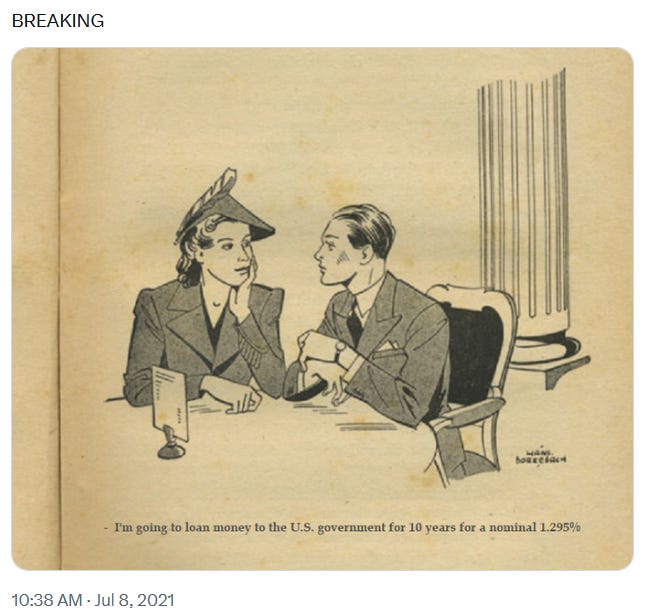
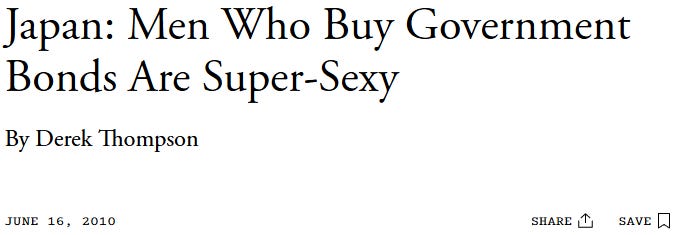
The Japan 10-year yield in June 2010 was hovering just above 1%.
The federal minimum wage is $7.25 per hour.
If we still used real money that'd be about $1,400 an hour!
40 hours a week, 50 weeks a year = $2.8 million a year, which might be enough to buy a small house, a car, a TV, and maybe take a trip to Disneyland once a year.
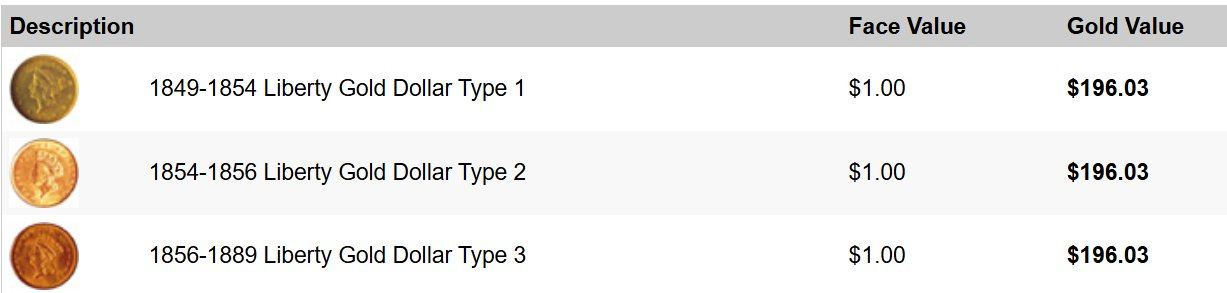
Please don’t fact check this.
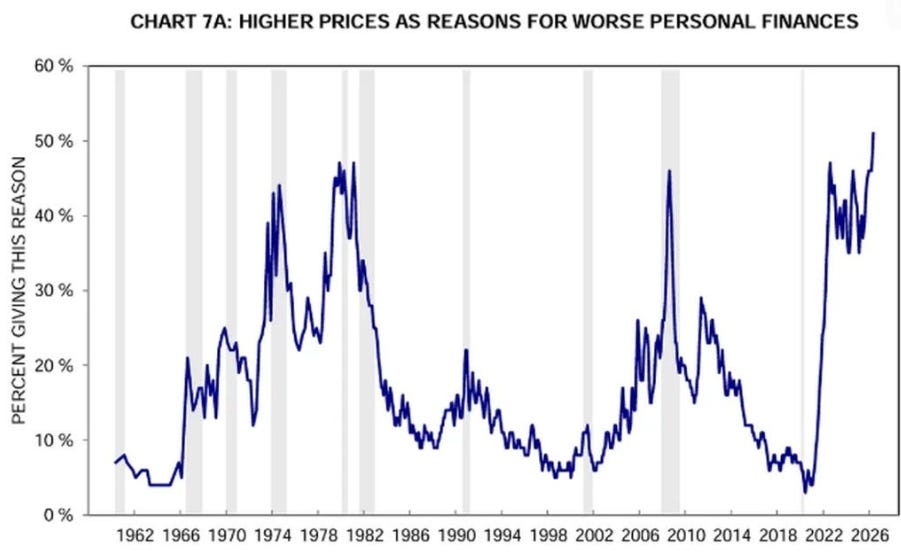
Russell Clark
“If I look at people 40 and under, those in their 20’s and 30’s, their number one problem is they can’t afford housing. If you want to get housing back to some more reasonable levels, you need to have wages rising at about 7% a year, so it’s sort of doubling in 10 years. And then you need to have the housing market be flat in nominal terms, so falling in real terms. So that requires you to have a real rate of about 3%. So people keep their money on deposit rather than sticking to real assets. So that gives you an interest rate around 10%. And that’s still my target for the Treasury yield, 10%.”
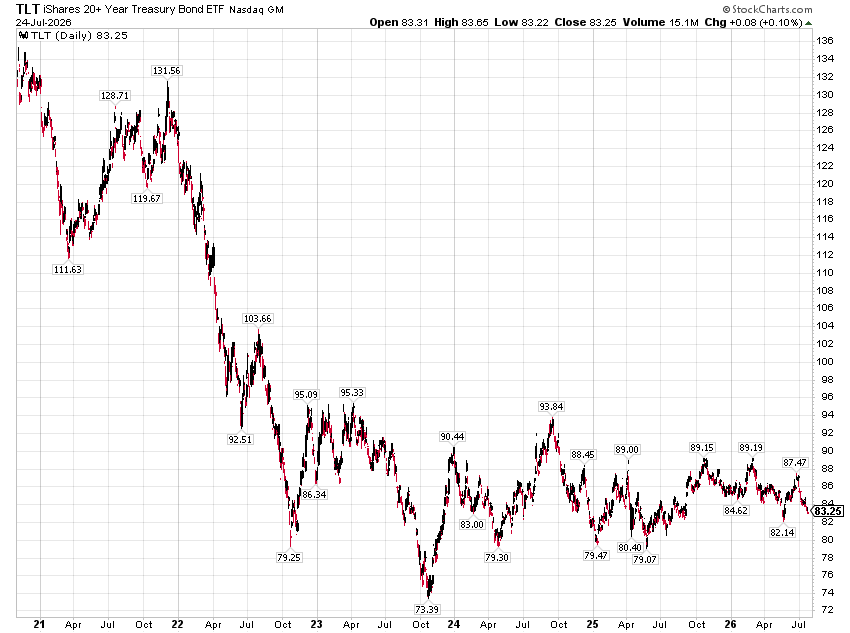
“I originally became quite bearish on treasuries in 2022, mainly at that time- and there were other reasons - but mainly because when Russian foreign reserves were frozen so they couldn’t access them after they invaded Ukraine, I thought to myself, well, if you have foreign reserves, if you’re a Russian government with foreign reserves and suddenly this money you’re saving you can’t access, why would you save it in that place in the first place? And you take that sort of thinking logic a couple more steps further and you go, well, why would any country that could theoretically disagree with the Trump administration, which is basically everybody, you know, why would anyone hold Treasuries as foreign reserves? So I suspected we were going to see a natural flow out of Treasuries into gold. For me, that was one thing I thought would happen. But I also suspected that we’d see buyers for fixed income slowly, particularly government sovereign fixed income, slowly disappear. And that certainly, I think, has been the case.”

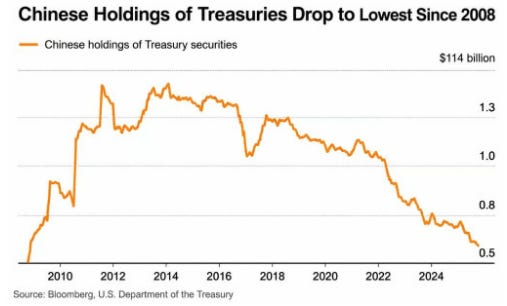
Clark: “Until 1980, the idea of holding another country’s fixed income as a foreign reserve was unknown. All foreign reserves were basically gold. And then we have this long period where Japan started buying Treasuries because they didn’t want their currency to appreciate. China did the same. Other nations did the same.”
Max Wiethe: So when you see those 500-year charts that say the reserve currency used to be the pound, and before that it was another European currency, and we go all the way back to the Portuguese, and say that people tie it to the strongest navy in the world. So you’re saying that that that’s not really how it worked going back? We weren’t owning bonds or currencies of other countries like we do today?
Clark: “So foreign reserve currency is very novel. A currency as a foreign reserve is novel. Gold used to be the only foreign reserve, and typically the country that had the biggest army had the most gold for various reasons. Basically, they went took it from where whoever had it. So, if you lost a war, reparations tended to be big chunks of your gold reserve would be sent to whoever won. So I think you’re confusing foreign reserves with sort of like the main trading currency, or the the currency that was used for transactions, and it often was backed by gold. So really until the 1970’s, the U.S. dollar was backed by gold.”
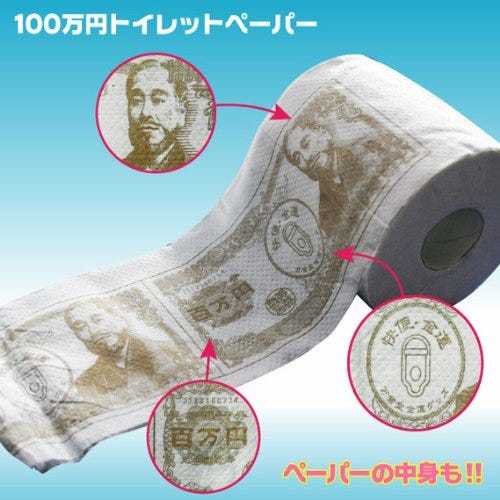
“I think we’re going to go through a very long period of much higher inflation…I think you already seen it in the results. If you look at bank results that just came out last week, loan growth is through the roof, because if people think price is going to go up 7%, 8% a year, they borrow at, you know, 4%, it’s a bargain, right? So you should see loan growth accelerating. We’ve seen that in Japan. I expect we’re going to see it in the states as well. You’re going to see it everywhere, and the only way to get loan growth down to control the inflation will be higher and higher interest rates.”
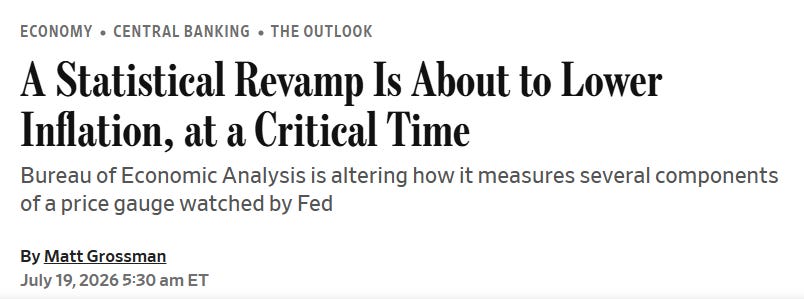
“When you have a problem that you can’t fix, you move the goalposts.”
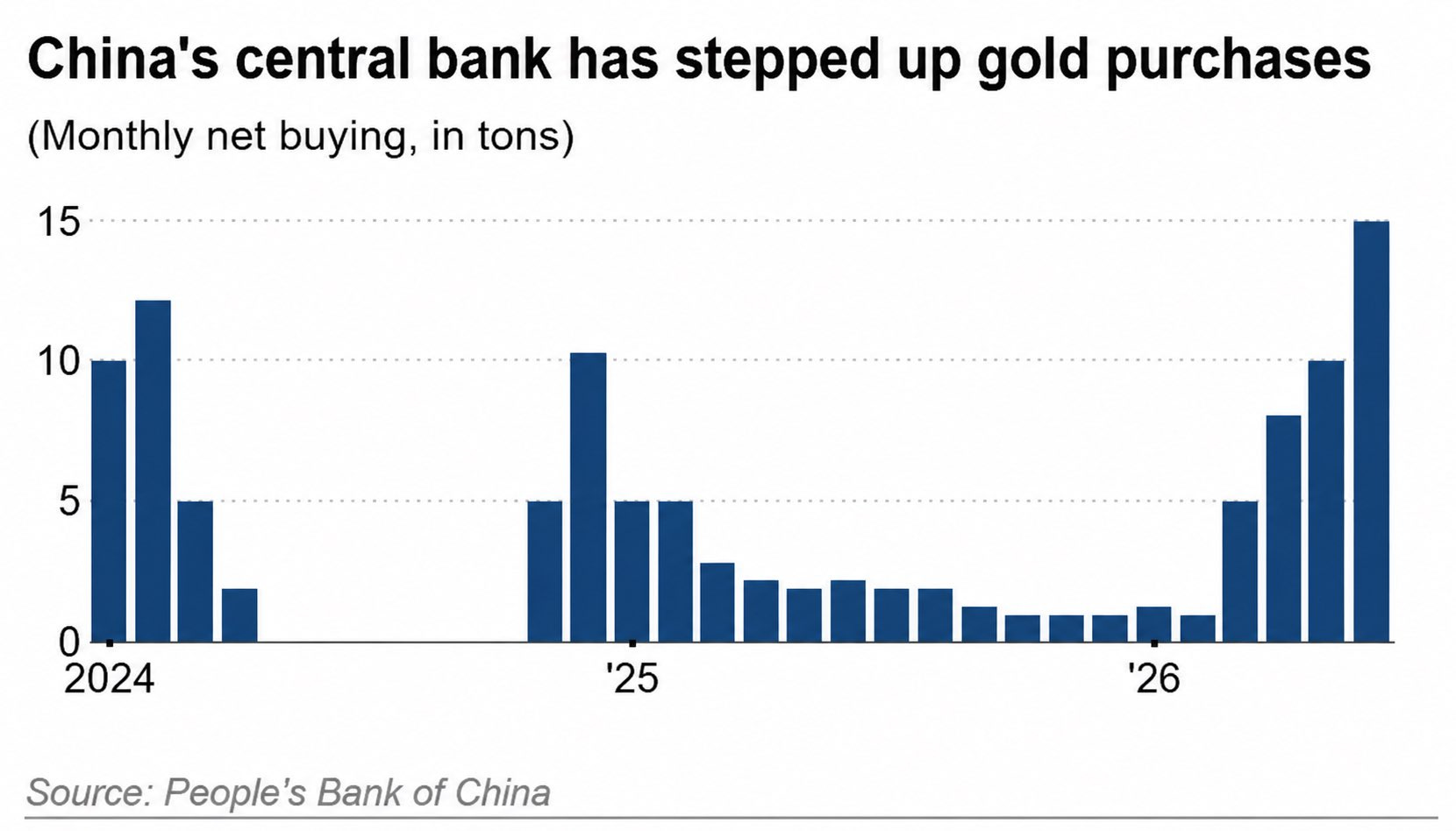
Buying Gold?? No sense of history, these Chinese.
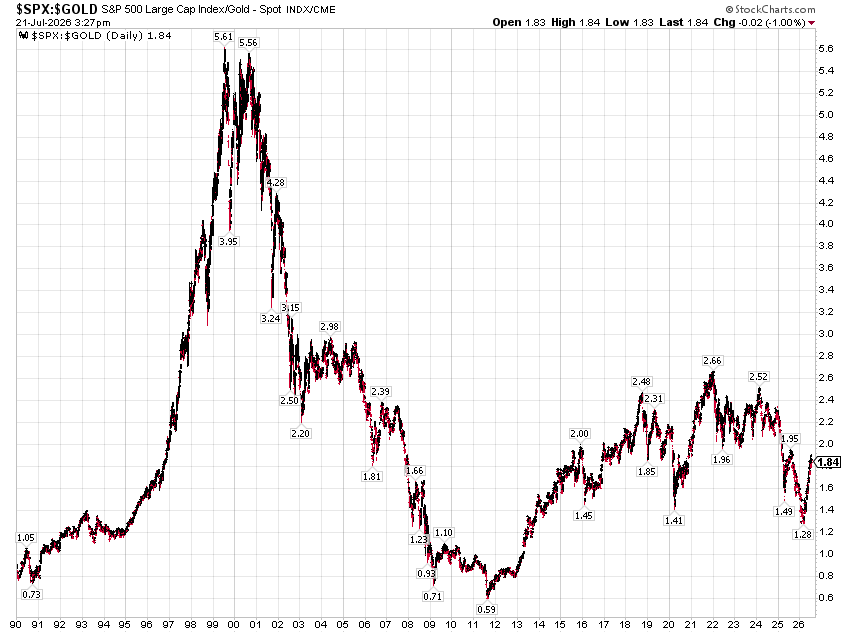
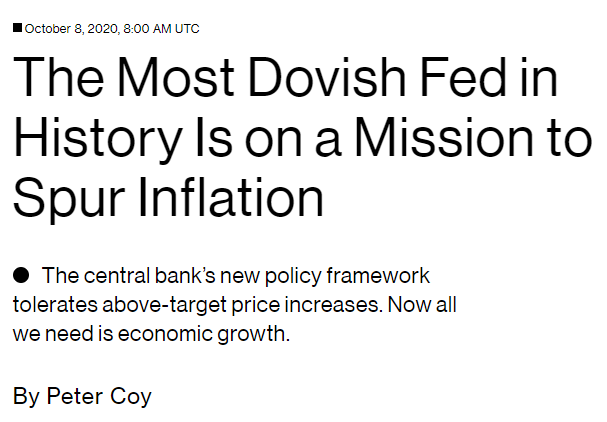
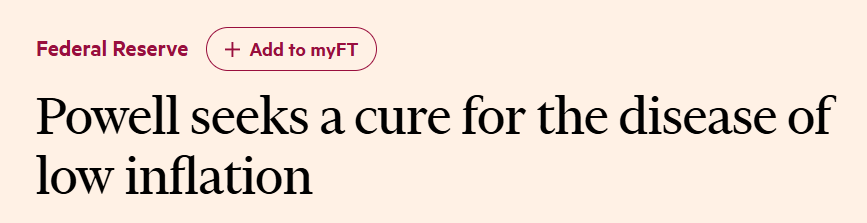
A real FT headline from July 2019:
And this, from one of the stupidest financial writers around:
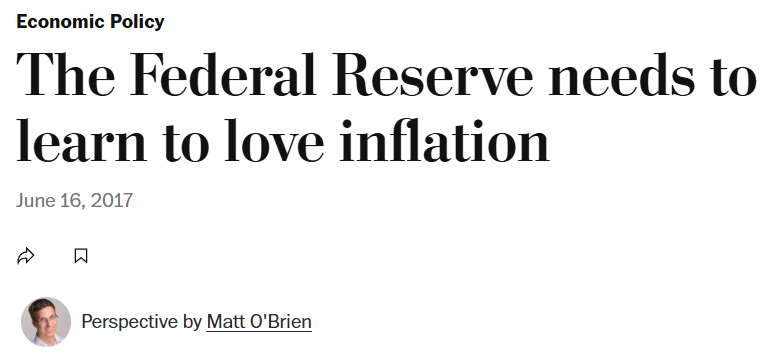
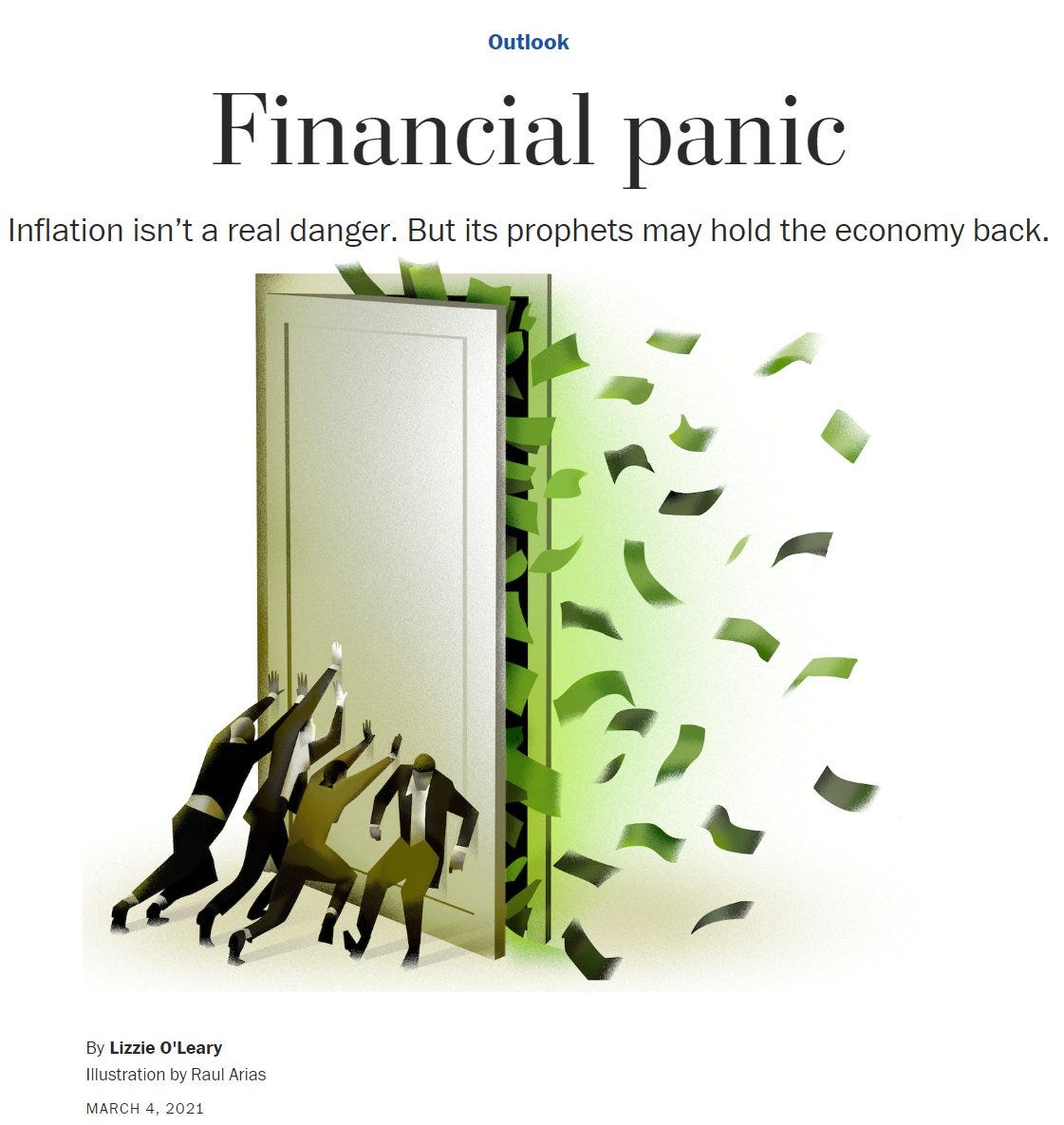
I'm talking, of course, about the Fed's inflation target. Right now, that's 2 percent. But a group of liberal economists — including Nobel Prize-winner Joseph Stiglitz, former Minneapolis Fed chief Narayana Kocherlakota, and former head of the Council of Economic Advisers Jason Furman — think that might be as much as 2 percent too low.
“Buy gold. Sell long-term bonds.”
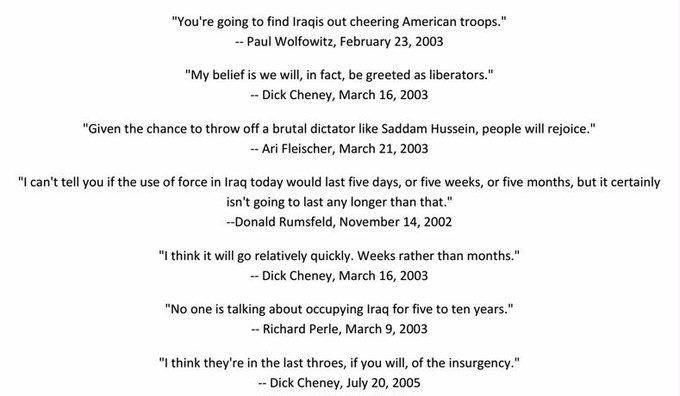
Contemporary comments about Iraq.
Just came across this image I made over a decade ago.
“The administration spent thirteen consecutive nights bombing Iran, and by Friday had achieved the following: Brent settled above one hundred dollars for the first time since May, the Houthis opened a second front on Saudi Arabia’s Red Sea bypass, India barred its own seafarers from Hormuz, and the International Maritime Organization is telling commercial traffic the strait is not safe to enter.”

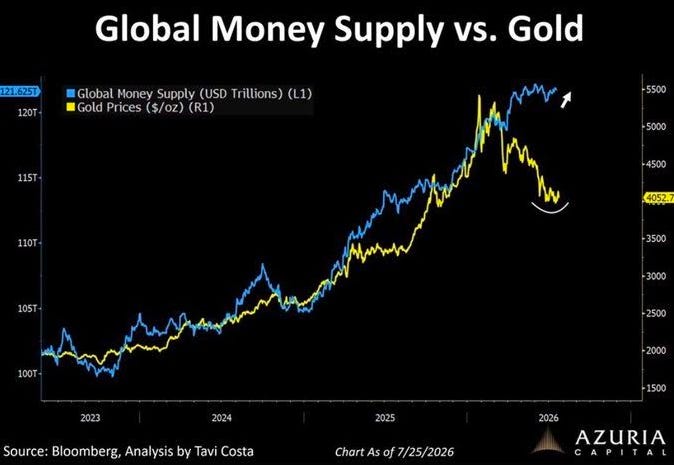
Everything that got sold this week was a promise to pay dollars later. Everything that got bought was either a claim on something real or the dollar itself for near-term carry.
That is the week in one sentence, and it is not what the street wrote.
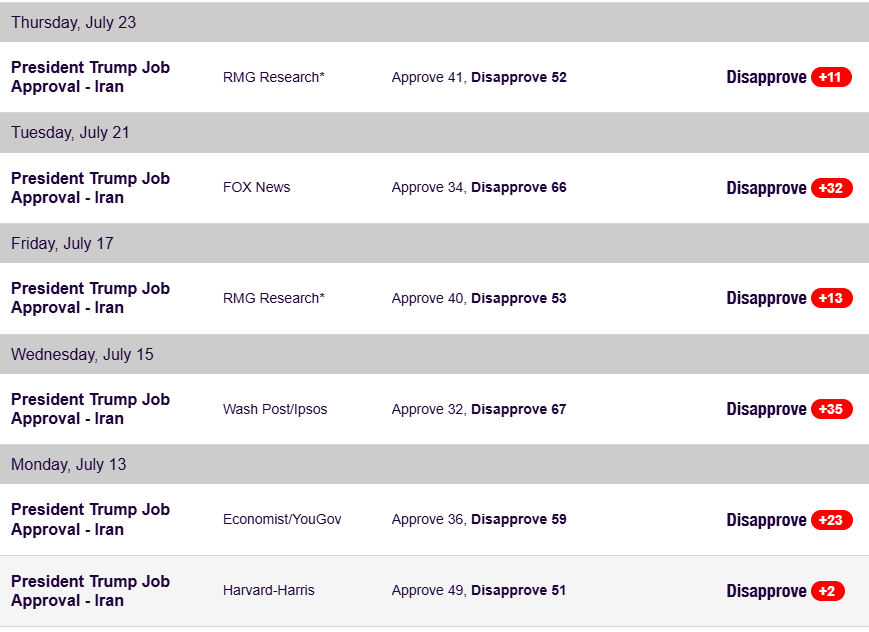
Trump: Americans aren’t against the war.
Americans:
Tim Congdon
Now, let’s go back to March 2020. The COVID pandemic was then evident. Medical emergencies were announced in major nations And there also were major announcements about economic policy.
These were two kinds. One was the monetary side, with the cuts in interest rates to virtually zero. and the announcements of big asset purchases - quantitative easing. And then you had the announcements about fiscal policy to help people afflicted by the medical emergency. Of course, there was also the loss of tax revenue and so on, simply because there was less economic activity.
Now, it was then very clear, even by, this seems amazing, but even by early April 2020, that there was going to be a money supply explosion. That was because these announcements, and because indeed the data coming out week by week, I think it was week by week in the US case, coming out week by week in the USA. And indeed, one could reasonably expect money growth. Even then, this is early April 2020, certainly by, say, May 2020, that you’re going to get the highest growth rate of broad money in US modern peacetime history. Now, I’m not making that up. That was evident in the data at the time.
Now, I’m a monetarist. I believe that money determines national income. What had I got to say? I had to forecast an inflation flare-up. That’s what I did. And I was bang on, exactly right. I said what would happen, happened roughly with a two-year delay. And I said it’d be preceded by asset price inflation. All these things are there on the record.
It was the application of a theory that I believe in, have long believed in, and which frankly, is the correct theory, and I’m afraid to say my profession doesn’t understand it. It’s as bad as that. And the reason I’ve written this book above all is to tell my profession, “Get yourself sorted out.”
Meanwhile, these are the idiots mainstream economists listen to: Austan Goolsbee, Lisa Cook, and Claudia Sahm:
“There's one type of macroeconomics that really has caused trouble. I call it ‘interest rate only macroeconomics.’ The new Keynesians have this amazing three equation model which they regard as iconic, state-of-the-art, God knows what. It has only three equations that define and characterize the economy, and one of these, the only one that determines economic activity, is one in which economic activity depends upon the level of the central bank interest rate. They therefore ignore the quantity of money. They ignore the effect of changes in the quantity of money on house prices, on share prices, on land prices, on the prices of small businesses. I’m sorry, these things are very important.
If you just conduct your macro-economic research by looking at only the central bank interest rate, you can miss them entirely, and that is exactly what happened in 2020 and 2021.”
"We are in QE5 right now. We are in the fifth round of doing QE."
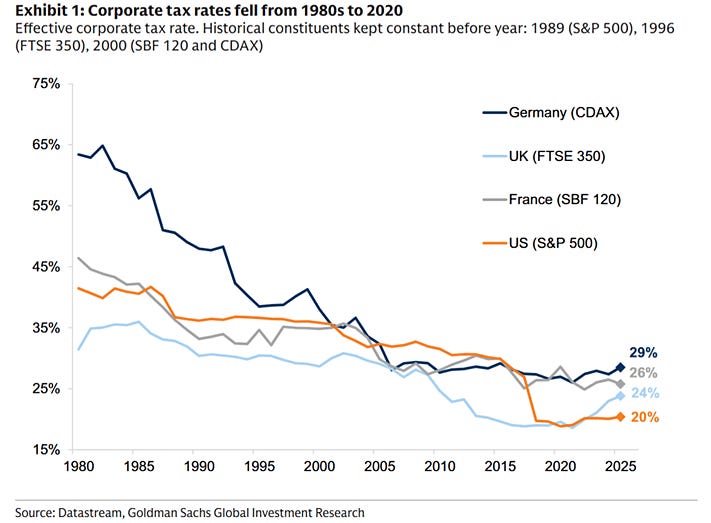
Corporate Tax Rates
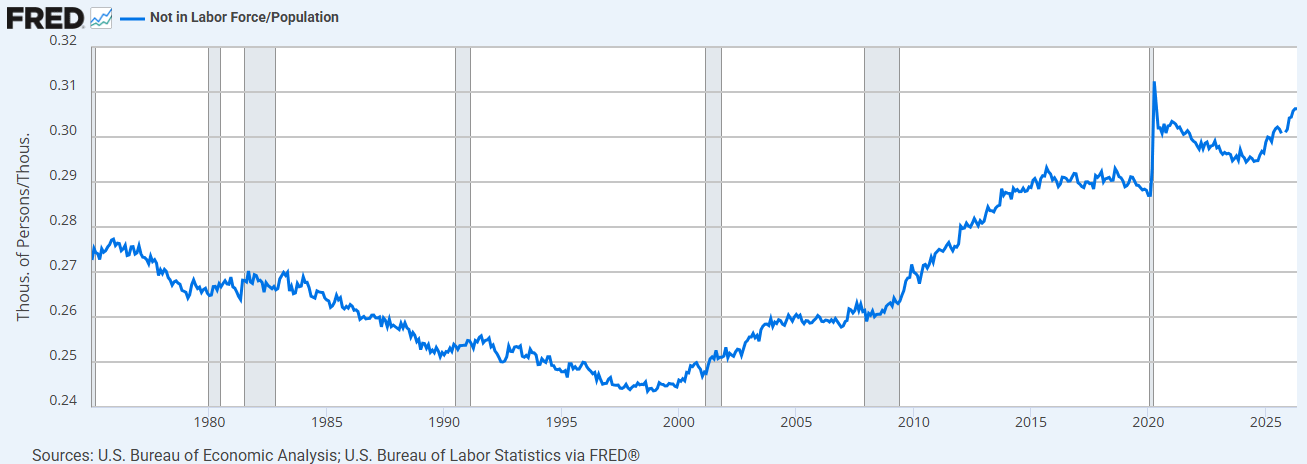
30.6% Percent of Americans are not in the labor force
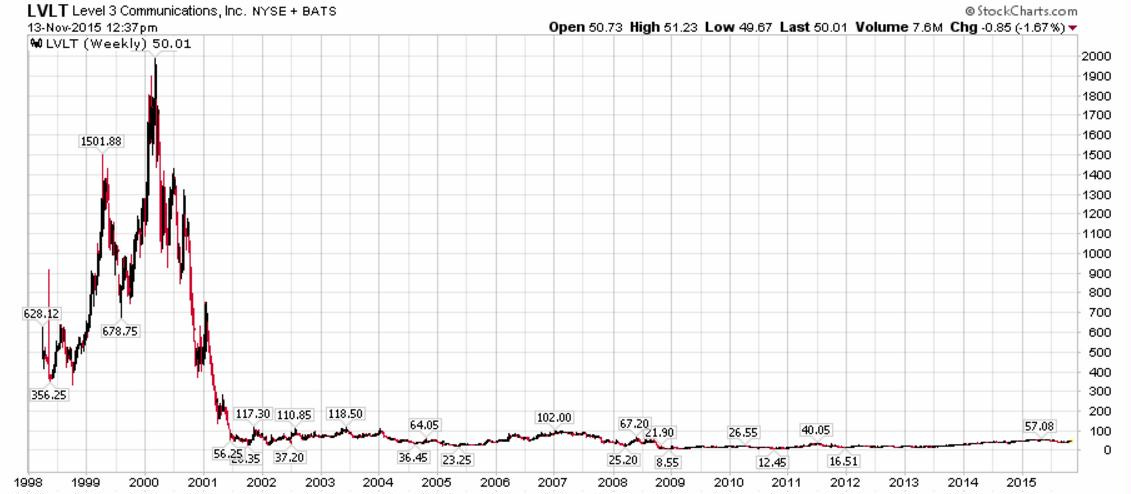
Level 3 Communicatons
Level 3 Communications “was a major U.S. telecommunications and internet backbone provider that built one of the largest Tier 1 IP networks during the late-1990s telecom boom.”
They got bought out in 2016 by CenturyLink, which became Lumen Technologies.
“You bombed Gaddafi. The country collapsed. The West created a failed state and just walked away, and the rest of the world noticed. There’s so little reflection in the West of how many people have you killed, how many lives have you destroyed by becoming so trigger happy after the end of the Cold War.”
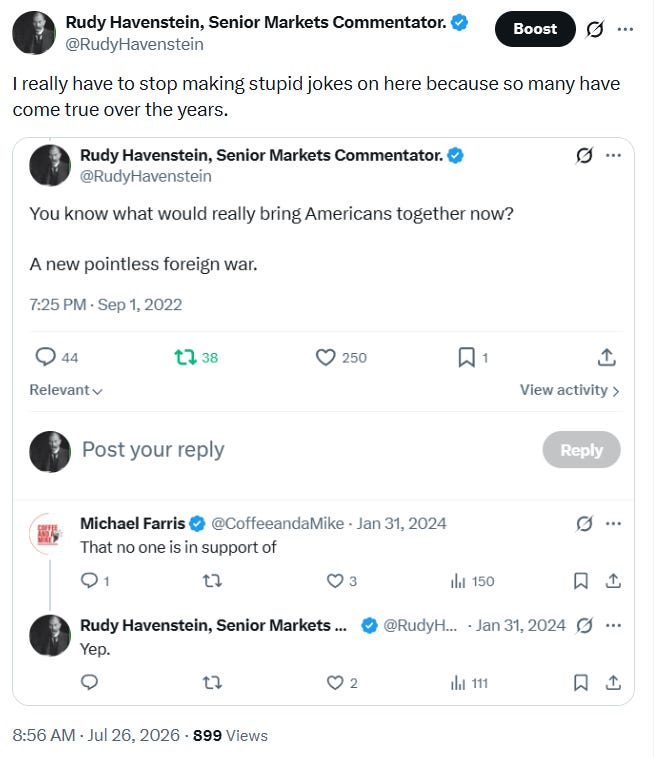
And I'm big into war
Big into war
Big into war
How the Mossad used a "honey trap" in 1986 to kidnap Mordechai Vanunu in Rome.
Vanunu was leaking proof that Israel had more than 200 nuclear weapons.
"She was an American"
From "Honey Trapped" by Henry R. Schlesinger
Mossad employed a classic honey trap operation to bring a wayward nuclear technician back to Israel to face justice. The target was Mordechai Vanunu, a former technician in the Dimona facility who absconded with detailed information regarding the country’s nuclear weapons programme. Israel had kept its nuclear programme under wraps for years, creating an uneasy atmosphere of international speculation among the general public. That guessing game ended in 1985 when Vanunu left the facility with proof that included dozens of photos inside a nuclear weapons plant and in-depth knowledge of its operation.
Vanunu wasn’t planning on selling Israel’s secrets to a hostile adversary from the outset; instead he began approaching the media in the US and England. He found an eager, if cautious, taker in London’s Sunday Times in August 1986. However, the paper, having just been badly burned by the bogus Hitler Diaries, which it proclaimed as genuine, sought to verify the story. Installing Vanunu in a London hotel with minders, the paper’s editors went to work on the verification process.
As the days dragged on, Vanunu became restless and impatient with the vetting process. Finally, disregarding instructions of the editors, he began to wander about London, meeting what he believed to be an attractive American beautician named Cindy Johnson. The young woman in her twenties explained that she was travelling abroad to ease the heartache of a divorce. London, she said, was a first stop before she moved on to see Europe.
They met, not in a bar, but in Leicester Square. As he would later recall, they were both crossing a street and began chatting. That he would have been susceptible to a friendly woman after being isolated for so long is almost without question, while the fact that she was American and he had spoken to her first eased any suspicion he might have harboured about his new friend.
In fact, Cindy Johnson was Cheryl Ben Tov, a Mossad operative. And while she was an American, she was also married to an Israeli intelligence officer. Growing up in the US, the daughter of a wealthy businessman, she emigrated to Israel in 1977, married Ofer Ben Tov, an Israeli army intelligence officer, and was recruited into Mossad where she then underwent years of training. Eventually she was deployed to the field, primarily posing as the girlfriend or wife of officers on operations.
Over the next several days, the relationship between Cindy and Vanunu progressed at a normal pace. And then, on 30 September 1986, the couple flew to Rome with plans to stay at what she touted as her sister’s empty flat. No sooner had they entered the flat than Vanunu was subdued, sedated and transported out of the building on a hospital gurney to a waiting ambulance. From there he was loaded on an Israeli navy ship disguised as a cargo vessel. The story, finally fully vetted, was published on 5 October 1986, confirming that Israel was a major nuclear power with more than 200 devices in its arsenal.
Put on trial in Israel, Vanunu received an eighteen-year sentence. He was released in 2004. An investigation by the Times and other media outlets soon uncovered the mysterious Cindy’s identity. With her cover blown, she and her husband moved to the US and started careers in Florida real estate.
“The pessimist can be enraged at evil. But only the optimist can be surprised at it.”
Gustave Gilbert, Nuremberg Diary
“We got around to the subject of war again and I said that, contrary to his attitude, I did not think that the common people are very thankful for leaders who bring them war and destruction.
“Why, of course, the people don’t want war,” Goering shrugged. “Why would some poor slob on a farm want to risk his life in a war when the best that he can get out of it is to come back to his farm in one piece. Naturally, the common people don’t want war; neither in Russia nor in England nor in America, nor for that matter in Germany. That is understood. But, after all, it is the leaders of the country who determine the policy and it is always a simple matter to drag the people along, whether it is a democracy or a fascist dictatorship or a Parliament or a Communist dictatorship.”
“There is one difference,” I pointed out. “In a democracy the people have some say in the matter through their elected representatives, and in the United States only Congress can declare war.”
“Oh, that is all well and good, but, voice or no voice, the people can always be brought to the bidding of the leaders. That is easy. All you have to do is tell them they are being attacked and denounce the pacifists for lack of patriotism and exposing the country to danger. It works the same way in any country.”
“You lost so many people close to you. So many. You ever think about what it all means though? About death. About why we here, what’s the point of it all?”
She laughed and said, “Sure, but you can’t dwell, right? That’s God’s job.”
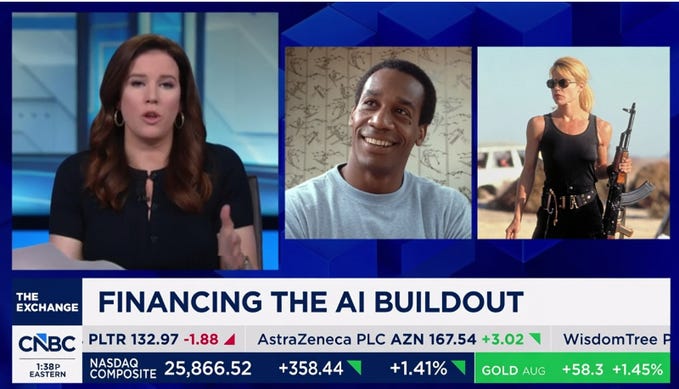
“The whole reason that we’ve been perpetually at war - really since 1917 - is because identifying a foreign threat or foreign enemy - that’s something to worry about far away, and removes attention from our own bad leadership.”
“Don’t put your faith in any man. You’re going to be disappointed every single time.”
Of course they did: "With her cover blown, she and her husband moved to the US and started careers in Florida real estate."
Excellent post and thank you.
Where does everyone get the idea that 2% inflation is good or even allowed. The law regarding the Fed (which clearly no one GAF about) says STABLE prices. That means 0%. zero point zero.
not 2% which is a halving of your money every 35 years or cutting it by 75% over your lifetime.
You know if you go with the inflation is a monetary phenomenon theory, every year for the last 6 or 7 the feds generate about 1.8 trillion dollar deficit which is about 6 to7% of the total economy. 6 to 7% that they are just printing and creating out of thin air. That means a halving of your money every 10 years. I'd says prices are about double since 2016..........wouldn't you? Doesn't it feel like 6 to 7% a year??????
Certainly closer than the bullshit 3% number they throw at us.