
Enron-like accounting games!
A crisis of really bad underwriting.

Sunday desk-clearing.
Another post full of eclectic cheery things I found interesting, and hopefully a few you might find interesting. As usual it’s a bit disorganized, like me.
Lots going on lately. Godspeed y’all!
By request, cute puppies and a kitten!


“Conventional economics is the most dangerous ideology pretending to be a 'science.'”
Oh boy!
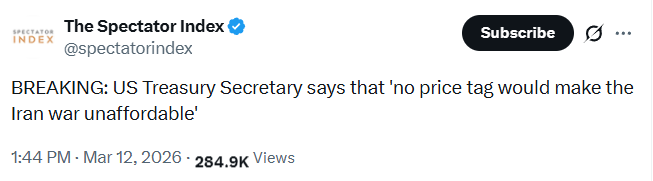
“This is a bad, bad deal. It’s not good.” - Robert Rapier
“There is no good historical parallel for the scale of destruction that would go into energy markets from six months of the Strait of Hormuz closed.” - Nick Kumleban
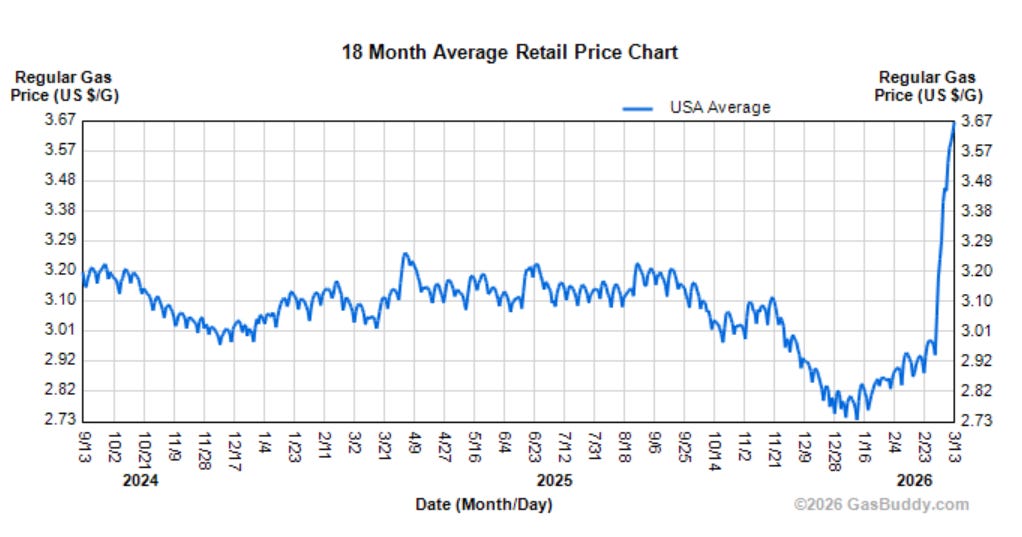
Oil Price
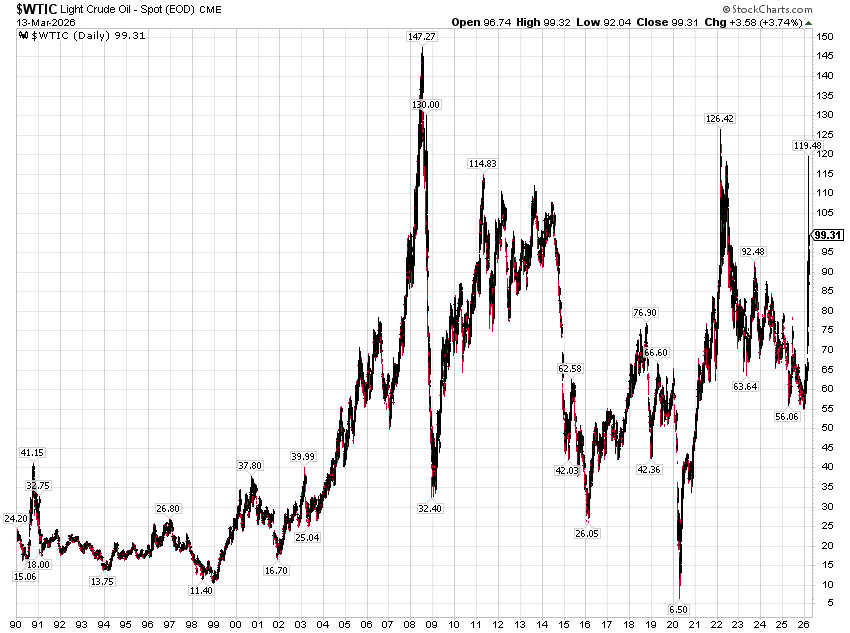
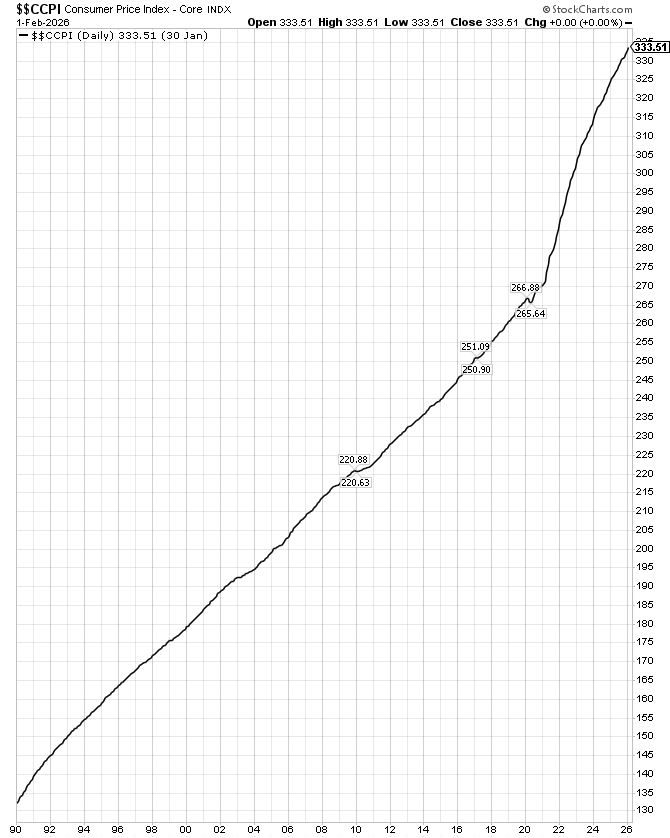
CPI Number go up.
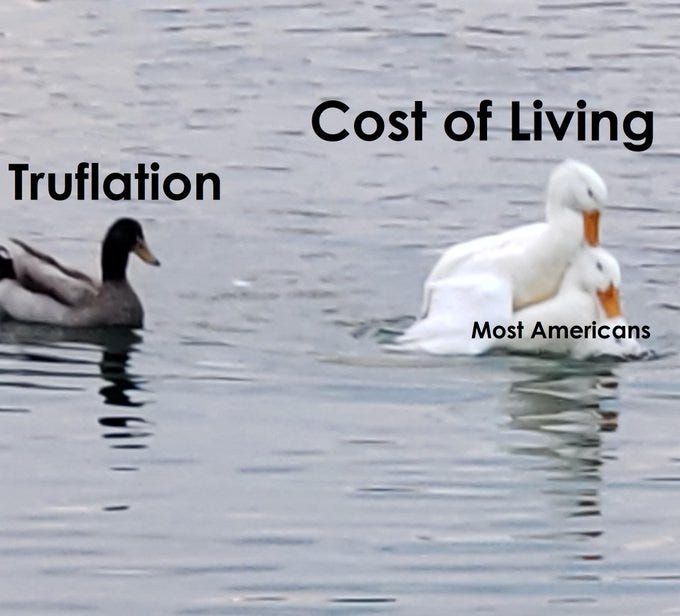
The level of gaslighting we live under is astounding.
Consumer Sentiment Falls 2% to Lowest Reading of 2026
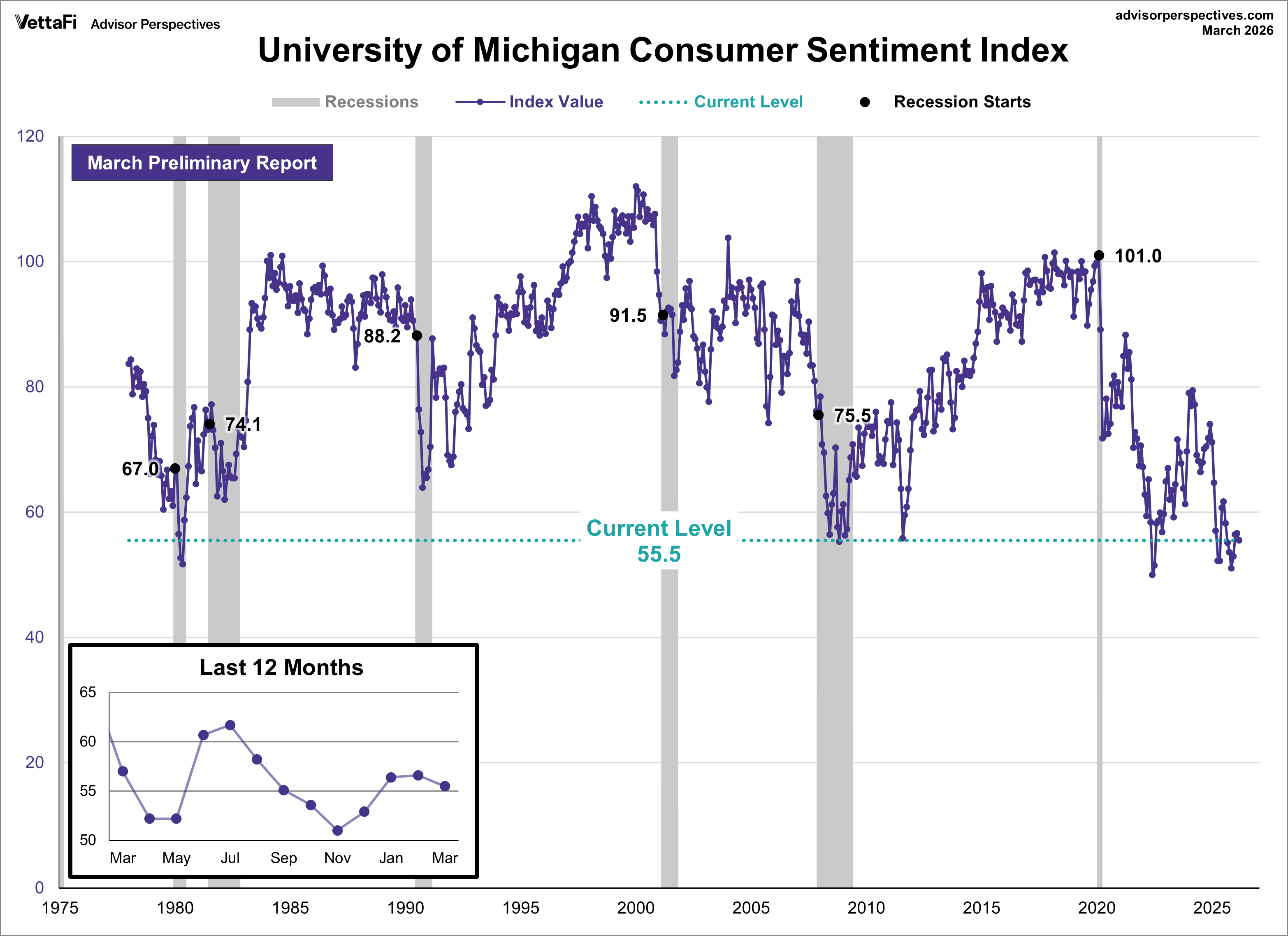
Even before this latest war, this sentiment survey is at early-1980’s recession and Great Depression II (aka GFC) levels. Maybe we should fix things at home before we further blow up the outside world.
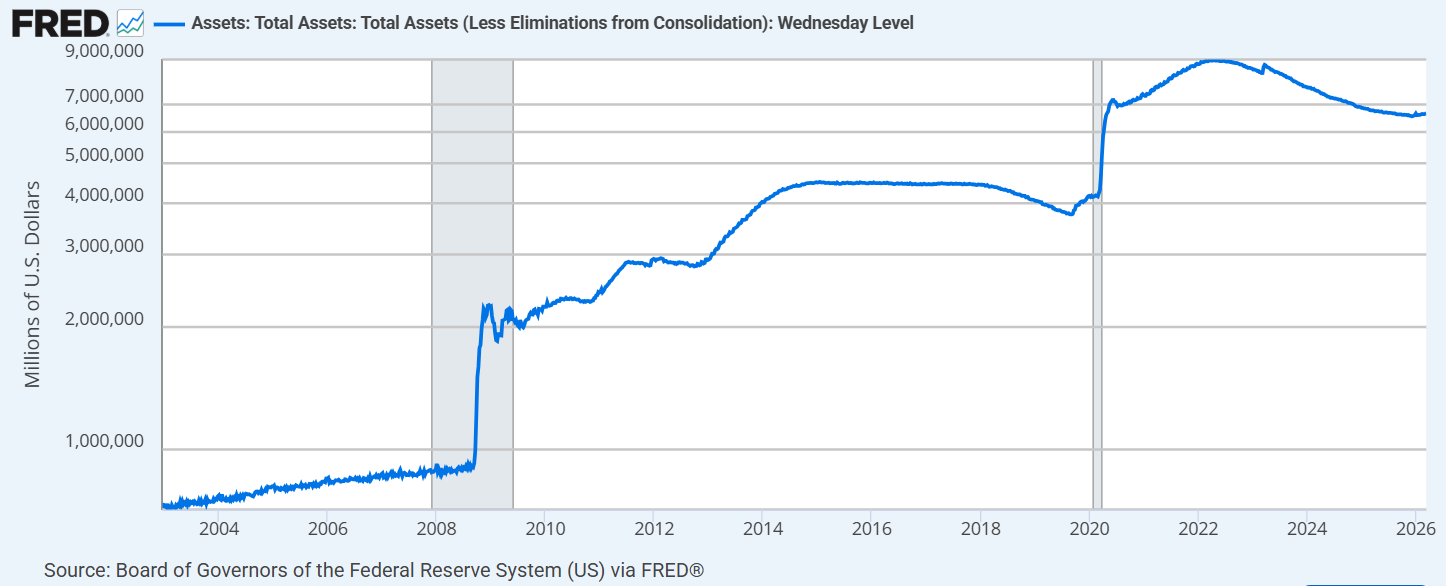
“I would contest a little bit, Eric, the idea that we have not been monetizing the debt. The Fed of course has been monetizing, buying Federal securities with credit that did not exist before the Fed tapped the relevant numbers on its computer keypad. The Fed has come to own substantial portions both of mortgage-backed securities and of treasury securities outstanding, so that is, by definition, that is monetization. It has turned those pieces of paper or those digital images into living credit.”
Jim Grant, March 2018
"Stock markets are crashing, jobs numbers are terrible, we are heading to World War III, and we have two of the most incompetent ‘leaders’ in history. This is not good.”
- Donald J. Trump, August 5, 2024
Via Grant’s:
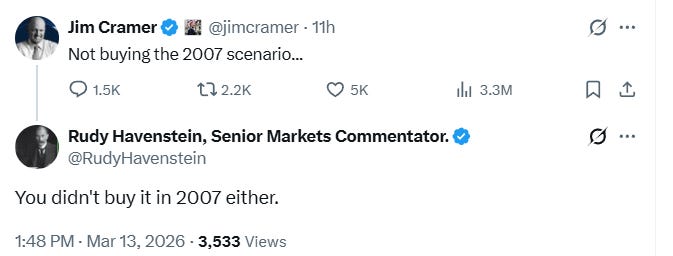
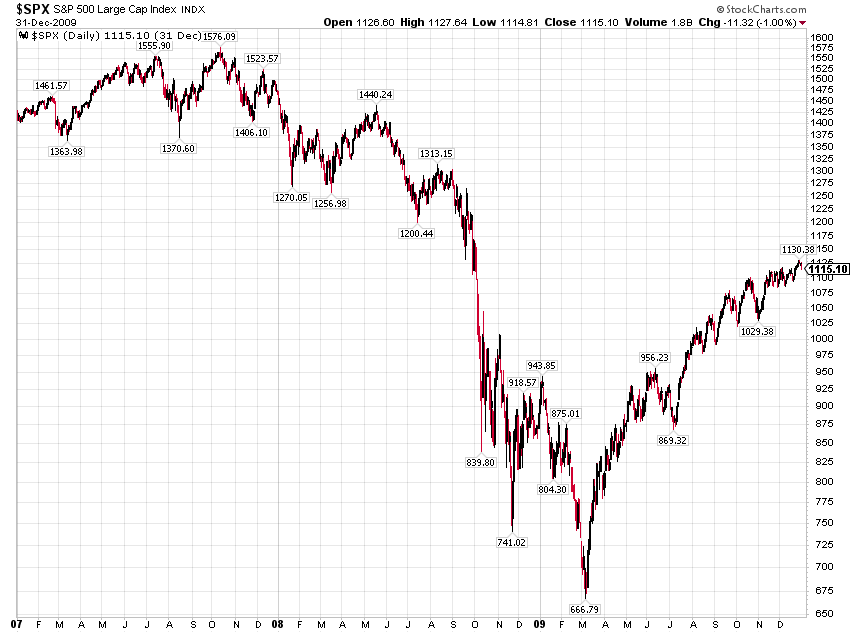
“Asset performance in 2026 is more ominously close to price action seen from mid-2007 to mid-2008,” Bank of America strategist Michael Hartnett ominously wrote Friday, citing the spike in energy prices alongside a suddenly-shaky employment picture and cracks in the credit complex.
“Human beings do really badly with crises that unfold really, really slowly, because as long as nothing really bad happens, everybody figures, eh, what’s the big deal?”
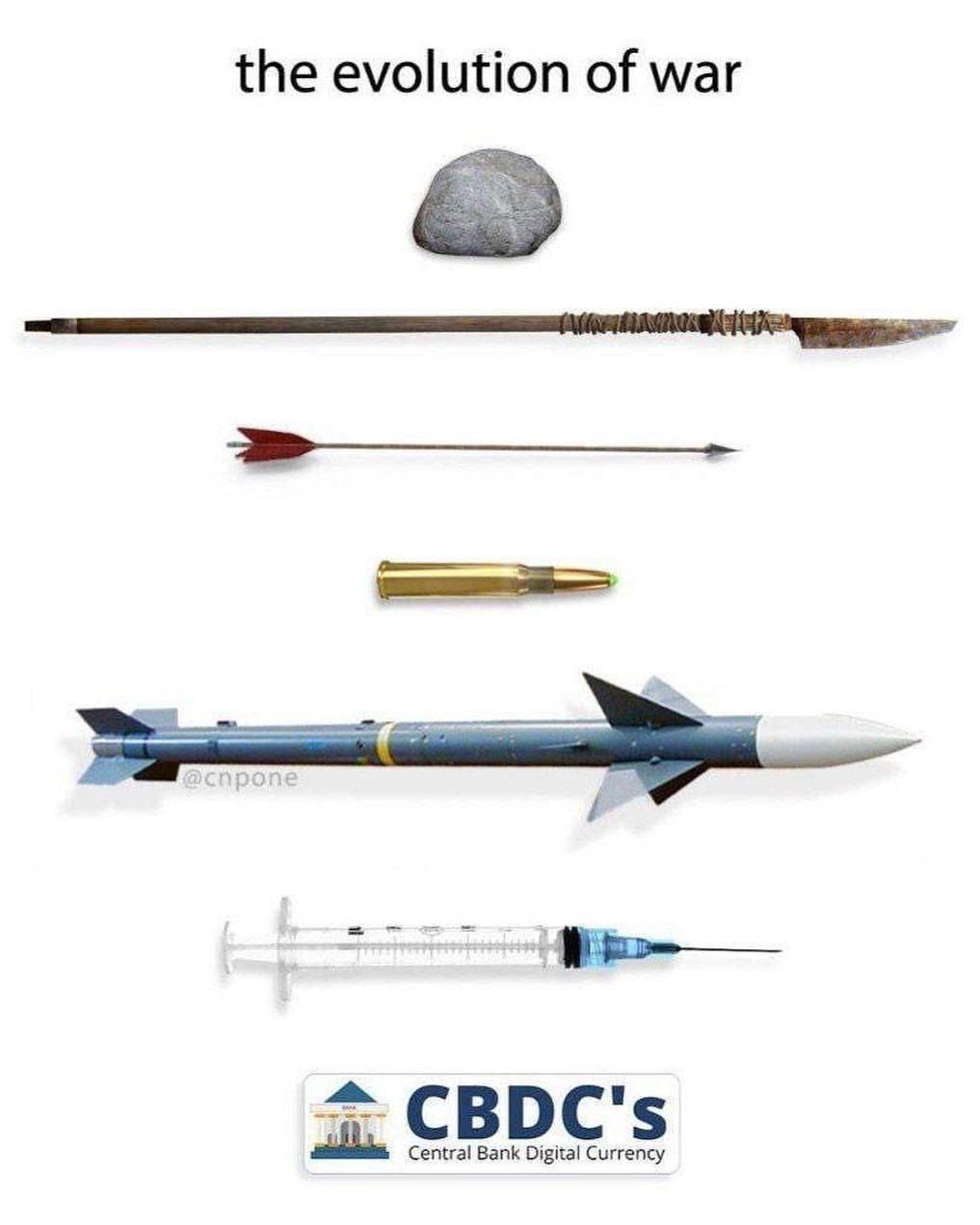
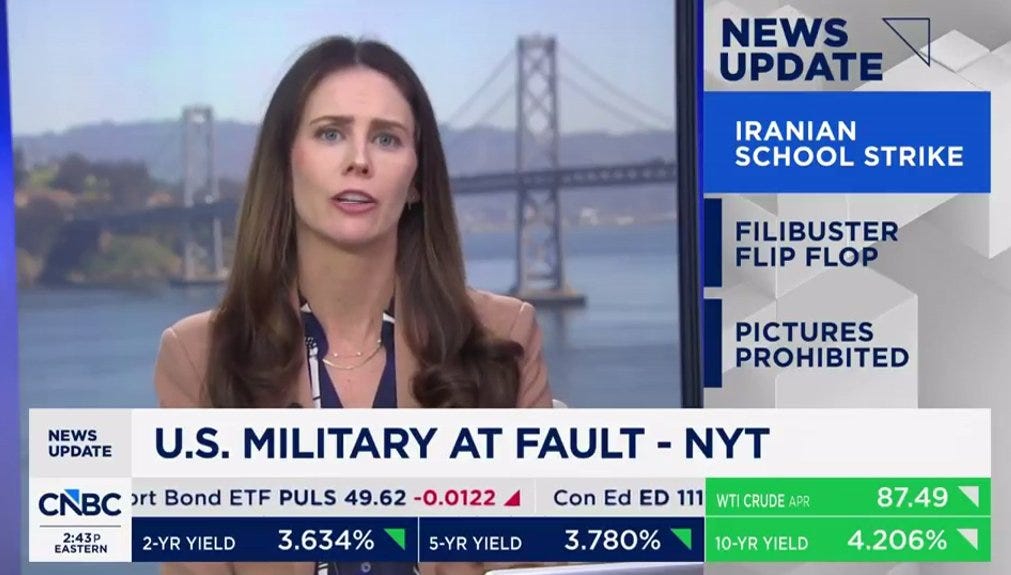
Who’s up for some war propaganda?
“We have the most dominant navy in the world, and Iran closed the Strait of Hormuz with missiles and our navy wouldn’t get anywhere near it.”
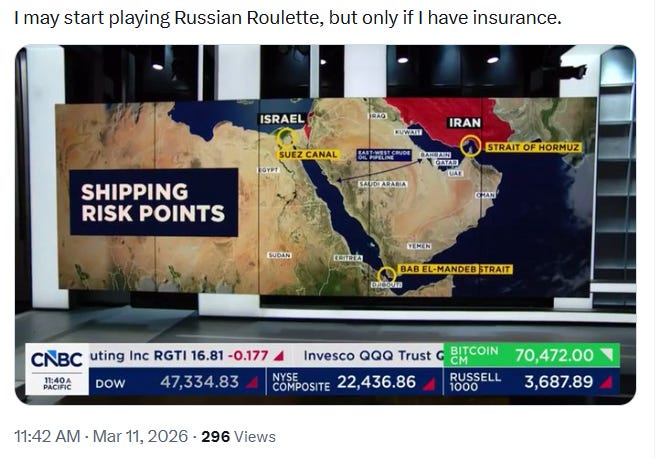
“The reason that this is happening is because Trump allowed himself to be compromised, and because he was compromised, he made bad decisions based on the preferences of a foreign nation. That should not be possible in the U.S. system.”
Via Grant’s:
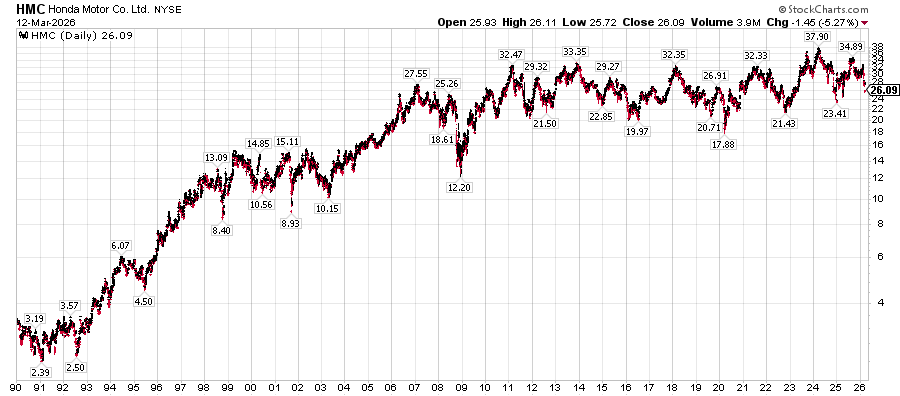
Honda Motor expects to book up to $15.7 billion in expenses and losses related to the reassessment of its electric-vehicle strategy and expects to swing to its first annual loss in decades as a result.
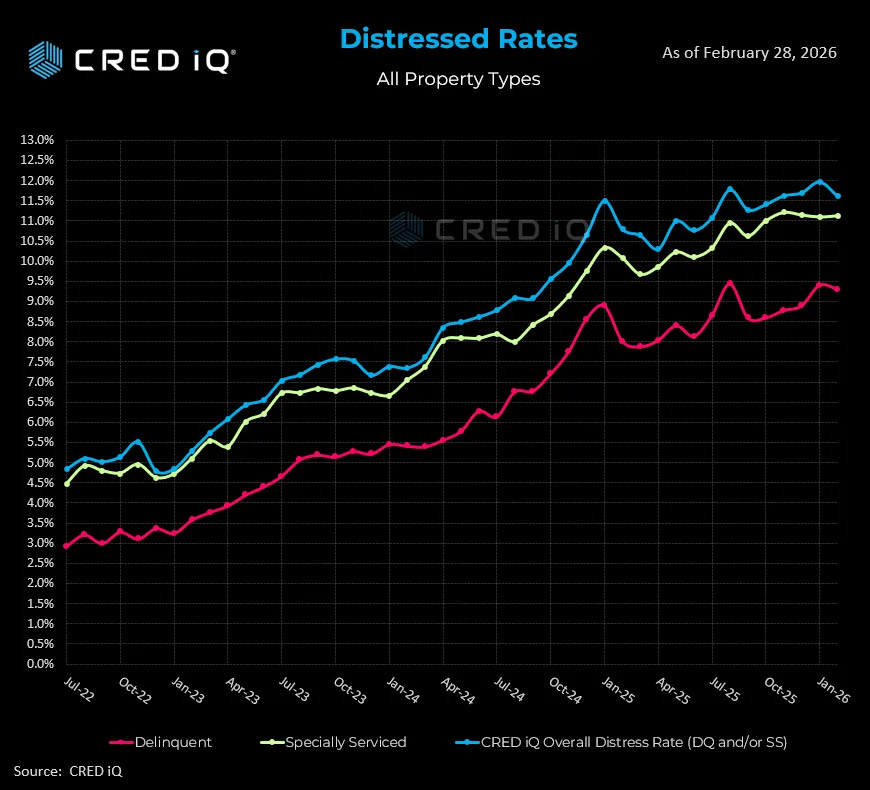
CRE Distressed Rates
“The current situation reminds me of being very much of October 2007. That was the time when I predicted we were at the verge of a recession. And many of my colleagues thought I was a fear-monger, that it made no sense. But the Great Recession actually began in December of 2007. Even though in October of 2007, the S&P 500 equity average reached an all-time peak. So things changed suddenly.”
Chris Whalen
I think it was so funny when the head of Apollo, Mark Rowan, said that this was just a bit of an opportunity, but an opportunity for him to basically take over. I think he’s talking about himself. He and the rest of these guys better be careful because they just got burned horribly on an insolvency in the UK on residential mortgages ,and the unit of Apollo Atlas SP is the predecessor of Credit Suisse. Those are some of the smartest people in the mortgage business, and the fact that they got stuffed by a bunch of UK mortgage bankers I think is extraordinary. I was a managing director of a PLC in the UK…I couldn’t believe that the guys at Atlas were the ones who missed this, and suddenly they get stuffed with essentially people committing fraud.

It’s like First Brands. They were pretending they had more collateral than they really did. They pledged it on multiple debt. We did that with Bear Sterns. You remember Bayer liked to double pledge collateral, too.. And remember when Jamie Diamond talked about First Brands, he said when there’s a couple cockroaches, there are more. And I think you’re going to see more fraud and more transactions where people are playing fast and loose with collateral. So that’s what’s going on there…
I think all of these big firms are all at risk. Even the BlackRocks, I mean BlackRock is a huge firm. They have a lot of income from their investment management business, but if you take enough hits to your reputation as well as the financial part of it, that can really undermine the solidity of the firm. So, these guys have to be careful. They’re not banks. These are non-banks that have to access the capital markets to raise their money, and mostly they raise money with investor cash. That’s how they make most of their money.
Apollo in particular studied the Warren Buffett model. They got an insurance company, which is a balance sheet for them, and they’ve been putting all sorts of stuff on the asset side of that balance sheet, but the liabilities are annuities to retirees. So, that’s why this is such a vital question.
“The folks at the White House get their financial news by watching Newsmax.”
Kevin Warsh is “a friend. I love him. He’s a great conservative. He may actually lecture members of Congress about the budget deficit. We haven’t had a Fed chairman do that since Arthur Burns.”
“I just think that the inflation narrative is going to get away from the Fed. There’s no way for them to be credible on inflation if they have to monetize the federal budget deficit, which I anticipate they will. You didn’t hear President Trump talking about the budget deficit the other night, did you? No. We’re all in a delusion. The whole country is completely deluded. We think we can just keep on going, go on vacation, buy and sell stocks. It’s going to be fine. That’s why metals are so important.”
The fastest growing bank asset category is loans to non-depository financial institutions (NDFIs), a corner of the financial system that regulators have struggled to monitor and control, up 7% in Q4 vs Q3 and up 35% YOY to $1.4 trillion at year-end 2025. With growing signs of credit stress among nonbank companies, banks will eventually pull back from lending to NDFIs. The problem is timing. By the time banks tighten lending standards, many private companies dependent on this funding may already be heading toward collapse, and those failures will not stay confined to the shadow banking system.
They will hit bank balance sheets directly…
The fact that Apollo’s Atlas SP unit was caught unawares by the apparent collateral fraud at MFS is especially notable given the firm’s past experience. One of the leading providers of secured financing to nonbank mortgage companies in the US, Atlas SP was formerly owned by Credit Suisse and has been the advisor on numerous financing transactions for NBFIs. Yet two supposedly “secured” warehouse facilities backed by Atlas SP are now reported to be in default. If the lenders structuring these deals are surprised by collateral problems, investors should be asking deeper questions about how widespread these risks really are.
The collapse of American Car Centers in 2023, another Atlas SP client, provided advanced warning of a wave of corporate insolvencies that now threaten the US banking sector with contagion. U.S. corporate bankruptcies in 2025 surged to their highest level in 15 years, with over 700 companies filing for protection through November, marking a 14% increase over 2024. A large share of those failures involved private equity-backed firms…
In practical terms:
Banks have $1.4 trillion in outstanding loans to NDFIs
They have another $2.8 trillion in undrawn commitments
That means for every dollar already lent, two more dollars are waiting to be drawn.
And a nonbank borrower can draw on those lines and default immediately, leaving banks with the loss.
Total potential exposure: roughly $4.2 trillion.
Meanwhile, JPMorgan Restricts Private Credit Lending After Loan Markdowns
JPMorgan Chase & Co. is restricting some lending to private credit funds after marking down the value of certain loans in their portfolios…The devalued loans are to software companies, the person added, some of the biggest borrowers fueling the growth of the private credit market.
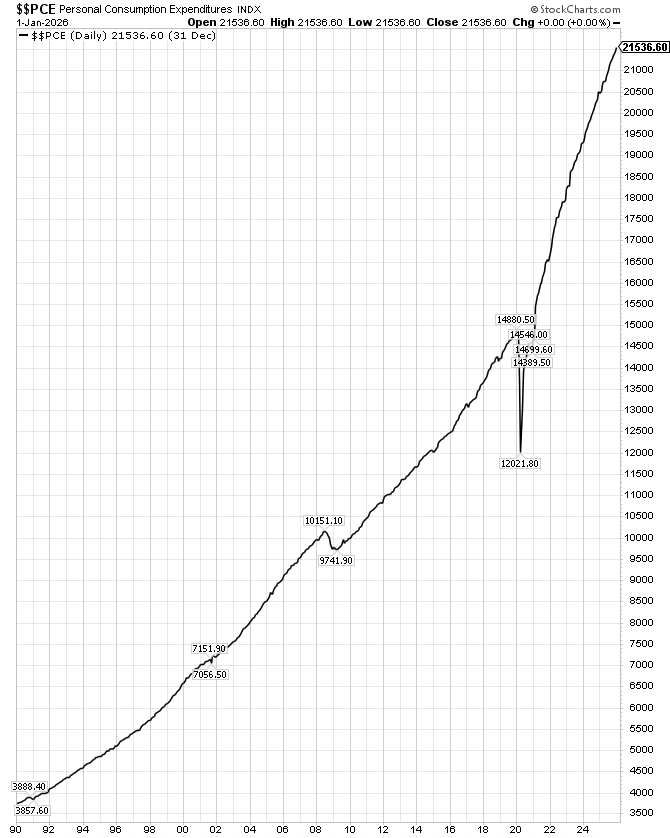
“Core PCE” has now been above the Fed's made-up "2% target" since April 2021, and above their actual legal mandate of "stable prices" since forever.
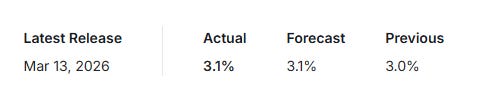
Number go up!
Cliffwater’s $33 Billion Private Credit Fund to See 7%-Plus Redemptions
Cliffwater LLC is facing redemption requests in excess of 7% from its flagship private credit fund…Founded by Stephen Nesbitt, Cliffwater is the latest firm in the $1.8 trillion private credit market to see an investor exodus over concerns about loan quality and exposure to software companies that could be disrupted by advancements in artificial intelligence.
Pimco Sees Crisis of ‘Bad Underwriting’ in Private Credit
“It’s not just a crisis of confidence, it’s a crisis of really bad underwriting.”
"Our key takeaway from this behavior is that distribution cuts are so worrisome that some bad actors are playing Enron-like accounting games," the letter said.
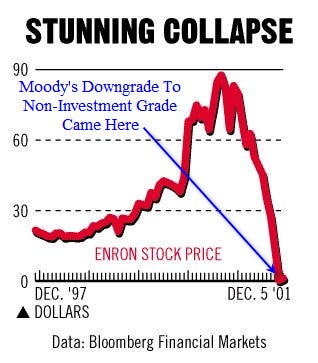
“You cannot create liquidity from an illiquid asset class”
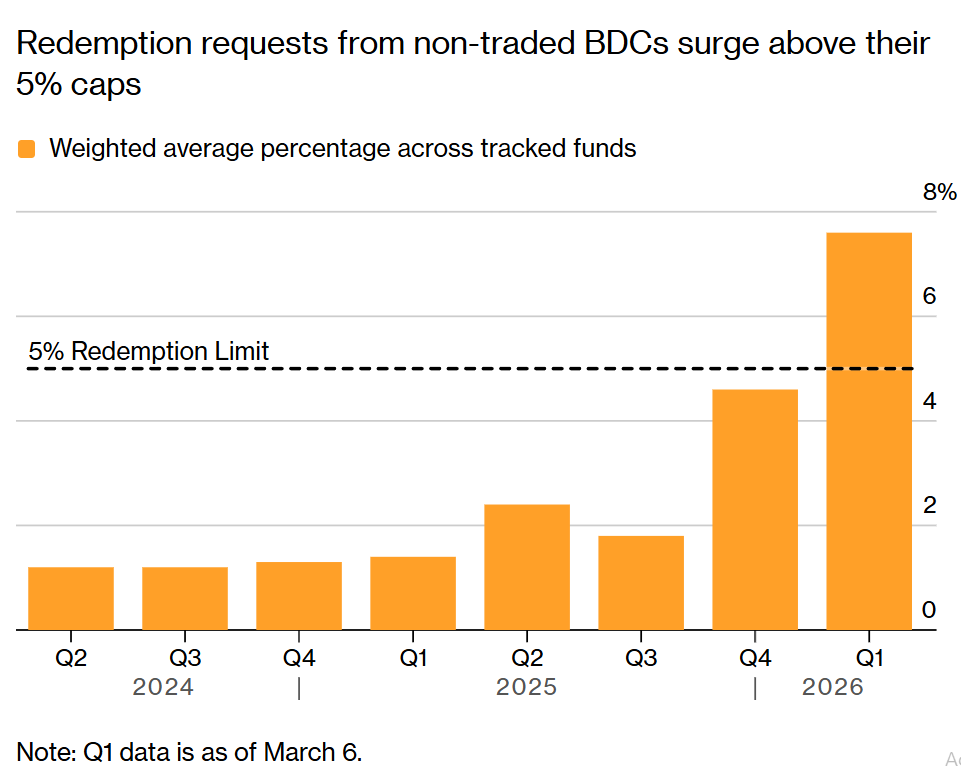
Blocking withdrawals “tends to damage relationships and could lead to further redemptions from investors who weren’t planning to exit but interpret it as a distress signal,” said Zain Bukhari, associate director of risk and valuations for S&P Global Market Intelligence.
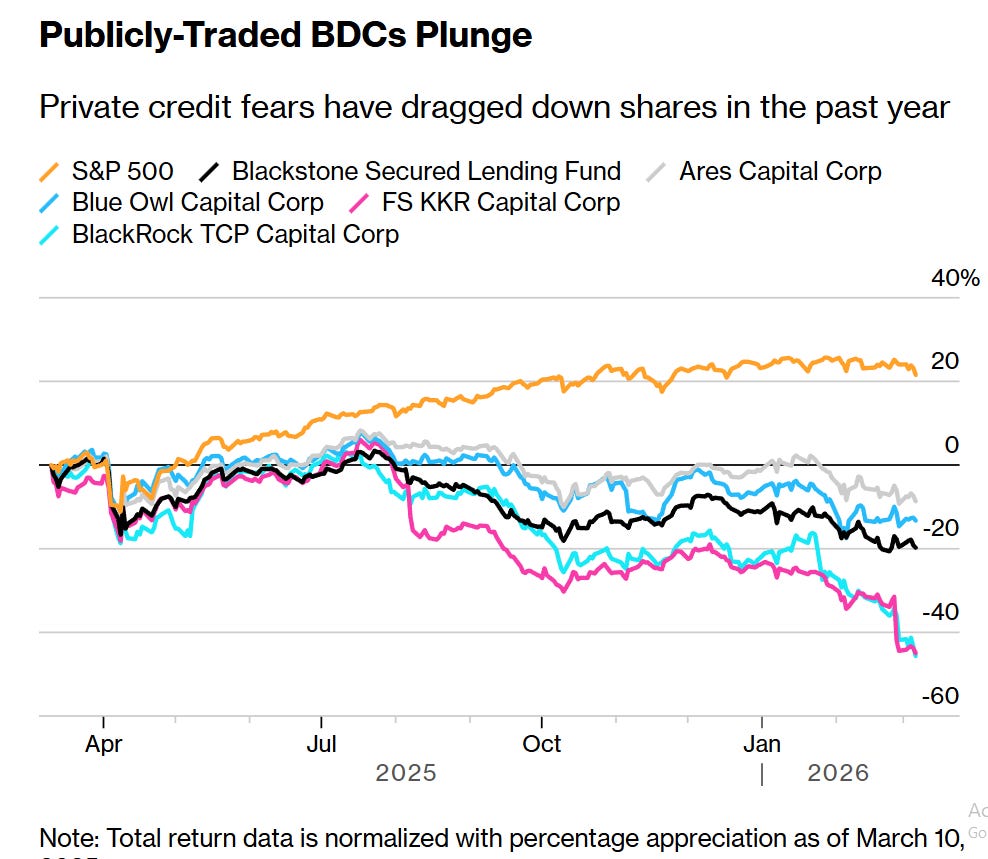
UBS Group AG strategists led by Matthew Mish said private loan defaults could reach 15% in a worst-case scenario.

Via Trepp:
The major apartment-owning REITs—nine companies with 527,256 units—are having trouble pushing rents, as new leases generally are being signed at prices lower than existing agreements.
They signed new leases during the fourth quarter at starting rents that averaged 5.18% less than existing rents. That means that in some, if not many, cases, a tenant moving into a unit would pay less in monthly rent than existing tenants in comparable units at the same property.
Companies are offering such discounts on new leases in order to remain competitive as supply in some areas has overwhelmed demand. Last year, 402,175 units were delivered, following a record 530,000 units delivered in 2024 and the 450,000 units completed in 2023, according to Cushman & Wakefield.
Meanwhile, as monthly rents for new leases are discounted, it becomes difficult to increase rent on renewal leases.

“Mortgage Rates Surge to 7-Month Highs”
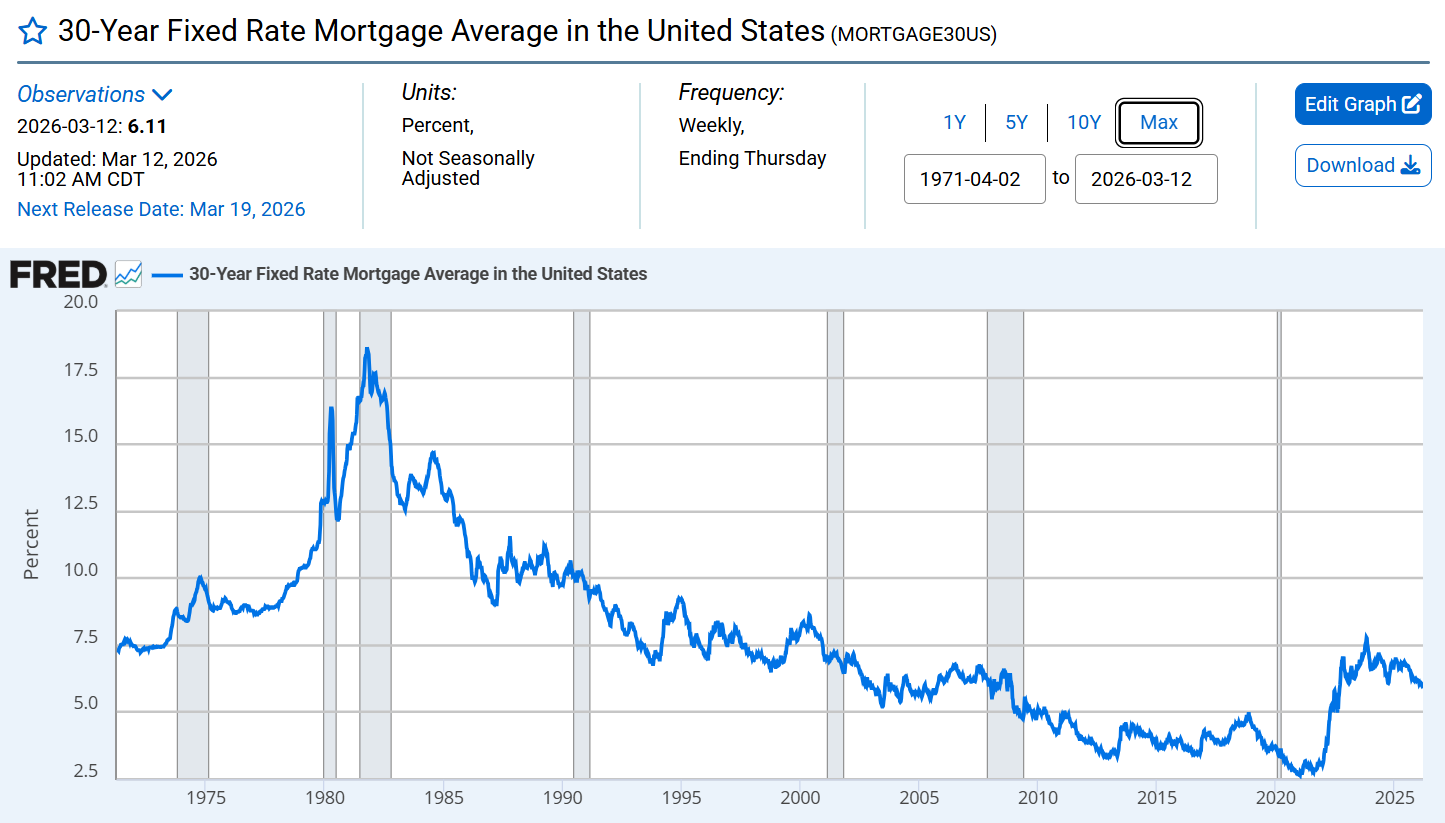
"I'll remind everybody that Donald Trump is a real estate guy, and I've yet to meet a real estate guy who has not met an interest rate that he doesn't think should go lower."
Jim Bianco
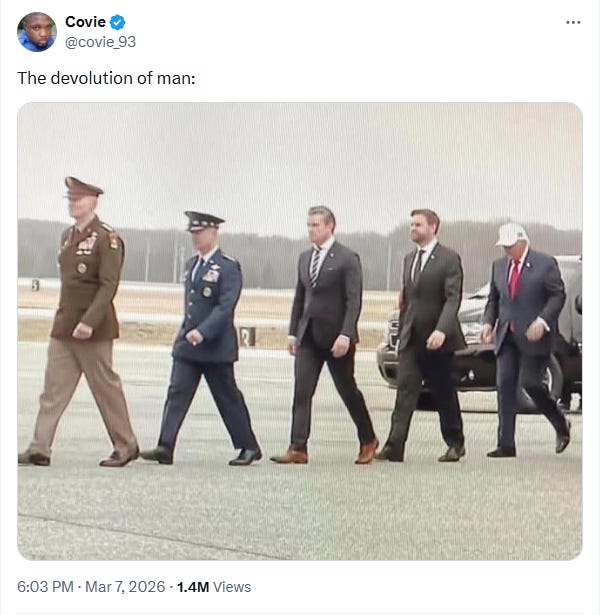
“The worst thing they ever did was to freeze Russia’s financial assets...to cripple Russia financially. That was the final wakeup call for the entire global South to say we should have listened to you, China & Russia, you warned us this would happen."
London Paul, October 2025 (link is dead)
"I think if you just follow the White House, what they're saying, what Israel's saying, what the mainstream media is saying, you'd think that Iran was almost gone, and that the U.S. and Israel are winning really easily, and I don't think they are."
Rick Steves’ Iran
Interesting Account I came across:
On 5 March, an Iranian ballistic missile penetrated Bahrain’s air defences and struck Bapco Energies in the Sitra industrial zone. The kingdom’s sole oil refinery. Founded in 1929. Capacity: 267,000 to 400,000 barrels per day. Fire contained. Operations officially “continuing.” But IIR reported to Reuters that two crude units were shut. That is not “continuing.” That is a refinery operating at reduced capacity under active bombardment 15 kilometres from the US Fifth Fleet headquarters.
Then on 9 March, an Iranian drone struck a Bahraini desalination plant. The first confirmed hit on a Gulf country’s water infrastructure in this war. Bahrain generates approximately 90% of its drinking water from desalination. There is no backup. There is no pipeline from a neighbouring aquifer. There is seawater processing or there is a humanitarian emergency measured in days, not weeks.
Here is what everyone is missing.
Bahrain has intercepted 78 missiles and 143 drones since 28 February. That sounds like success. It is not. It is a depletion curve. Every Patriot fired at a $20,000 Shahed costs $4 million. Every THAAD interceptor costs $12.7 million. Bahrain’s air defence inventory is finite. US resupply runs at 8 THAAD per month globally. Iran produces over 100 missiles per month. The arithmetic has an expiration date. The Bapco hit and the desalination hit are proof that Iranian projectiles are already getting through. As inventories thin, more will.
The 31 autonomous IRGC provincial commands operating under Mosaic Defence doctrine do not need Tehran’s permission to select targets. The provincial command responsible for Hormuzgan province, which faces Bahrain across the Gulf, controls its own missile batteries, its own drone launchers, and its own target list. When Pezeshkian apologised to Gulf neighbours and promised to stop targeting them, strikes continued within hours. His own government admitted Mosaic commanders operate independently.
This is not collateral damage. This is doctrinal. Bahrain hosts the Fifth Fleet. It is the most exposed US ally in the Gulf. Striking its refinery tests air defences. Striking its desalination plant tests resolve. Striking both simultaneously signals that the IRGC can threaten both energy and survival infrastructure at will.
Who benefits beyond Iran? Russia benefits from every dollar added to the oil price. China benefits from every hour of US resource commitment to the Gulf that cannot be allocated to the Pacific.
"The disruption has caused a severe chain reaction in not only shipping and insurance, but there's also a drastic domino effect on aviation, agriculture, automotive, and other industries," Nasser said. "There would be catastrophic consequences for the world's oil markets the longer the disruption goes on, and the more drastic the consequences for the global economy."

Trump sons back launch of new military drone company
Eric Trump and Donald Trump Jr are backing a new tactical drone company that does business with the Pentagon, marking the latest foray into the military-industrial complex by the US president’s eldest sons.

A top Goldman Sachs executive has said that the bank’s clients in the private capital industry are “glad” that the Iran war is providing a “distraction” from questions over the sector’s exposure to software.


“The real power in America is held by a fast-emerging new Oligarchy of pimps and preachers who see no need for Democracy or fairness or even trees, except maybe the ones in their own yards, and they don’t mind admitting it. They worship money and power and death. Their ideal solution to all the nation’s problems would be another 100 Year War.”
Hunter S. Thompson (2003)
“HitchBot was a hitchhiking robot that relied on the kindness of strangers to travel the world. It successfully hitchhiked across Canada, Germany & the Netherlands, but while attempting to hitchhike across the U.S., it was found with its head & arms ripped off in Philadelphia.”

Another great job providing us with all the news that's not fit to print in our "free press"! One question - Is it possible that our client states in the Gulf will reconsider this alliance after or maybe even during the war. A UAE billionaire wrote a letter condemning the decision of Trump to start this war. Plus I've read reports that the Gulf states believe that our focus is on defending Israel, not them. Wasn't the original deal with the Saudis providing military support in exchange for their selling oil in dollars? I've seen analysists and commentators saying that a secondary goal of the war is to weaken China. But wouldn't it be more economically advantageous for the Gulf states to align with China and ditch the US?
I feel like 95% of Americans aren't remotely aware of even what's already baked into the cake. It's going to be a hot summer.