This would have happened anyway.
Get ready for QE5.
“The play on the stage is the same, it’s just the actors are different.”
Dan Wantrobski, CMT
AC/DC
In 1979, AC/DC with Bon Scott was my favorite band (along with Led Zeppelin and Black Flag and the Sex Pistols. A punk with long-hair.)
For me, AC/DC became a different band after Scott OD’d in February 1980.
The last time I saw AC/DC live, Angus Young was 24, and Bon Scott (age 33) was the singer. 3,000+ people, tickets were $7.50.
At the Rose Bowl April 18th, Angus is now 70. Time flies. Everyone got old.
Angus is still a killer guitarist and entertainer, and, although Brian has lost his voice (and forgotten some lyrics,) he did a serviceable job. He looked happy to be out there (and winded - he’s 77).
The band was solid, and I think 10 of the 21 songs they played were pre-1980, from the Bon Scott era. Nearly 50-year old songs, still killer rockers.
Sin City, Whole Lotta Rosie, and Riff Raff were probably the highlights for me. Angus must've done a 20-minute version of Let There Be Rock.
I had good seats thanks to a good friend, but what a zoo the Rose Bowl is. The serpentine lines to get in are ridiculous, and the traffic - fuggedaboutit.
Another item checked off the bucket list.
“I could sit here for two hours and talk about macro. I find it very fascinating. I happen to like macroeconomics very much. I think it's incredibly fascinating, but none of it - zero - has to do with how I actually trade. Zero.”
A Partisan Lens
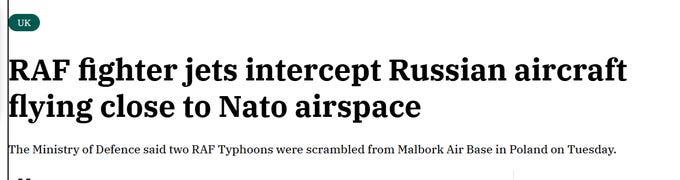
Russia is literally adjacent to NATO airspace:
"We'll know our disinformation program is complete when everything the American public believes is false."
William Casey, CIA Director, 1981
A nice message from paid up subscriber David:
And from Richard:
Please consider a paid subscription. It’s just $1.92 a week, which you’d probably just blow on food or rent anyway.
Below the fold: housing, student loans, the continued financialization of everything, Tim Price, Dying of Money, inverting, Greg Weldon, Mike Taylor, Brent Johnson, Steve Eisman, the Germans, bond experts, mobsters, grifting, charts, consumers, and more.
Housing
Check this chart out: Houses Sold by Type of Financing, Cash Purchase.
There was a similar plunge in 2006. (via)
So it looks like 1.87 million homes were for sale in March 2025, and AirDNA today has 675K short-term rentals for sale, about 36% of that.
Trump ends FHA COVID-era mortgage assistance
“COVID-era mortgage relief, initiated by Trump in 2020 and extended by Biden in 2021, “has created another subprime housing bubble and put taxpayers at risk. Trump should end it,” says a February editorial in the Wall Street Journal…Of the 52,531 FHA loans last year that went seriously delinquent within their first year, only nine resulted in foreclosure…
FHA mortgages, which make up less than 15% of all active home loans, but allow higher debt ratios and smaller down payments than other loans, accounted for 90% of the 131,000 home loans that went delinquent last year, ICE reports…In 2024, FHA served 766,942 new borrowers nationwide…
The COVID relief program allows FHA to make payments, called partial claims, (‘partial’ because the payment is not covering the entire debt) on behalf of delinquent borrowers, and add the amount fronted by the government to the back end of the loan, interest free. The FHA payments on behalf of borrowers cannot exceed 30% of a loan’s unpaid principal balance.
“Consider a borrower who misses five $4,000 monthly mortgage payments,” says the WSJ editorial. “The servicer will add the $20,000 in missed payments to the mortgage and reduce monthly payments by $1,000 for three years—adding another $36,000 to their mortgage. So the borrower is $56,000 deeper in debt, though with no additional interest.”
Mortgage expert John Comiskey projects the FHA “made ~2.6 billion dollars in mortgage payments from these stand alone partial claims last year.” Records analyzed by Comiskey indicate some borrowers made no payments for several years, with the FHA stepping in to bring their loans current every three to four months.
Comiskey, who calls the effort “an abject FHA loss mitigation policy failure,” tweeted last month that about 70% of some 160,000 FHA Covid relief modifications originated during the past two years are delinquent, and about 55% are seriously delinquent…
From April of 2020 through September 2024, some 1.7 million FHA borrowers took part in COVID-19 forbearance…Of those, 77% were able to get back on track, either paying off their loan or becoming current on their mortgages. Some 371,000 borrowers (22%) remained in delinquency or forbearance.
As of September 2024, FHA held active mortgage insurance on 7.81 million single family mortgage loans. The share of FHA borrowers who are seriously delinquent stood at 4.15% in September 2024, a slight increase from a year ago but consistent with rates seen prior to the COVID-19 pandemic…
Loan servicers receive a monetary incentive for participating in the relief program – between $500 and $1,750 every time the FHA steps up on behalf of borrowers…”
“Government-backed mortgage relief has become a cash cow for servicers, some of which originated the risky loans they are paid not to foreclose. Moral hazard, anyone?”
“…Unlike 2008, when most properties were privately held, government-sponsored entities such as FHA, the Veterans Administration, the U.S. Dept. of Agriculture, Fannie Mae, and Freddie Mac, have skin in the game on about half of all mortgages.”
Student Loan Debt is Coming Due
“The U.S. Department of Education today announced its Office of Federal Student Aid (FSA) will resume collections of its defaulted federal student loan portfolio on Monday, May 5th. The Department has not collected on defaulted loans since March 2020.”
Today, 42.7 million borrowers owe more than $1.6 trillion in student debt.
More than 5 million borrowers have not made a monthly payment in over 360 days and sit in default—many for more than 7 years—and 4 million borrowers are in late-stage delinquency (91-180 days). As a result, there could be almost 10 million borrowers in default in a few months. When this happens, almost 25 percent of the federal student loan portfolio will be in default.
Only 38 percent of borrowers are in repayment and current on their student loans. Most of the remaining borrowers are either delinquent on their payments, in an interest-free forbearance, or in an interest-free deferment. A small percentage of borrowers are in a 6-month grace period or in-school.
Currently, almost 1.9 million borrowers have been unable to even begin repayment because of a processing pause put in place by the previous administration. Since August 2024, the Department has not processed applications for enrollment in any repayment plan such as Income-Based Repayment, Income-Contingent Repayment, or PAYE. The Department is currently working with its federal student loan servicers and anticipates processing to begin next month.
Financializing Kitchen Remodels!
“Loans that homeowners use to pay for fixes or renovations are increasingly being packaged into bonds…The loans are considered a type of unsecured lending, since it isn’t practical to repossess home improvements such as a remodeled kitchen”
Apartments
“The multifamily sector delivered nearly 600,000 new units in 2024, the highest annual total since 1974. But this surge has had mixed effects, per Trepp.
In Sunbelt markets where construction has been aggressive—like Dallas-Fort Worth, Miami, and Charlotte—landlords are seeing higher vacancy rates and rent declines. By contrast, high-barrier cities such as Boston, Chicago, and Washington, D.C. have remained more stable due to limited new supply.”
“Landlords aren’t just grappling with weaker rents—they’re also facing sharply rising expenses. According to Trepp:
Repairs & maintenance: +16.5%
Real estate taxes: +16.6%
Utilities: +21%
Insurance: +99.5%
[Just a reminder re: the official CPI model - rh]
On the financing side, floating-rate debt has become a major risk. Over 5,100 multifamily properties within the securitized market now have a debt service coverage ratio (DSCR) below 1.0, signaling that income is no longer covering debt payments. The highest concentrations are in overbuilt Sunbelt metros like Houston, San Antonio, and Atlanta.”
Multifamily CMBS delinquency rate:
Mid-2022: Below 2%
Early 2025: Over 4.5%
March 2025: 5.44%
“Seattle now has the smallest new apartments in the US, averaging just 649 SF, down 8% from a decade ago.”
Los Angeles “Class A office vacancy rate hits 24% in Q1”
So true: Risk is not volatility.
“Risk is not, realistically, volatility – the extent to which a price wobbles around an average level. Risk is, for example, the likelihood that you incur a permanent capital loss. You saved for your retirement and lost everything? Now that is risk…
In the financial markets, the standard bell curve does not exist.
The bell curve is not a good map for those navigating financial market reality.
Between 1916 and 2003…Based on the bell curve, there should have been 58 days when the Dow moved more than 3.4%. In fact, there were 1,001 of those events. The bell curve predicts six days of index swings beyond 4.5%. In fact there were 366 of them.
Index price swings of more than 7% should, according to theory, come once every 300,000 years. In reality, the twentieth century saw 48 separate occasions of them.
Could standard financial theory be wrong?”
The Biggest Short
I always wonder who the counterparty is on United States’ Credit Default Swaps…AIG? Goldman?
Stocks vs Bonds
“Bloomberg’s U.S. Treasury Index has returned minus 9% on a nominal basis over the past five years, lagging the negative 6% showing for its global aggregate fixed income gauge.
Conversely, the S&P 500 virtually doubled over the five years through 2024, comfortably outpacing the 74% dollar-denominated return for the MSCI World Index. On that note, foreign investors have veritably covered themselves in red, white and blue in recent years, accounting for 18% of U.S. equity market ownership as of year-end according to Goldman Sachs. That’s the highest share on record, up from about 15% in 2020 and less than 8% throughout the 1960 to 2000 epoch.”
I’m again reminded of a passage from Dying of Money:
“Investors were extremely slow to grasp that stocks were poles apart from fixed obligations like bonds, quite wrongly thinking that if bonds were worthless stocks must be too. Nearer the end in 1923, relative prices of stocks skyrocketed again as investors returned to them for their underlying real value. Stocks in general were no very effective hedge against inflation at any given moment while inflation continued; but when it was all over, stocks of sound businesses turned out to have kept all but their peak boom values notably well. Stocks of inflation-born businesses, of course, were as worthless as bonds were.”
“Even before this whole trade issue, there were a number of normally reliable economic indicators that did suggest a recession.”
Everyone forgot about this:
Greg Weldon
I knew I could count on Greg - who’s been prescient in warning about the consumer - to give a cogent summary of our present economic situation:
“You might say, well, it's only because of tariffs. No, it's not.
Tariffs are not the cause. Tariffs are the catalyst. This would have happened anyway. Some other story, some other thing would have happened. We were headed in this direction anyway you cut it.
Tariffs are only going to make it worse in the near term.”
“You have consumers that are telling the Fed, "We expect our real income to be down by 6.6% over the next year.””
- Weldon
Note that these negative prints historically occur AFTER recessions have already officially ended!
"Since 2008, the markets have been manipulated - and I say that tongue in cheek - by, you know, quantitative easing. QE1 QE2 QE3 QE4. Get ready for QE5 - it's coming."
Mike Taylor
“I saw it in my data in my businesses - a recession - 18 months ago.”
“What's different now versus other times is private equity. Private equity is gigantic, and it is in - whether you know it or not - it is in these people's retirement portfolios, and it was not like that in 2007, 2008. They were more liquid. Sure, we had levered up mortgage situations in pension funds, things like that, but now we've gotten out of that, into illiquid things -Blackrock, Blackstone - all these guys that have made these credit products that have found their way into accounts, and it looks great, because it's secured, it's 8% yield, and it it keeps coming back for more all the time. What they don't say is the leverage that's associated with the underlying business - many thousands of private-equity businesses - have been levered up. Buy an asset, and it runs at a single-digit margin, and that's really been the name of the game. I think we're going to walk into a a period in the very, very near term - Q2 - this is going to start to unwind, and then we're going to find out who has no clothes when the tide goes out.
“U.S. corporate profit margins have never been higher, and this is in a pre-tariff world. Tariffs of course take down your margins.”
“I saw it in my data in my businesses - a recession - 18 months ago. In the fall of 2023, remember? I called you and I said, dude, all of my tenants are 30 days late - not all, but a third were 30 days late on payment. So I saw it, and we one of your last interviews - Stephanie - she was talking about how the government ramped in debt, the government ramped in employment - all these things - to jam it right to the election, and this is why I was so bearish coming into this year. The comps off of that are absolutely impossible, not going to happen, and we're there. Independent of that, we now have this tariff disaster.”
I'm definitely very, very worried about what's going to happen. The next leg is going to be - in my view - very likely a meaningful credit problem, which we haven't gotten to yet. That'll be the next leg, and that's when we find out who's naked credit. Credit problems in the U.S. - everywhere - but certainly in the U.S., and I'm very worried about it, because it's going this could very well be kind of like a 2008, but 2008 was very centralized. It was different, because it was centralized to, let's say, mortgages for the most part. Very important on that underlying you had collateral. This time that collateral is not as good as a house. That's what I'm really worried about. The collateral stinks.”
“I know a lot of guys that have multibillion dollar books on, and they own three, four, five percent of the companies that they're in. They can't get out. They're married”
“We have a lot of very young Portfolio Managers who are running meaningful money, and they do not know what they're looking at yet…I'll get bullish if a third of those people are unemployed. You need to hear about really talented people getting let go - that's when the bottom forms in my experience.”
[In my experience too - I’m reminded of when Robert Sanborn was fired by Oakmark right at the value bottom/tech top in March 2000.]
Keith McCullough: “We live in an era where intellect is overvalued, talent is overvalued, richness, elitism - it's all way overvalued. I don't need to hear from f’ing Bill Ackman. Get out of here.”
“The better a value manager you were, the worse you did in 1998."
Robert Sanborn
The Inflation
GLD vs TLT
Brent Johnson
“I see no reason to allocate my assets overseas right now”
I thought Brent in this podcast with Tom Luongo gave one of the more sober takes on current events I’ve heard lately, in this 7-minute clip.
Transcript1
Steve Eisman
Another view of things…Great interview.
Everyone who thinks Europe is going to soon overtake the U.S. or some nonsense should listen to this interview.
“If Germany - this the entire country - decided to go big in A.I. - I mean, there's no tech sector, but let's imagine that they could do it - they don't have the energy capability to provide enough electricity for what's needed for A.I.”
“There are only three professors in Germany who do research in nuclear sciences - three - and there are 150 professors in gender studies.”
I didn’t like the podcast but I did like this Luke Gromen quip:
“I don't buy assets where the seller needs me to lose money on a real basis just for them to avoid defaulting.”
Everyone on Reddit is now a bond expert. e.g.,
Same with the dollar:
“I expect some shocking developments in coming months, but I won’t be shocked or judgmental. I can’t stop them, nor do I want to. The comforting thing about the world today is everyone is in equally bad shape.”
- Alyosha
"We have all been here before. We have all been here before."
- David Crosby
“Why should you be afraid of me? You know very well I don’t exist.”
André Gide, The Counterfeiters (with Journal)
Jeff Snider made me look this up:
Fascinating: Dominick Cicale, a "Made Man" with the Bonanno Crime Family. His description of his crypto scam (and all the crypto buzzwords) at the end is really a sign of the times. Also, everybody is a rat.
Come on, this is simply egregious grifting:
(Auto-generated) “So let me give you the big picture and then I'll break it down into like current reality. So even since, you know, five or six years when I started talking about my whole framework, I said there was four things that could happen. Number one, the whole world could go down together in some kind of a just disaster, right? Number two, the whole world could go up together and everything's fine. You know, maybe that's a low probability event, but it's possible. The other thing was that the U.S. could hang on and do okay and the rest of the world would go down or the rest of the world could go down or the U.S. could go down and the rest of the world could rise. Now I have to admit that anything is possible. There's always some probability, but I think that last one where the U.S. goes down and the rest of the world thrives, I think is an extremely low likelihood event and the probability is not zero, but very close to it just because of the way the system is designed. And even if we could ultimately get to that, I think the transition would just be a disaster. And so now let's bring it down. And I don't think the whole world is going to rise together right now. There's just too many problems in the world. So that either leaves the whole world going down together or the U.S. doing okay and the rest of the world falling. So let's focus on those two things and bring it into where we're at right now. I think Trump's first term let the cat out of the bag that the current status quo was no longer going to be acceptable. I think he was very smart. And I know people think that there's no way that you could ever equate Trump and smart in the same sentence. But I think he was very smart about the way he criticized the rest of the world. And what he said was, I don't blame China. I don't blame Europe. I don't blame—and they did a great job. It's our leaders who really screwed up and made all these bad deals. And by him framing it that way, I think it gave the rest of the people in the U.S. on his side cover to continue making that point. And it forced the other side, meaning the Democrats and Biden that came after him, to use that same thing. If you look at Biden's policies, R-E-China, he basically continued everything that Trump started to put in place. He didn't do it as forcefully as Trump is doing now, but it's not like he reversed course. And so the point is, we are going to have this come to Jesus, this global reckoning, this rebalancing. Now, how we get there and how quickly we get there, I don't know, but it's not going to be smooth. And so because of what's going on domestically in the United States, I don't think that we could continue on with the business model of the United States. I don't think the domestic politics of the United States allowed to continue the global business plan for the United States to continue. I think they had to change course. I think politics forced them to change course. And so when you go, and make no mistake, what Trump is trying to do is absolutely a revolutionary move. It is completely changing the business model of how the U.S. has operated for the last 40 or 50 years. There is not a business in the world that can completely change their business model that has been in place for 50 years and not have some unintended consequences, some unfortunate events, some downsides, even under the best circumstances, you're going to have some bad things happen while you're making that transition. And I think we can all agree we're not in the best case scenario right now. Okay. So now that we understand that this transition is going to take place, whether we like it or not, and I don't think Trump can back down. If Trump backs down, I think it's political suicide for him. So I think he has to keep the pressure on. I don't know how you would go about transitioning from the type of economy we have now, and a government spending the way we are spending now, to a leaner government, which spends less, and with a private economy that makes more stuff rather than just importing everything, other than the way he is doing it. So maybe there's another way they could go about it, but I can't figure out how else you could even try to accomplish those things. And so that is why I think it's going to continue, whether we like it or not. And while I don't think it's going to be easy, and I don't think it is going to be smooth by any means, I'm not as apoplectic about it as many other people seem to be. And I actually think there's a chance, or I think the probability of it ultimately working is higher than many people that I interact with think is possible. I do think companies around the world will choose to invest in the United States and build plants here. I do think the rest of the world, in most cases, will either drop their tariffs on us, or continue to do business with us, even if we put tariffs on them. And the reason is because we are the biggest consumer market in the world. And if you don't think the consumer is important, I don't know what you're doing in business. Because if you don't have clients, you don't have a business. Right? And so, yeah, you might not like it. I mean, we all have a few clients that we just don't like. Sure. We all have them. Every business that has ever existed has a client that is not the most pleasant to work with, but you just deal with it because it's a good client, right? And not everybody's always going to agree with you. But if they're big enough and they provide you enough revenue, you make allowances for them. And that's kind of the US. For most exporting countries, the US is either their number one or number two biggest client. If they stopped selling to the United States, they would have to find someplace else to sell it to. Now, could they sell it someplace else? Maybe. But they wouldn't be selling it at the same price that they can sell it in the United States. All the money that they borrowed to finance the production of those goods that they wanted to sell in the United States would get crushed when they have to now sell that inventory at dramatically reduced prices. And I think the rest of the world knows this. And they don't like what's happening, but they're kind of stuck, right? They've got this big client who isn't treating them well, but God, they really need that revenue. And I think that's what's happening right now.”


Another outstanding letter from Rudy!
Trump's shit-coin is just more proof that none of it's real . . . just a clown show.