Everyone loves credit!
Liberace's sexiest girlfriend

Hard to believe the year is over 58% done. Normally I like to just present stuff and let you draw your own conclusions, but today I’ll add a few random thoughts.
I think the asset-bubble volcanic dome (I’m reaching for something original) growing/popping is as ridiculous as ever, but then again I pretty much think everything that’s been done (and not done) since 2008 is ridiculous.
As always, I am way long. I have not shorted since early 2009, although once in a while I will buy puts as a hedge against capital gains. I have, as usual, a very concentrated, non-diverse portfolio, with my top 9 stocks comprising 98.65% of stocks as of Friday (sorry, I don’t do 4 decimal places like the scientists at the Fed.) That includes 2 ETF’s.
I own none of the cool stocks, but - believe it or not, I don’t care - have somehow outperformed the market in my IRA over any time period beyond year to date. I own exactly one stock that could be classified as “tech”, and it has a market-cap around $2 billion. I don’t use leverage. I’m a very odd investor. Yes, gold/inflation-related holdings are a decent chunk, but not the majority.
I’m sort of an anti-momentum investor, quite familiar with catching falling knives. If I had the discipline I would only buy stocks once every year or two, in size, and then maybe someday sell at a higher price, usually too early. I break a lot of cardinal trading rules. I have no FOMO, and generally hold “too much cash,” for liquidity, and optionality, in case markets ever fall 50% again (which they did, and then some, twice in the last 25 years). I understand that that is no longer legal.
I never panic.
I often like to joke about my Johnson and Johnson shares, which I started buying in - checks notes - 1992, in a - get this - dividend-reinvestment plan (or DRIP - ask your grandparents). It was a different time, pre-Bernanke. Never sold a share. Pays a nice dividend.
So most trading days, I don’t do much except read voraciously, and annoy people on the internet. Keeps me from overtrading.
So where are markets going?
Yes, good answer (nominally).
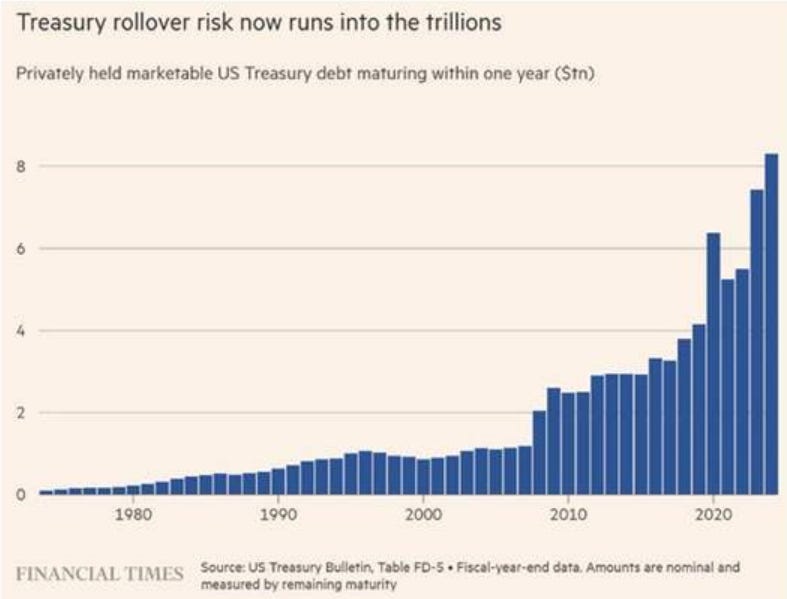
I sometimes think of this chart:
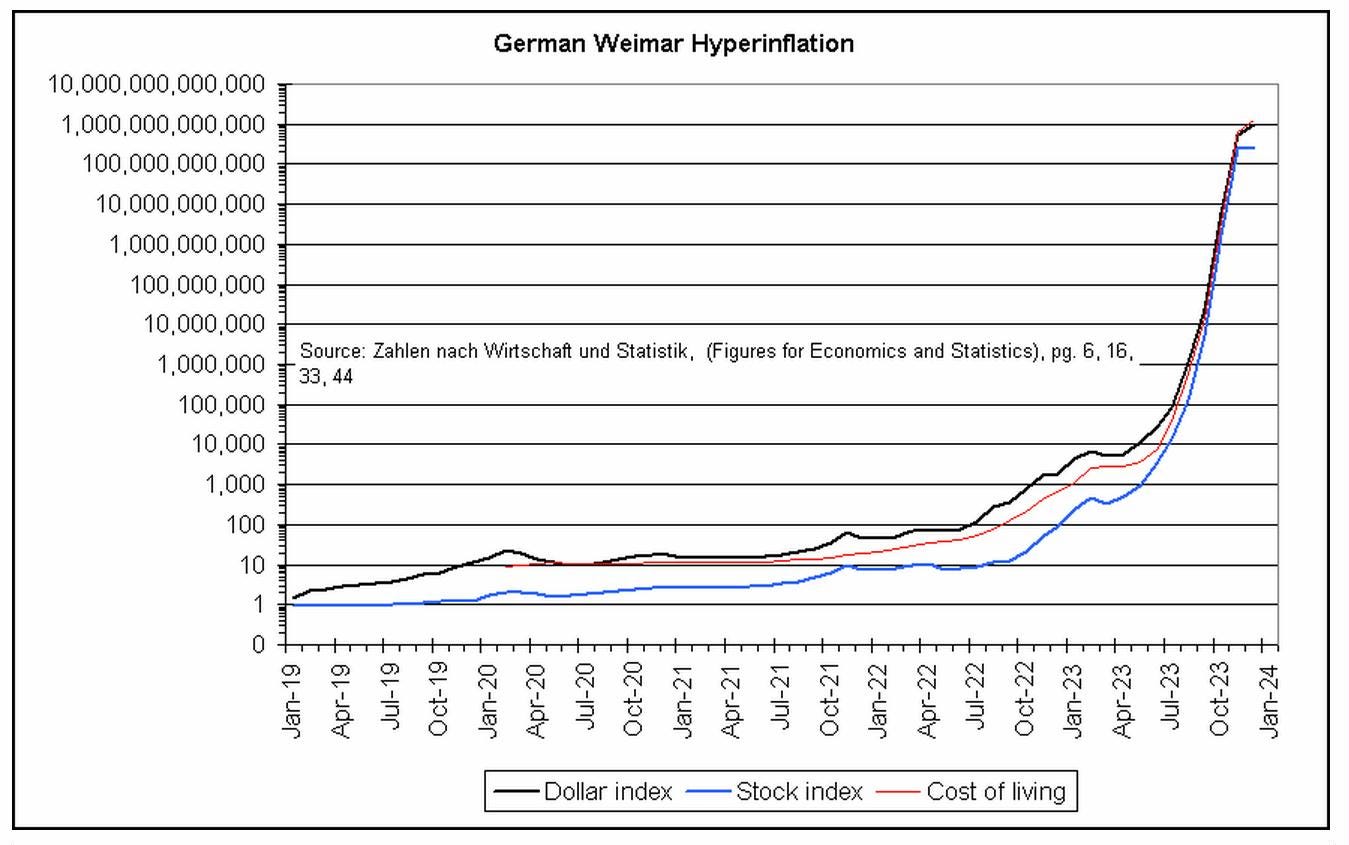
And this passage from the book, “Dying of Money”:
“Investors were extremely slow to grasp that stocks were poles apart from fixed obligations like bonds, quite wrongly thinking that if bonds were worthless stocks must be too. Nearer the end in 1923, relative prices of stocks skyrocketed again as investors returned to them for their underlying real value. Stocks in general were no very effective hedge against inflation at any given moment while inflation continued; but when it was all over, stocks of sound businesses turned out to have kept all but their peak boom values notably well. Stocks of inflation-born businesses, of course, were as worthless as bonds were.”
The only bonds I own are I-bonds from around 25-years ago, paying 6% tax-deferred and California tax-free (they stop paying interest after 30 years.)
Even though I’d rather own stocks than bonds - I wouldn’t buy bonds with your money if you paid me - I still think the stock market is insane, price-insensitive (i.e., passive) investing is insane, and our government and central bankers are insane. Then again, I don’t have an econ PhD, so I’m not sure what the wrong answer is.
This is why I tend to just show pictures of things, and play music, and make dumb jokes, and quote people I (generally) agree with. I don’t know what’s going to happen. I’m a cheerful skeptic (but it ain’t looking good.)
That said, I’m always early (i.e. wrong,) and the single-best thing that can ever happen to one of your stock holdings is if I say I think it’s overpriced!

But, as Jim Grant says, "Successful investing is about having people agree with you...later."

Lindsey Graham: What a legacy!
Men of Principle:
Seeing all the news about Justin Trudeau and Katy Perry, I'm reminded of Liberace's sexiest girlfriend...

“Humor tells you where the trouble is.”
Louise Bernikow, Alone in America
Green Shoots!
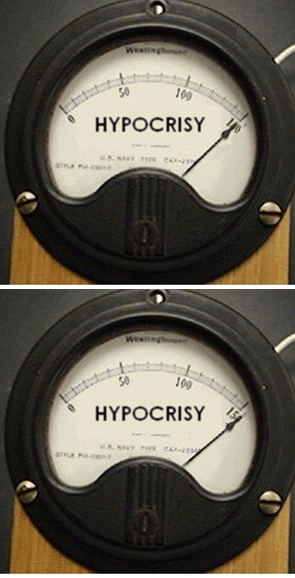
I think this 2021 G20 Rome summit photo epitomizes the hypocrisy and capriciousness of global leadership during the authoritarian Covid insanity.
All of the "leaders" are unmasked, all of the "first-responders" are masked.
Never forget.

“Gold is just a 0% yielding bond of infinite duration, finite issuance, and infinite face value. Why would you own a 10-year Treasury which is, you know, 4.6% yielding, infinite supply, finite face value, finite yield?”

“No change”

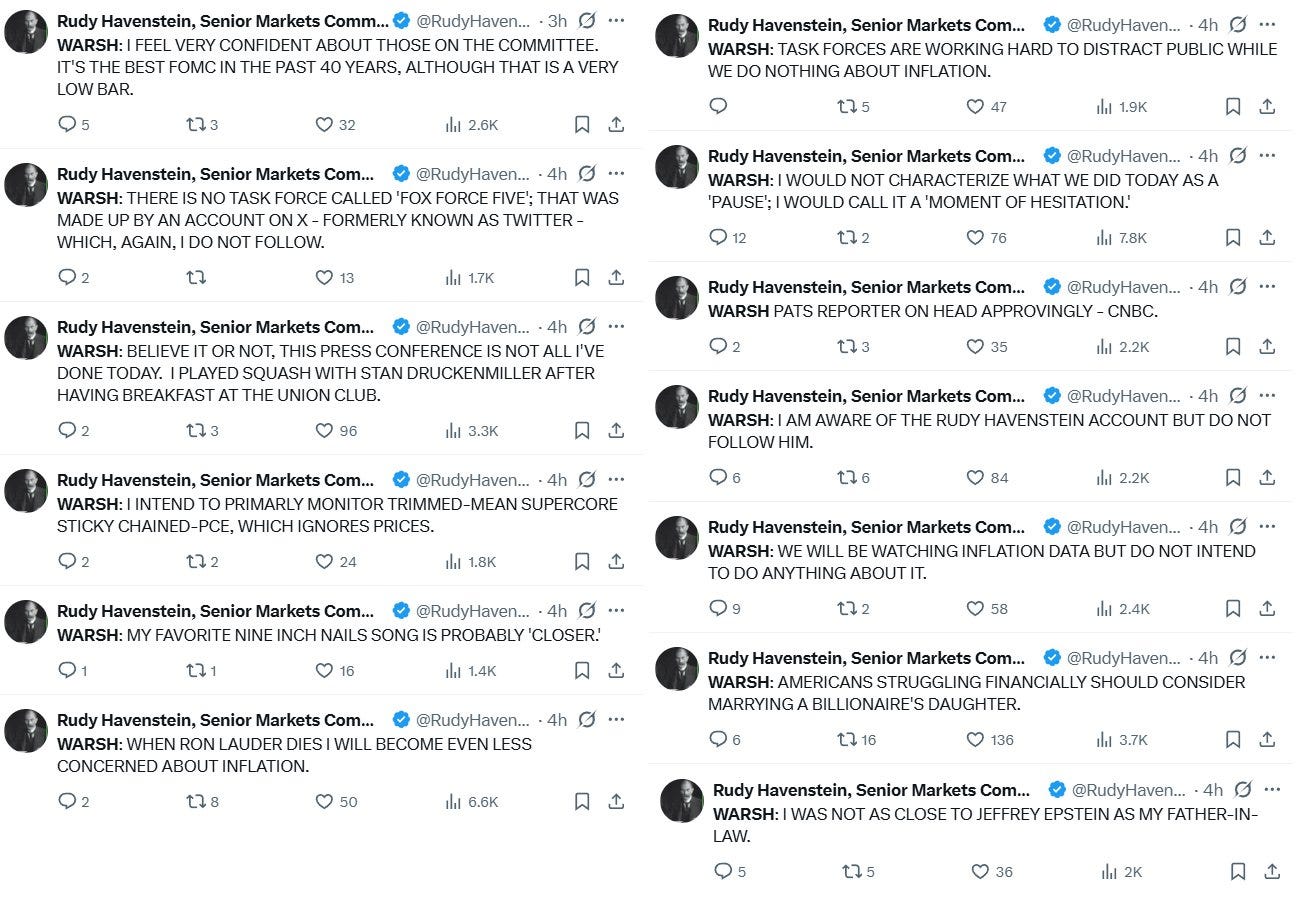

"The Fed cannot take its eye off the ball, because the Fed is the ball, and the ball is the Fed."
Steve Liesman, July 30, 2026
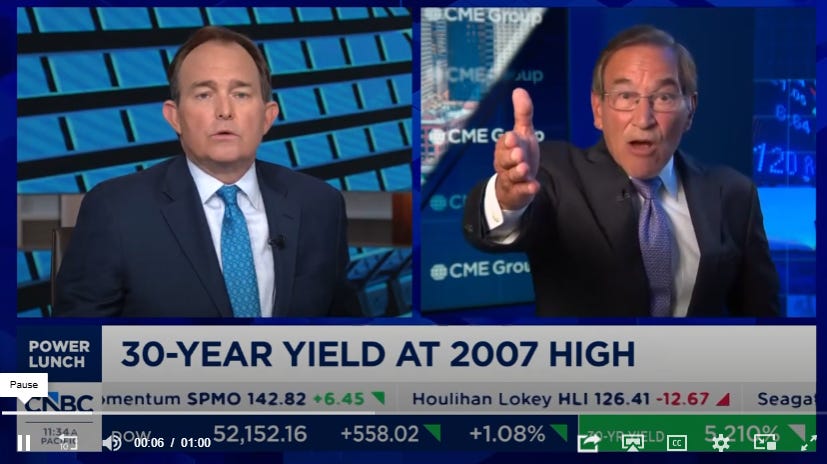
Rick Santelli has a nice rant on Thursday:
Sullivan: Rick, I do wonder, does all of this go to this idea, this general sort of thought that the Federal Reserve is going to come to the rescue, like they’re going to solve all of our problems because they’re going to raise or lower rates and fix everything. The house was on fire. It was set on fire in large part by supply side disruptions, COVID, and then trillions of stimulus, another trillion dollars plus stimulus package in 2021, when we were coming out of COVID, when most of the U.S. economy was running full steam, surprise and sort of weird rate cuts in the fall of 2024. And now we’re looking for Kevin Warsh and the Fed to kind of put the fire out. It’s like they’re running up with buckets of water. I don’t—I just wonder if we’re overstating the Federal Reserve’s role.
Santelli: Why should 17 guys be the firemen? Why should 17 men be the firemen, men and women? You know who the firemen are? All the people that have capital, that trade every day and put the money at risk, and to see the risk parameters go higher in this time is a good thing, not a bad thing. And when I see a little extra volatility, that’s fine to me. The Fed’s smoothing things out isn’t necessarily a good thing. And maybe if we would have taken our medicine better in the credit crisis or the tech wreck, we wouldn’t have sidelined so many houses where nobody could sell their house because they can’t get a mortgage. But is it really about rates? You know what it’s about? It’s about the price of a house. By keeping rates too low for too long, all the money went into real estate because anybody and their brother could buy houses.
Sullivan: But the damage is done. I don’t know what they’re going to do is my point. Rick, I think you’re agreeing. What are they going to do?
Santelli: We’re going to keep the same flawed people in charge some more? Give them more power? The central bank was never meant to do this. They were never meant to do this. The monster from Jekyll Island is supposed to be a central bank. They’re supposed to nudge rates. They’re supposed to monitor crisis issues. They’re supposed to do things when the gears start to grind. The gears aren’t grinding right now. Everything is going pretty well, I think. Let the market do the heavy lifting. That’s what Warsh wants. And ultimately, when all the hissy fits end, because people like to be led, like to have things easy, then you’ll see how much better off in the long run we all are.
CNBC edited out this part on their website, but I found the clips on archive dot org.
“You have to go all the way back to 1998 to find a time when you were offered less to take investment-grade credit risk”
“Everyone loves credit. We know this must be true because credit spreads — the extra yield you get paid for abandoning US Treasuries and hanging out in the less liquid and more default-prone world of corporate credit — are extremely skinny. In fact, you have to go all the way back to 1998 to find a time when you were offered less to take investment-grade credit risk.”
"A lot of my great friends, they manage money in the bond world. And we always say the bond guys are the smartest guys in the room. It turns out it's not true at all. They just happen to be investing in a period where interest rates are going down."
Keith Dicker, 2018 on RealVision
Lacy Hunt
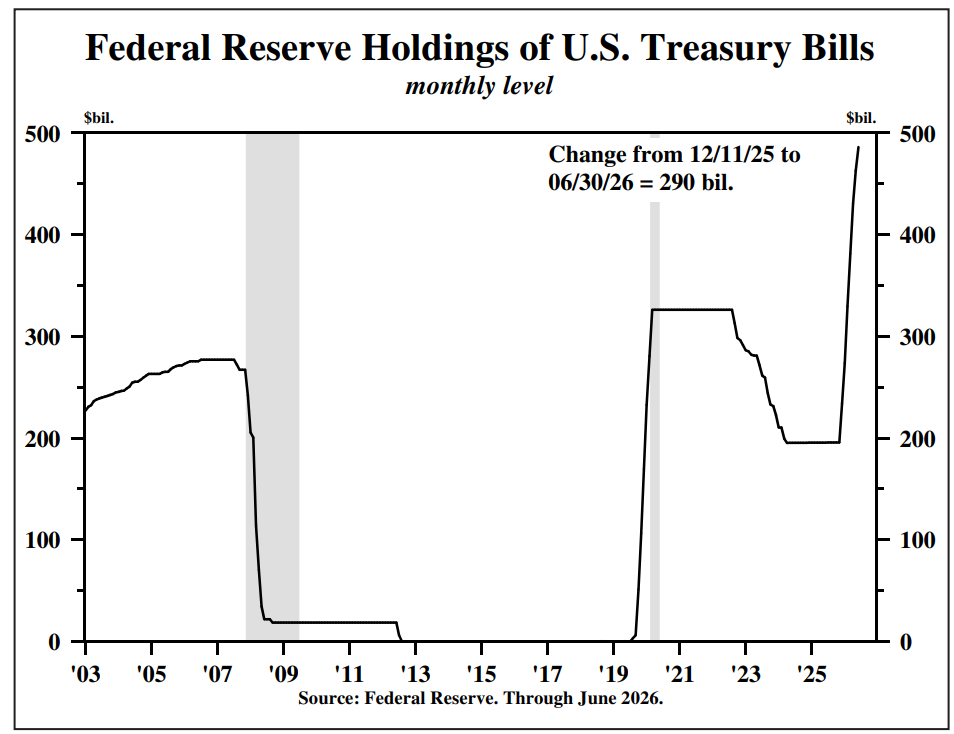
“This is a very important graph that you put up, and since mid-December we’ve actually had a case of quantitative easing. It’s a stealth easing. The Fed said it was a plumbing operation. The Fed the banks needed reserves. They were in a too tight reserve position. If that were the case, after this bill buying, then the the bill purchase liquidity would have gone into idle balances. but instead it resulted in a dramatic surge in in bank deposits and bank credit. And that’s in my opinion one of the reasons why the inflation rate started accelerating even before the first shots were fired in the Middle East.”
“And the proof of the pudding is is really what happened to bank deposits and also to ODL. If you can put that chart up:”
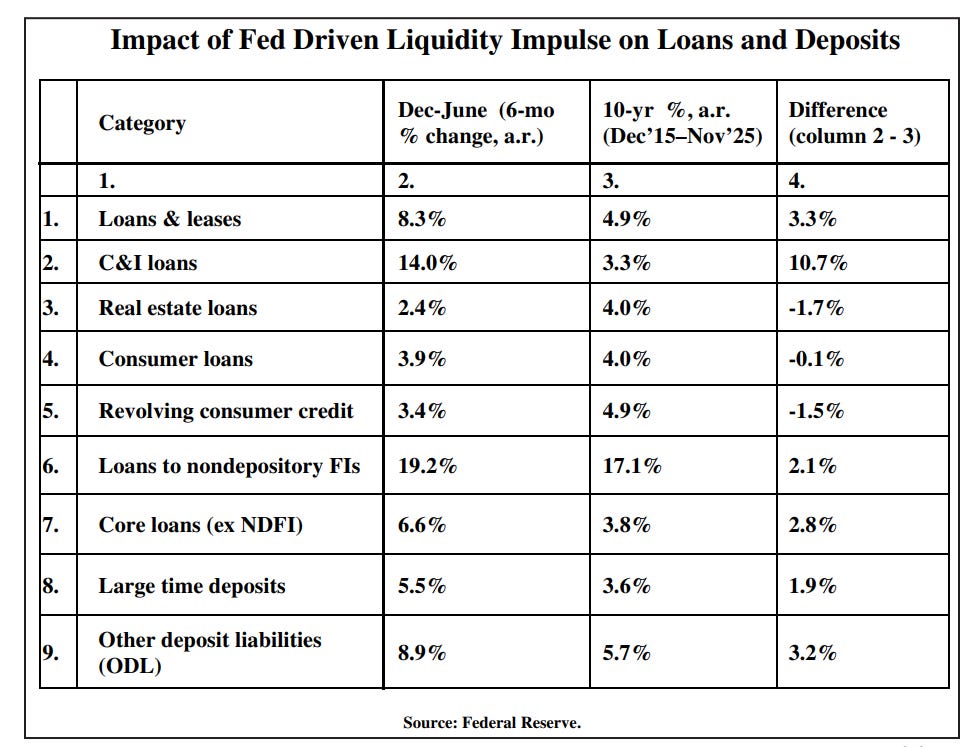
“So let’s let’s look at, for example, total loans and leases, line number one. Since June an 8.3% annual rate. I compared all of these to the 10-year rate of growth, and I took the 10-year because I wanted to include all of the pandemic surge in bank credit and money. So, you know, that’s 330 basis points more than the 10-year average. Look at look at CNI loans since mid December, 14% versus three and a fraction.
And we come on down to ODL, which is 80% of M2, I believe, the best measure of money, right? And we’ve had an 8.9% rate of growth, which is 1.6 six times the 10-year rate of growth. That’s too fast. When the liquidity started coming in from the Fed, if there were a reserve insufficiency, they would have built up idle balances. The fact that they went out and expanded the bank balance sheet so rapidly was a sign that they didn’t have idle balances, they were being constrained by the Fed, and all of the flush liquidity was then immediately put to use in in an explosion in the bank balance sheet, and I think that’s a problem, and I don’t believe that it’s going to reverse itself without the Fed taking action, which is which means that if the Fed doesn’t have the resolve, then the action taken by the outgoing Fed administration will greatly exacerbate the inflationary problem…”
“I would say the first order of priority is to end the T-bill purchases, and they can’t be ended overnight. you have to wind them down, but that still leaves you with a $6.7 trillion balance sheet that has led to a serious misallocation of resources, and had this deleterious effect on American economic growth - shifted growth away from from real investment to financial investment.”
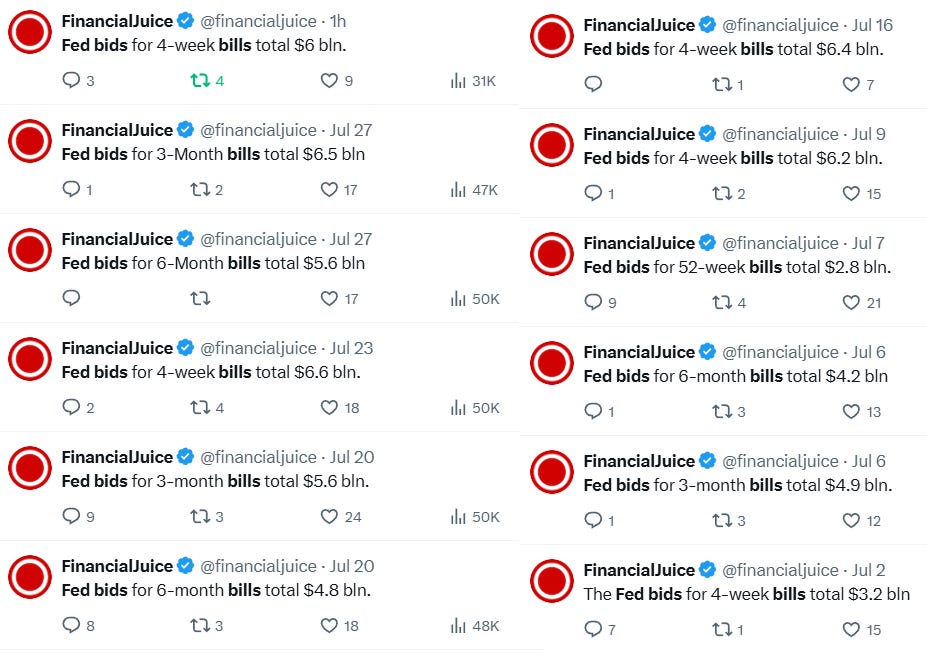
Just for July (excludes notes and bonds):
“ODL rose at a torrid 8.9% annualized rate in this year’s first six months (Table 1)—more than 1.6 times faster than its ten-year compounded growth rate.”
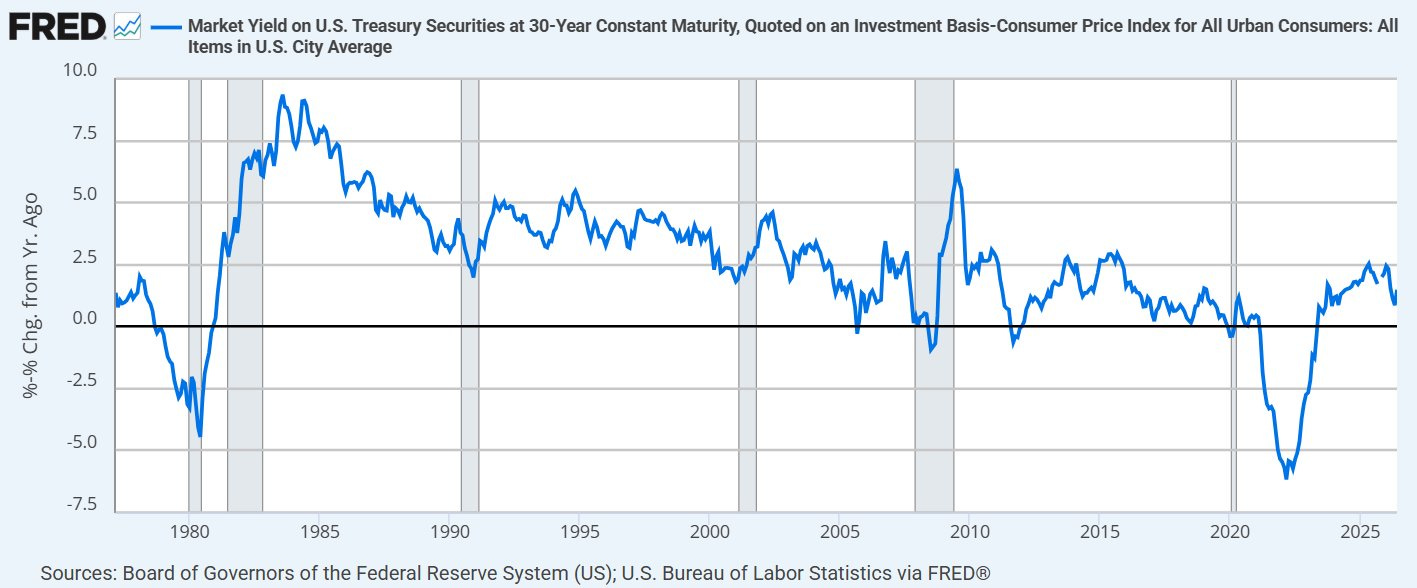
Considering they've monkeyed with CPI dramatically since the 1980's, we probably now have deeply negative real 30-year rates, but this chart shows just what actual bond vigilantism looks like: a much higher real rate.
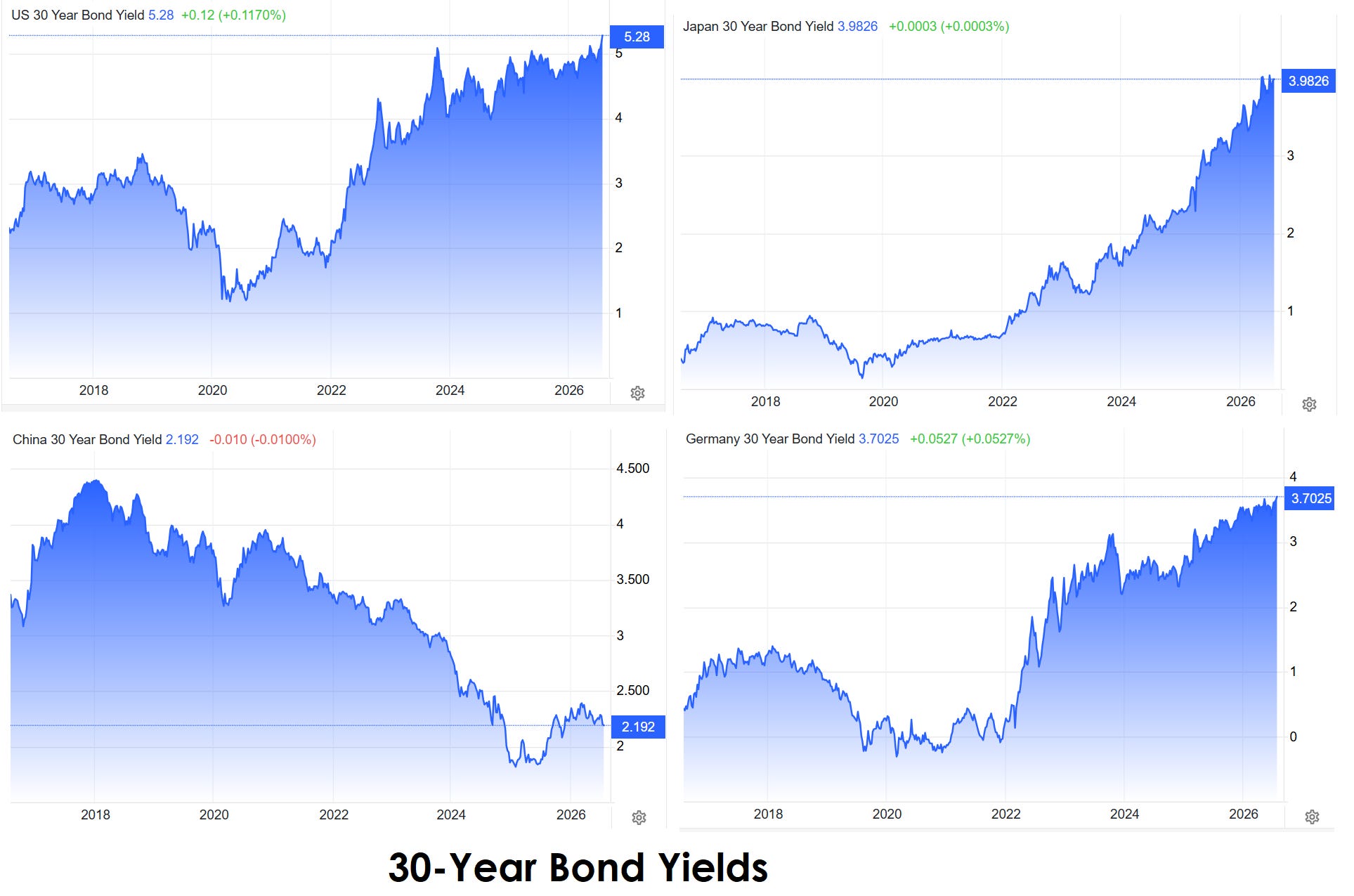
“What's the fattest of all fat tails? Government bonds."
David Dredge

Via Grant’s:
According to a new analysis from Apollo economists Sania Edlich and Torsten Slok surveying 321 fields of employment, occupations with the highest exposure to AI have experienced a 6.7% decline in real wages since 2023, shortly after OpenAI’s ChatGPT began to make waves.
Lower income employees bear the brunt of that burden, with the bottom quartile absorbing a 10.7% drop in inflation-adjusted compensation.
Bank Reserve Requirements
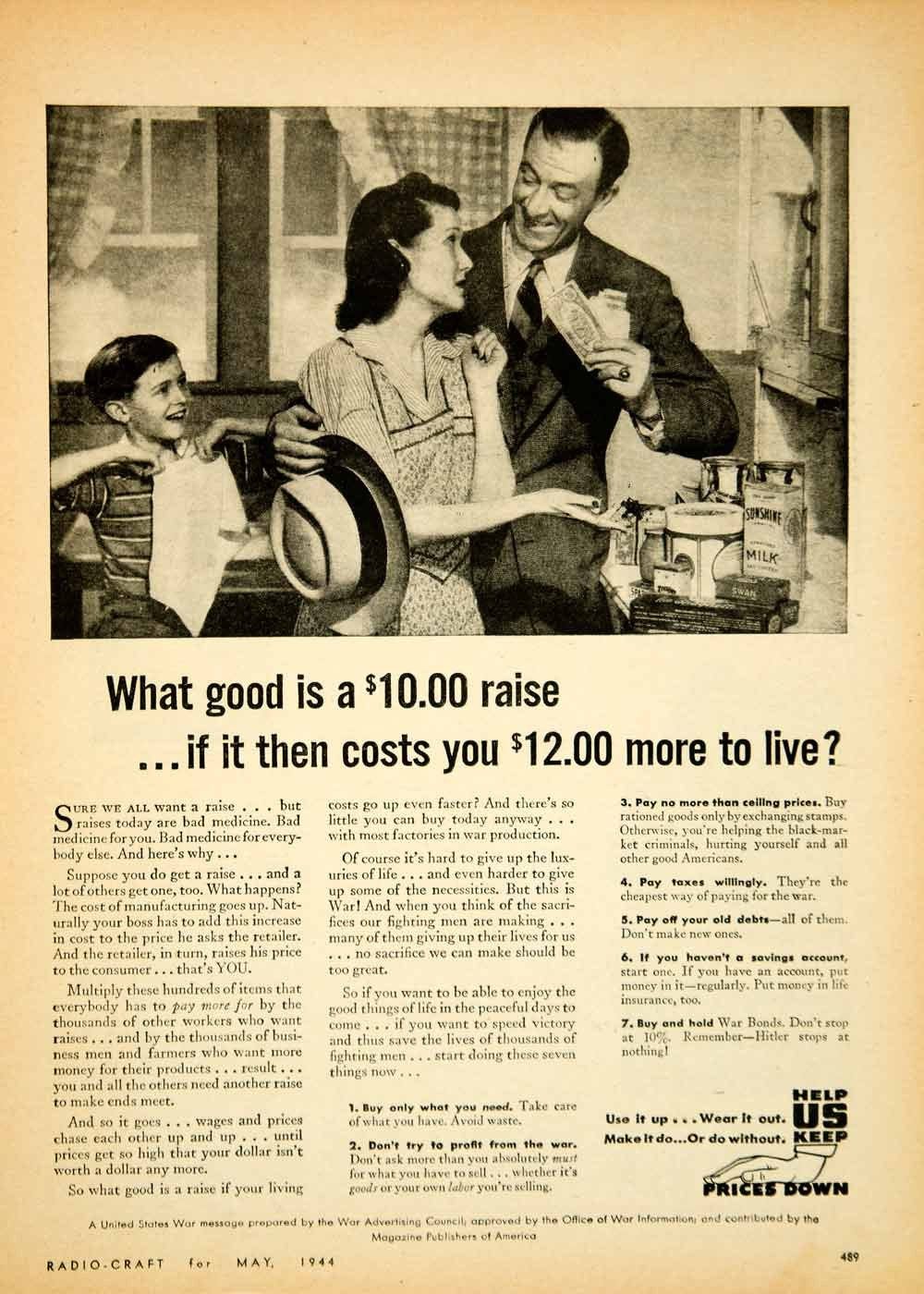
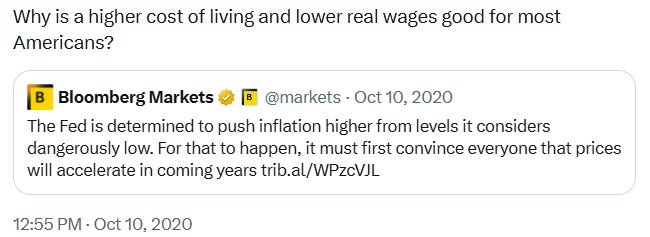
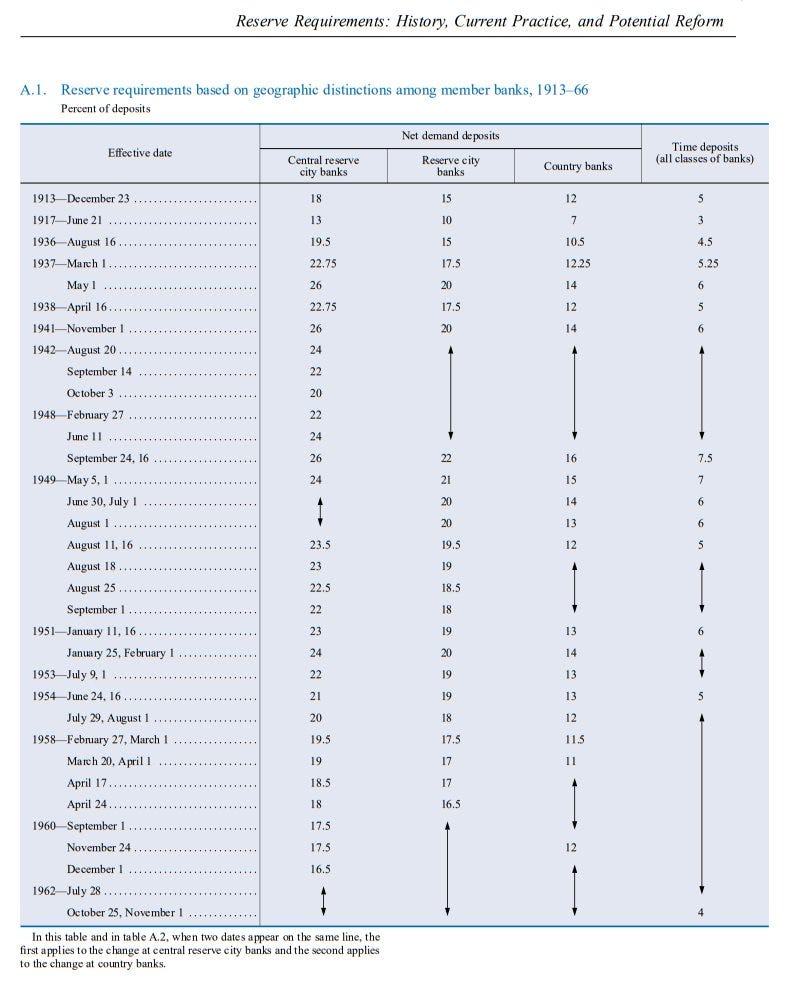
So the rising cost of living accelerated dramatically post-2020, which coincidentally is when the Fed dropped reserve requirements to zero, whereas they historically ranged from 3% to 14% or so.
The Fed used to adjust bank reserve requirements to fight inflation. No more.
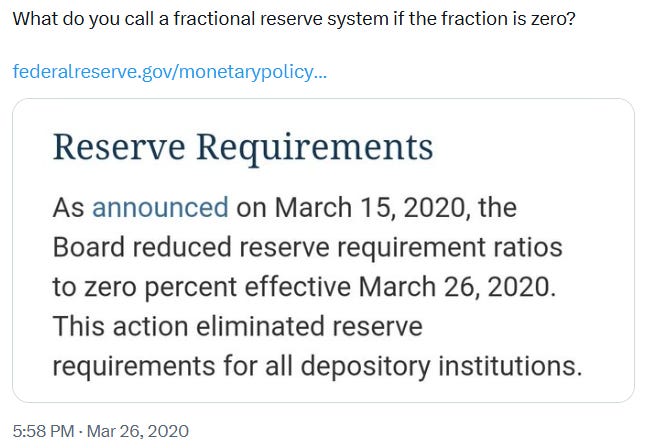
Here are reserve requirements from 1913-1966, before our central bank started to lose its mind:
"I'm 30-years old. Not one of my friends has children...
Dating app algorithms...don't optimize for you to meet the love of your life. They optimize to make you keep coming back to the app."
Connor Leahy
I think the massive increase in the cost of living over the years also is a huge factor in the dearth of kids now.
Nick Nemeth: Mark Walter's insurance company owns a piece of Mark Walter's Dodgers, and files it on its books as a loan to a stranger.
“Every life insurer files an annual statement, four or five hundred pages sworn by its officers, and buried in it is a single line, General Interrogatory 13.2, that totals the company’s investments in its own parent, subsidiaries and affiliates. In the statement Delaware Life certified at the end of February, that line came to about $1.4 billion or three percent of the portfolio. That rounding error was co-signed by KPMG.
The subpoenas, according to the companies’ own subsequent filings, concerned “whether certain private credit investments introduced to the Company and CSLAC by an affiliate should have been treated as affiliated or related-party transactions.” Delaware Life ran an internal review and in its next quarterly statement, under the heading Accounting Changes and Corrections of Errors, it delivered the result in the flat language these documents are written in: “errors were identified.”
The restated figure was not $1.4 billion. It was $16.4 billion of private credit whose returns are, in the filing’s phrase, “predominantly contingent on the performance of affiliates,” a bar the company’s auditor defines as greater than fifty percent. Counted the way the interrogatory asks, the related-party total went to $18.25 billion…
Three percent affiliated was the answer for as long as the question came from a ratings agency. Thirty-nine percent was the answer the first time it came from a grand jury, and despite that, the auditors and the executives, again, signed a clean bill of health…
The customer at the end of all this is an annuity holder, a retiree somewhere near the Indiana suburbs where Group 1001 keeps its offices, who bought a Delaware Life contract because the brochure said it was safe. She has no way of knowing that close to forty cents of every dollar in it is a bet on the performance of companies her insurer’s owner controls, or that the highest-graded paper in the pile is the television rights to a baseball team on the other side of the country. She, of course, was not told.
Podcast with Nick Nemeth and Rod Dubitsky. A good history lesson for the kids.
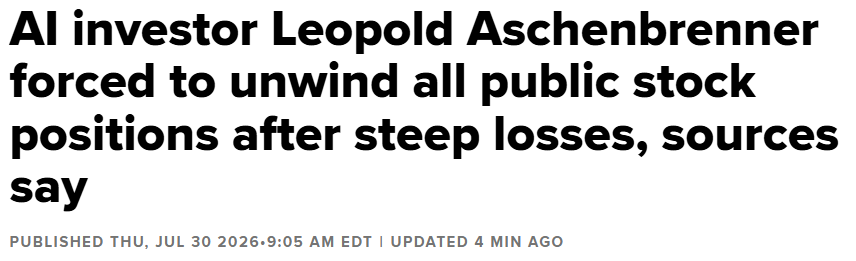
I love that his hedge fund was called “Situational Awareness.” The manager is 25 years-old, and the fund apparently went from $3 billion to $45 billion on one month, before the unpleasantness.
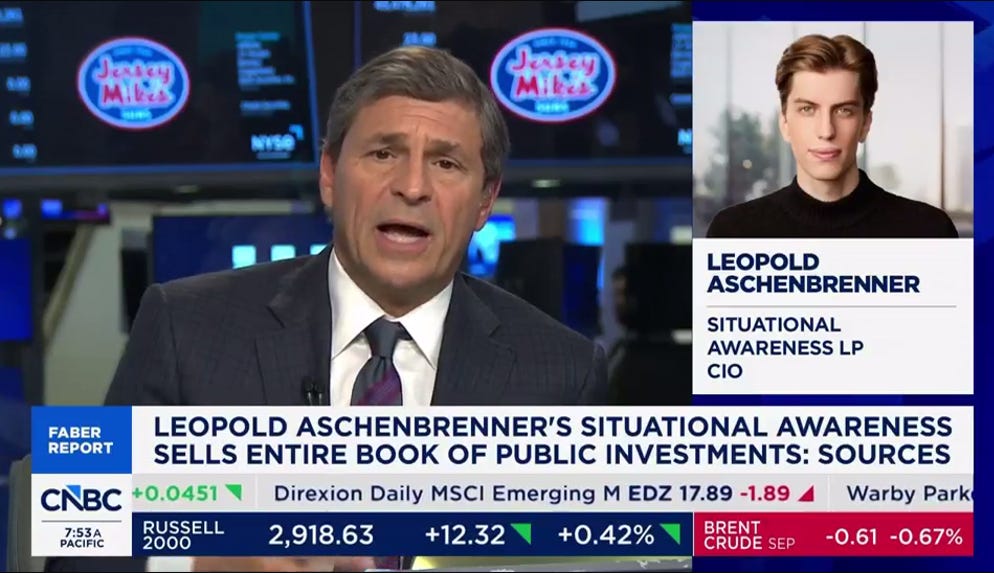
I’m reminded of Rick Rule’s great quip, “I learned that my assets were ephemeral, while my debts were money-good.”
“Right now, there are perhaps a few hundred people, most of them in San Francisco and the AI labs, that have situational awareness. Through whatever peculiar forces of fate, I have found myself amongst them.”
Leopold Aschenbrenner, June 2024
“At 4x leverage, being right late is just bankruptcy with better vocabulary”
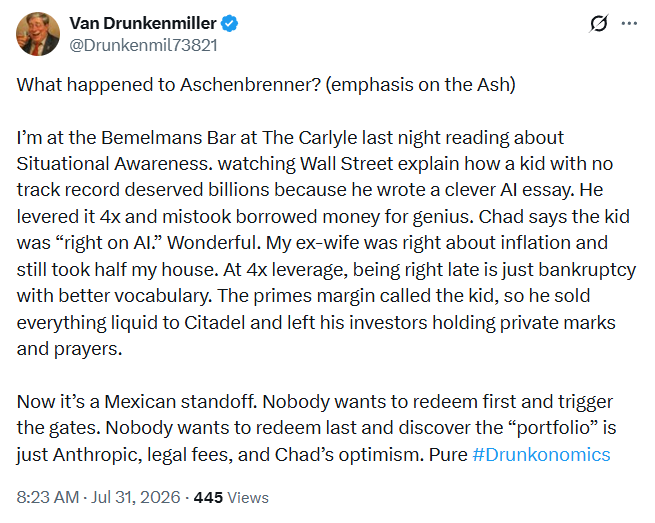
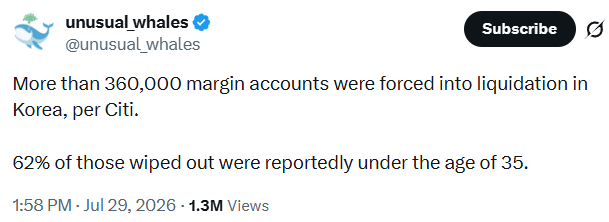
We used to call this "losing money," which the Fed put a stop to some time back, at least for billionaires.

“Worst month since 1987”!!
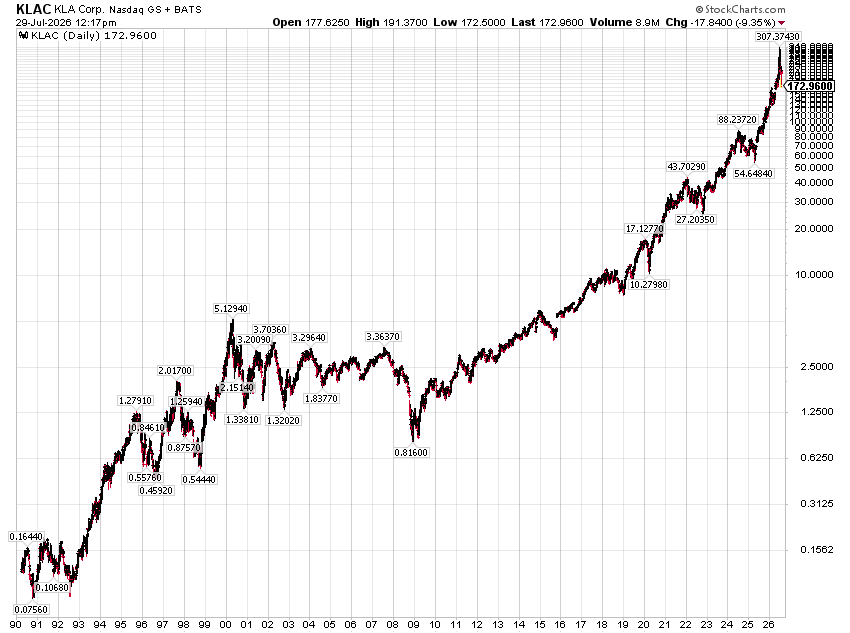
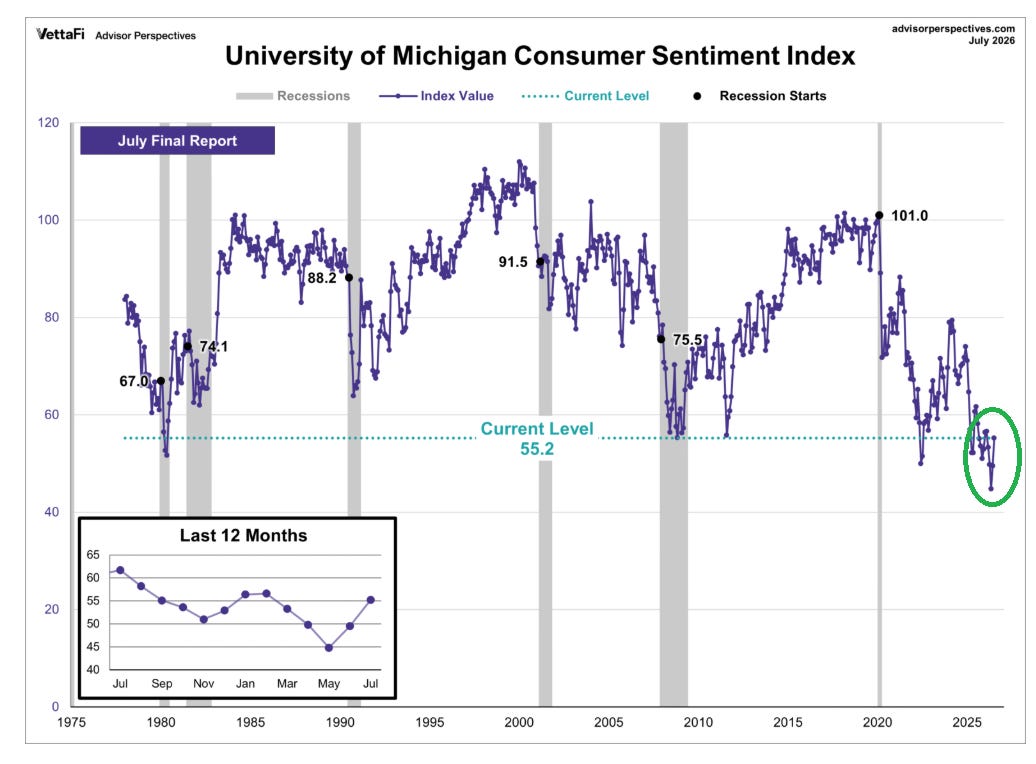
This chart has been floating around lately:
“I still really like US electrical infrastructure equities. we're seeing very clearly the bottlenecks around power, and the Chinese are able to sort of brute force a lot of stuff because they've spent the last 20 years subsidizing power generation, when we've been subsidizing $8 trillion in wars in Iraq and Afghanistan that did nothing.”
Conned by a Chatbot
“The route-finding algorithm on Google Maps is a minor miracle. It will solve a complex optimisation problem across multiple modes of transport, taking into account real-time congestion or delays, and it’s been available on smartphones and browsers for years. It is a proven, practical example of AI in action. So on marathon day, when the stakes are high and the clock is ticking, why would anyone turn instead to a fancy word-guessing machine such as ChatGPT?”

Homeownership
“The homeownership rate in the United States is reported to be 65 percent. But this commonly cited data point on homeownership is actually the owner-occupancy rate, which tells us how many housing units are occupied by an owner. While owner occupancy is an interesting measure, it doesn’t tell us how many people own their home. As an alternative to better reflect the share of adults who are homeowners, we offer the homeowners-to-population ratio, or HPOP, a measure that lends a more nuanced view for important policy considerations and context. Using this new measure, the U.S. homeownership rate is 53 percent.”
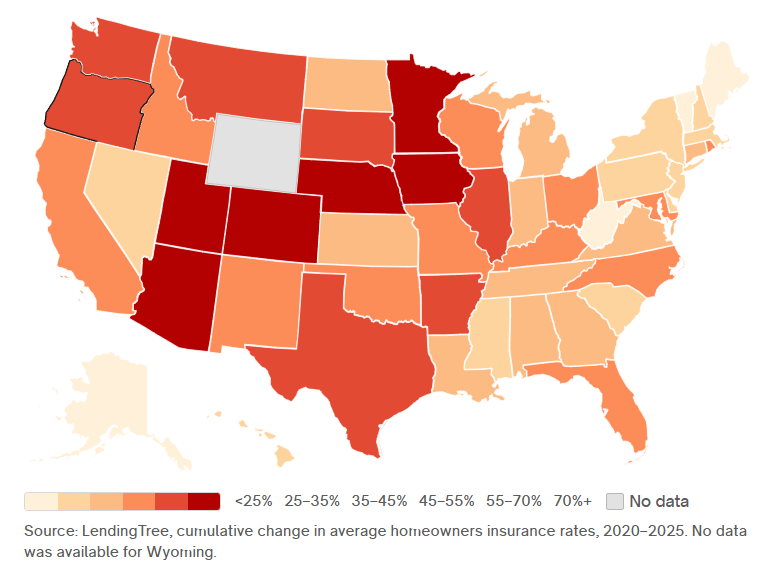
Home Insurance Rate Increases by State, 2020–2025
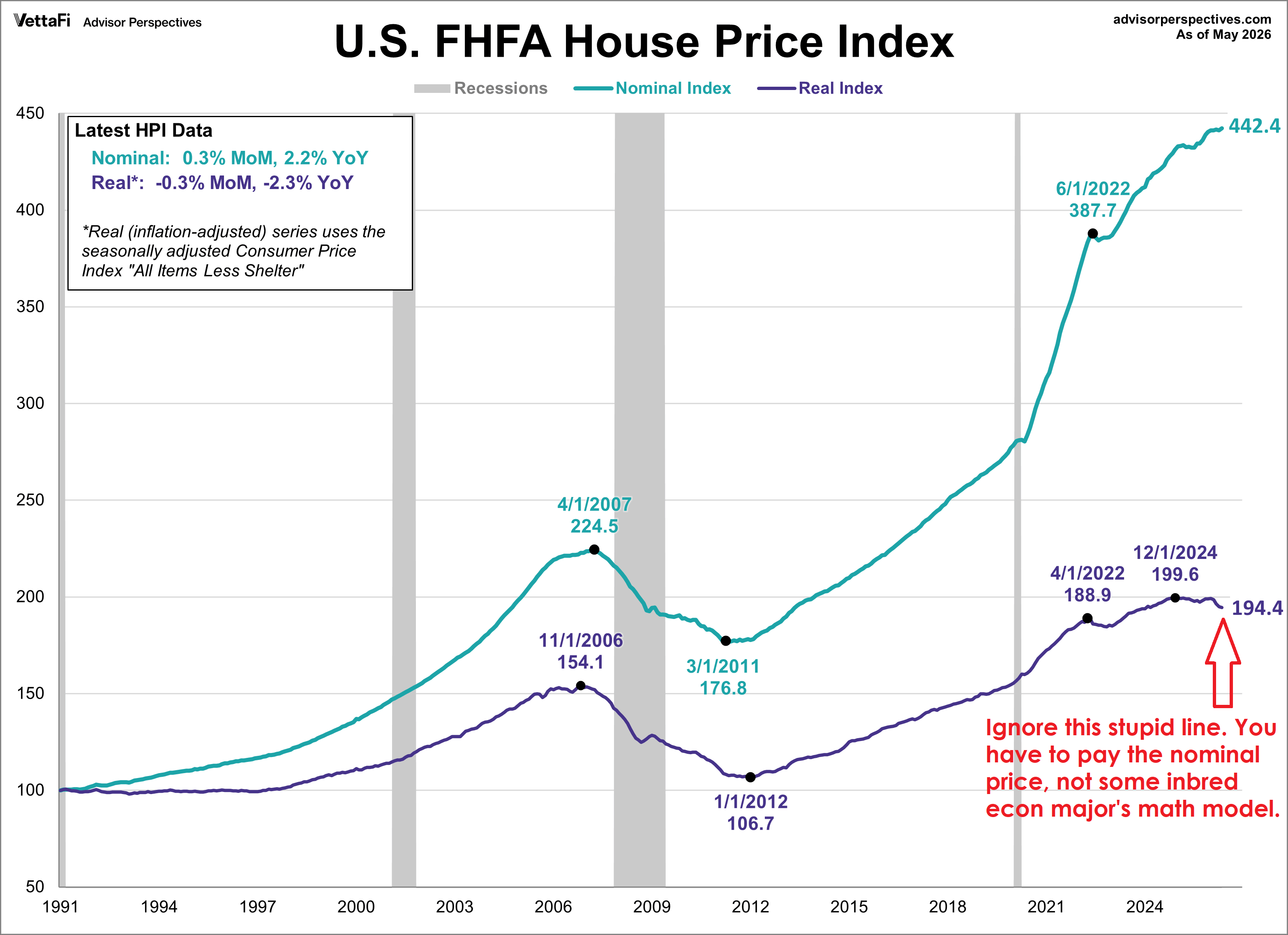
Sorry kids! FHFA House Price Index Rises to Record High
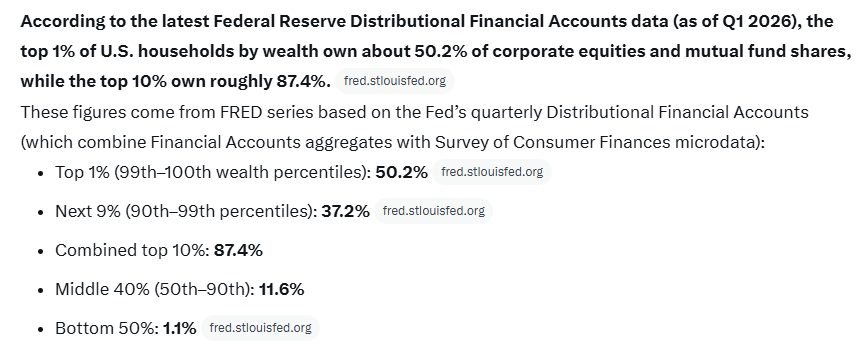
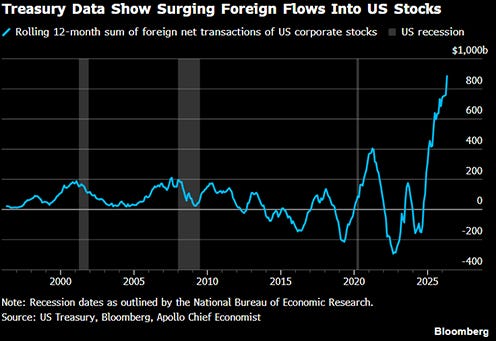
Equities surpass real estate as top US wealth driver for first time since WW2, Goldman says
Equity allocations among U.S. and Australasian households are approaching 50% of financial assets, surpassing the levels seen during the dot-com era, Goldman noted.
Households in the U.S., Australia and Sweden have the highest exposure to equities, while those in Europe and Japan remain comparatively under-invested in stocks and hold a larger share of their wealth in cash, the bank said.
Strong stock-market gains since the global financial crisis, particularly over the past three to four years, have increased equities’ share of global financial assets and investor portfolios, with technology stocks accounting for a growing portion of those holdings, Goldman said.
Regulatory changes in Europe, including reforms affecting Dutch and German pension systems, could encourage pension funds and insurance companies to increase their allocations to equities over time, the bank said.
Goldman also warned that higher exposure to equities leaves households more vulnerable to a sharp market correction, particularly when valuations are elevated and macroeconomic uncertainty is running high.
What exactly are we bombing now?
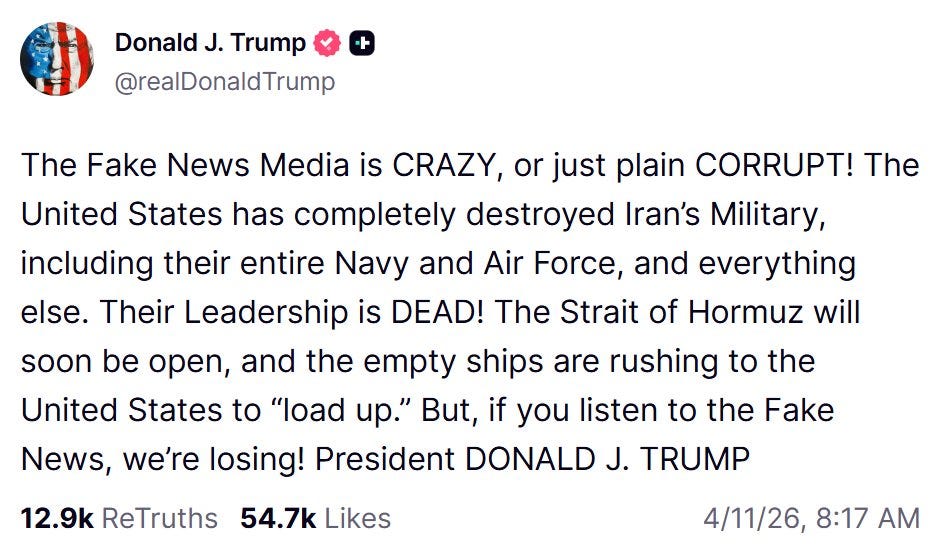
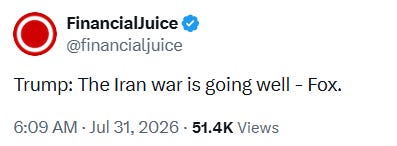

Who never doubted never half believed ;
Where doubt, there truth is ; 'tis her shadow,
- Philip James Bailey, 𝘍𝘦𝘴𝘵𝘶𝘴

Thomas Gober: Is Your Life Insurer Solvent?
“Whenever we’ve had an opportunity to peer into these black boxes—when an insurer posts them by accident or when an insolvent life insurer’s books are examined--the liabilities are found to be dramatically underfunded. One insurer went so far as to fund only 5% of its liabilities with real assets. Perhaps that’s why state regulators and the industry are so secretive. They don’t want us to know how big the hole is or how overvalued certain “assets” are compared to the true cash value.
When a large private credit firm takes your money for an annuity or surplus note, then hides it offshore and says, “Trust me it’s fine,” chances are it’s anything but fine.”
"The true con artist doesn’t force us to do anything; he makes us complicit in our own undoing. He doesn’t steal. We give. He doesn’t have to threaten us. We supply the story ourselves. We believe because we want to, not because anyone made us. And so we offer up whatever they want—money, reputation, trust, fame, legitimacy, support—and we don’t realize what is happening until it is too late.”
Maria Konnikova, The Confidence Game
David Morehouse with James Delingpole
I have concerns about all this, but I found it to be an interesting interview. The first half on remote viewing is kind of boring, although our government doesn’t seem to think so.
On remote viewing: “…all thought, all energy, all understanding, all written word, all spoken word, all things that are created, manufactured, made nature, all, all sentient beings, all single cell organisms, everything exists in waveform and travels by every possible path.”
Morehouse: I think probably the bigger thing that I am always telling people to get a grip on is this UFO/UAP stuff. I don’t care what President of the United States tells you - that he’s going to release all the UFO files - you just don’t get it. It’s like you don’t understand that these special access programs have absolutely no requirement. They consider the President of the United States to be a transient occupant.
Delingpole: Which he is, to be fair.
Morehouse: Exactly. And so the fact that somebody comes forward from that office and says, ‘I demand that you release all of these files,’ they’re going to release the exact same files that they’ve always released. And that’s precisely what they’ve done. They’re not going to release anything because he asked for it. They won’t. They’ll be happy to show up and give him a briefing, and then he could turn around and say, ‘that’s bullshit. I want the real stuff.’ And they’ll say, ‘yes, Mr. President,’ and they’ll go home and they’ll go back and they’ll repackage the exact same message differently, and they’ll come back again and they’ll deliver the exact same briefing. And after he’s done that twice, he’ll just say, they’re not going to tell me, are they? And his advisors are going to say ‘Nope, they aren’t. They will not tell you.’

UFO’s or Secret tech?
Delingpole: I mean, we know that that this anti-gravitational power that the UFOs have, it’s been around, hasn’t it, for quite some time. We just, we just don’t get to see it in in at air shows.
Morehouse: I don’t disagree with that. You know, being a scientist and a historian for the military, you know that there’s a lot of what’s going on that you’re seeing, and the reason nobody’s ever going to tell you about it is because, and most people don’t know this, but in December of 1945, the United States, the chairman of the Joint Chiefs of Staff, who at the time was a was a four-star general who had been AUS Army aviator in in World War 2 and probably prior to that. But in ‘45, he, along with a physicist out of the Pentagon went to the President and to other leadership and said that the next dimension of war is going to be in space. And what essentially happened in the historical findings and documents are that the United States declared a space war in December of 1945 and money was granted by Congress for them to start building a program…
It was a space race when Kennedy went before Congress and gave a presentation before Congress and said this is a subject of national crisis and concern in his opening statements. He secured at the time something like $9 billion, which in the ‘60s was a lot of money. And out of the $9 billion, seven billion went to the space war, and the remainder went to the space race. So it was a huge chunk that went off to, which at this time, now we had the Air Force and the Air Force managed this program and they were by 1966 we had lifting body aircraft. They were being tested in a lifting-body aircraft, which means that if you were a standard pilot and you were looking at this aircraft in flight, you would say it doesn’t have flight control surfaces like anything else. It doesn’t have wings. I can’t make out the propulsion package on it. It was lifting body.
So it was using, you know, various means of propulsion. They were dispersing, you know, dispersing the exhaust gases. They were doing all kinds of things with it. But if you saw it in flight, you would think that’s a UFO.
Col. John B. Alexander
At 89-years old, he’s been focused on “high strangeness” most of his life. I’ve mentioned Alexander before here, here and here.
“I think the entire approach [to UAP’s] is wrong now. And yes, the government does have data, but I don’t think this fits very well with governments per se. I think that a better model for how to approach would be consider the human genome, where you had multiple countries, and the major thing is sharing data. I would also compare it to cancer because it’s ubiquitous. It is many different forms. It morphs. It changes and all that. The government has a role to play in this, but it is not the role”
“Don’t disregard things just because you don’t understand it.”
Host: “I know you know Chris Bledsoe very well. When he was here, I asked him can anyone learn to summon orbs? He said ‘yes’, but you shouldn't.”
“I come down against the ETH or extraterrestrial hypothesis, not because they aren’t there, but that’s just too simple. Unless Earth is on the galactic bucket list of places that have to be visited or something like that, there’s pieces of that that don’t make sense.”

Former CIA Agent Jim Erdman. A disturbing interview.
Another disturbing one: Annie Jacobsen, author of Biological War: A Scenario, Nuclear War: A Scenario.
“A U.S. government map of Africa mislabeled every country during a State Department presentation at a global conference taking place in Brazil this week, causing a stir among attendees who took screenshots and posted them online…”

Tanganyika Laughter Epidemic, January 30, 1962
The patients zero were three teenage girls attending a strict missionary school, where they started to laugh inappropriately. Their laughter persisted long past the point of enjoyment or pleasure, enduring for hours, infecting their classmates, and mutating into other painful symptoms such as hyperventilation, nausea, choking, kicking, and vomiting.
By March 18, the laughing attacks had seized ninety-five of the 159 girls in the Kashasha school, with symptoms lasting for seven days on average (and for up to sixteen days), eventually forcing the school’s temporary closure. The outbreak recurred in waves, spreading further throughout the region, and shuttering nearby institutions such as Ramashenye girls’ middle school, where forty-eight of 154 pupils were vexed in a similar manner in June 1962. The epidemic did not subside until June 1964, after causing fourteen schools to close temporarily and “afflicting about 1,000 people in tribes bordering Lake Victoria in Tanganyika and Uganda.”
The dancing plague of 1518
In 1518 a large epidemic of continued dancing occurred in Strassburg. Eight days before the feast of Mary Magdalene a woman began to dance, and after this went on for some four to six days she was sent to the chapel of St. Vitus at Hohlenstein, near Zabern. Soon thereafter more dancers appeared and the number grew until more than a hundred danced at a time. Eventually the municipal council forbade all public gatherings and music, restricted the dancers to two guild halls, and then sent them off to the chapel of St. Vitus. According to one account, more than four hundred people were affected within four weeks. Various chroniclers point out that this was a period of ruined harvests, severe famine, general want, and widespread disease. This was also the time of the early Reformation and thus of religious unrest.

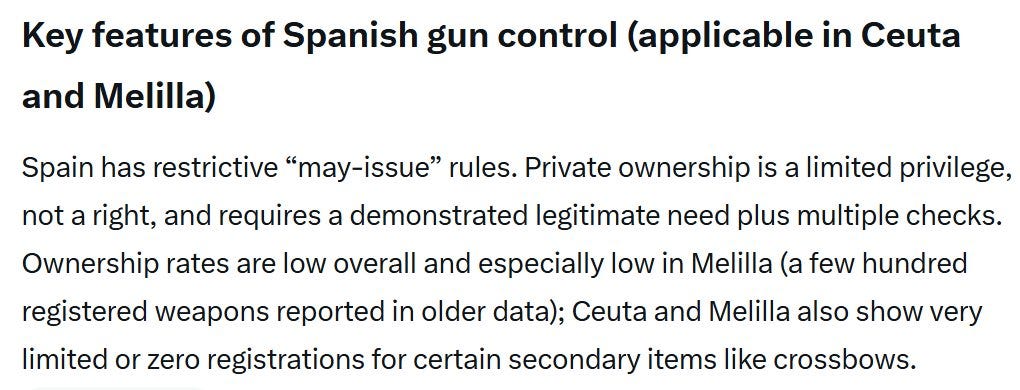
Apparently Spain's territories in North Africa have a population of around 170,000, so 50k 'migrants' arriving in a day would be like 100 million people swarming into the U.S., which is a lot.
It seemed logical to ask the LLM about Spanish gun laws: