
It's Deceptive, Right?
Let's light this candle!

“Yet is it far better to light the candle than to curse the darkness.”
- W.L. Watkinson, The Supreme Conquest (1907)

Your weekend beach reading. Something for everyone.
Godspeed, amigos.
“We know, of course, with regard to the market and similar social structures, a great many facts which we cannot measure and on which indeed we have only some very imprecise and general information. And because the effects of these facts in any particular instance cannot be confirmed by quantitative evidence, they are simply disregarded by those sworn to admit only what they regard as scientific evidence: they thereupon happily proceed on the fiction that the factors which they can measure are the only ones that are relevant.”
Friedrich von Hayek, The Pretence of Knowledge

Most Fed reporters are really Fed publicists:
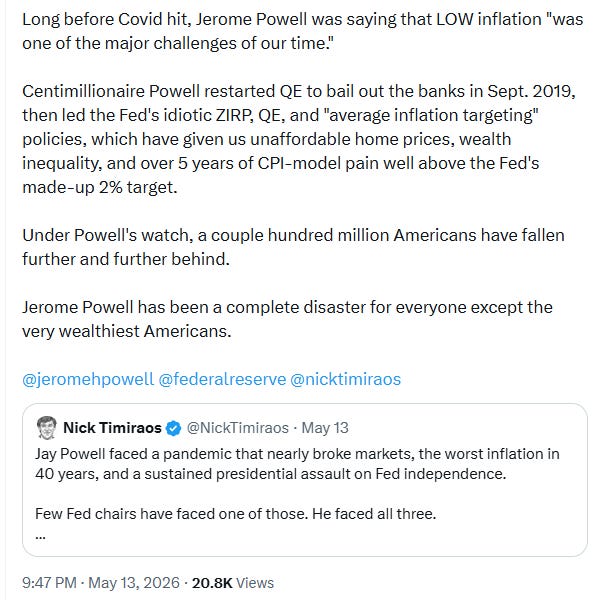
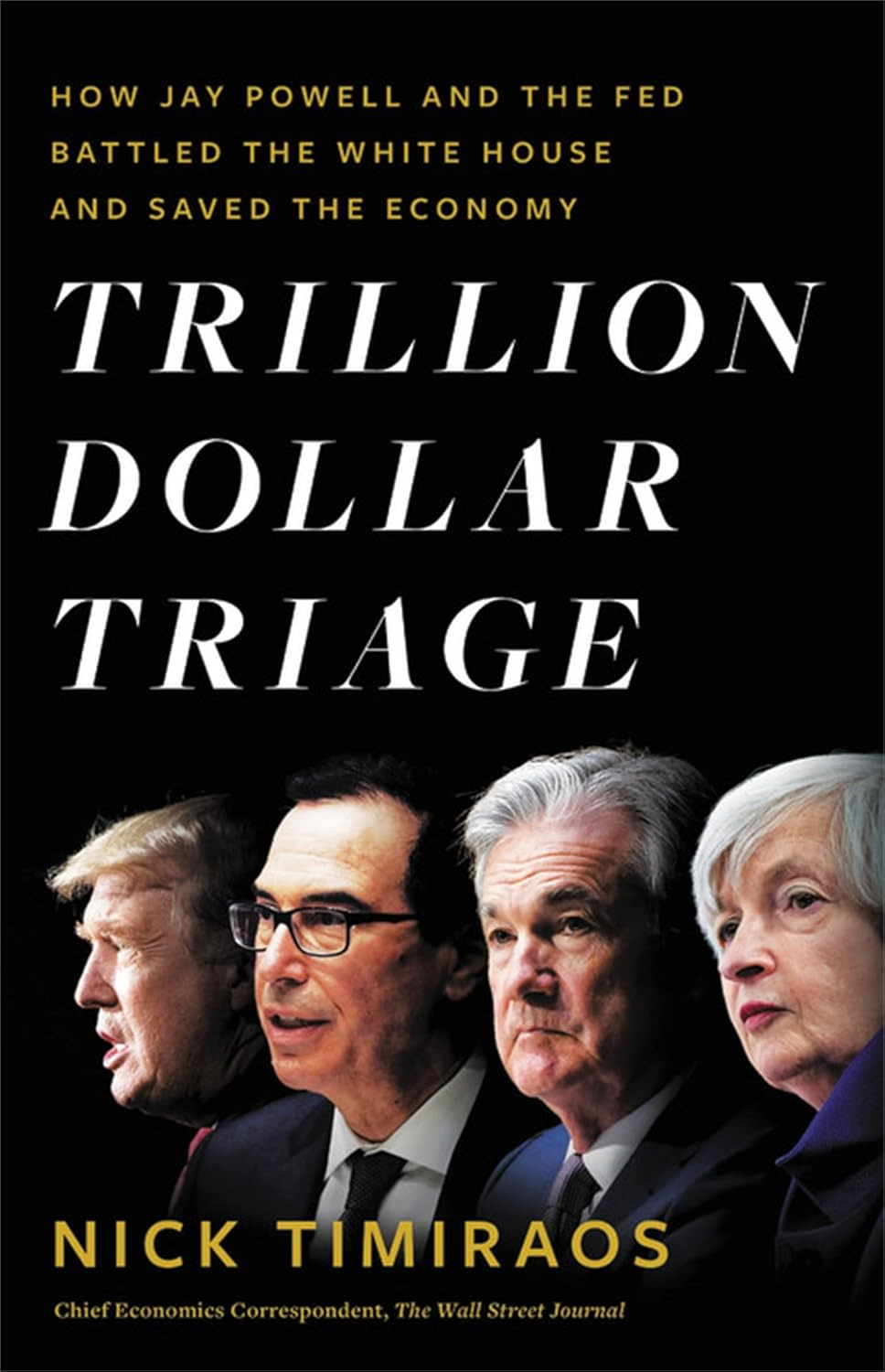
Never Forget!
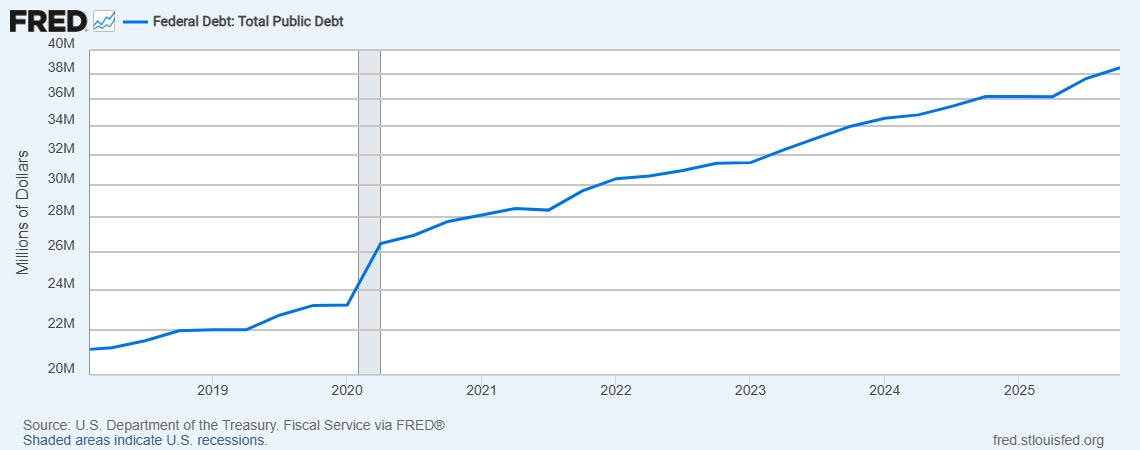
Powell's Legacy: The Federal Debt almost doubled during his 8-years as Fed Chair.
The Fed has been Congress' drug dealer.
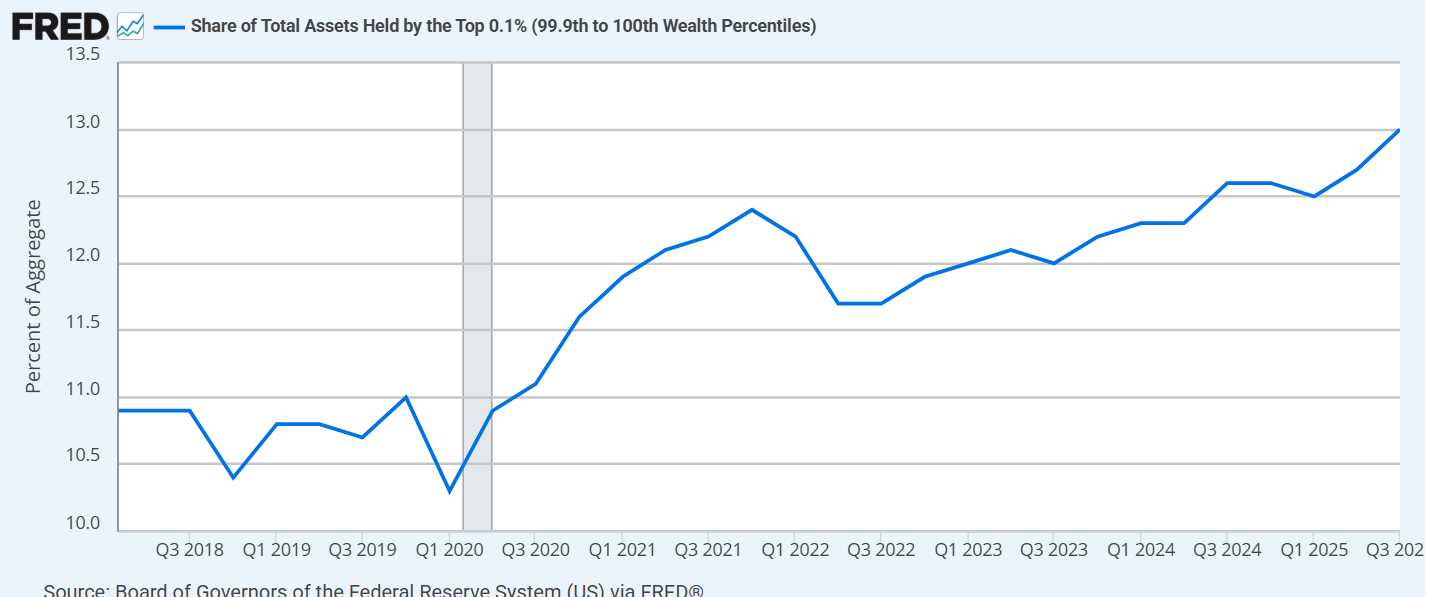
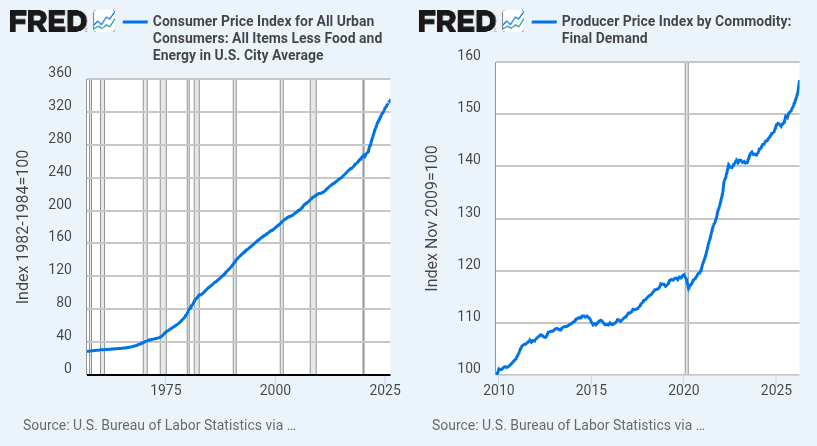
Numbers Go Up!
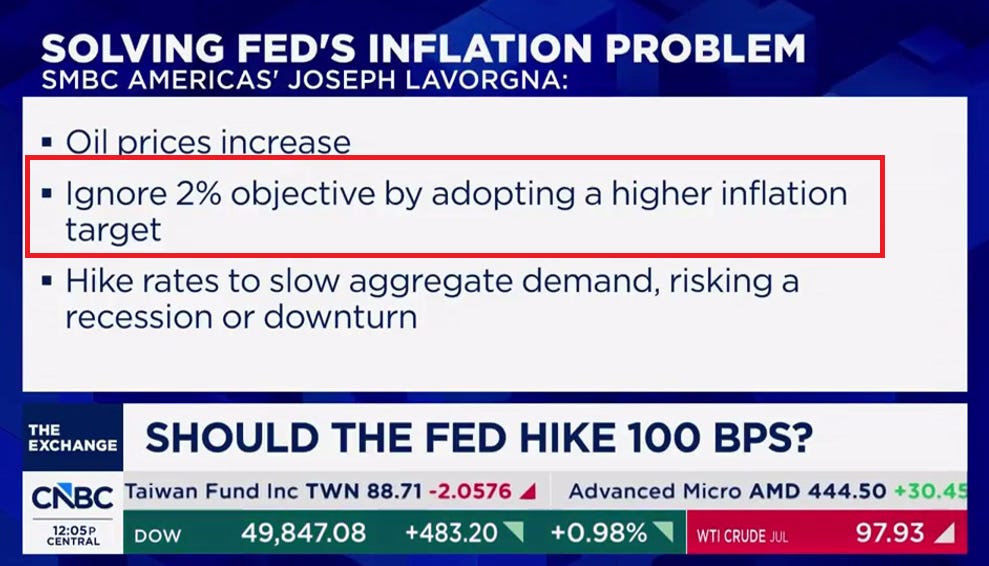
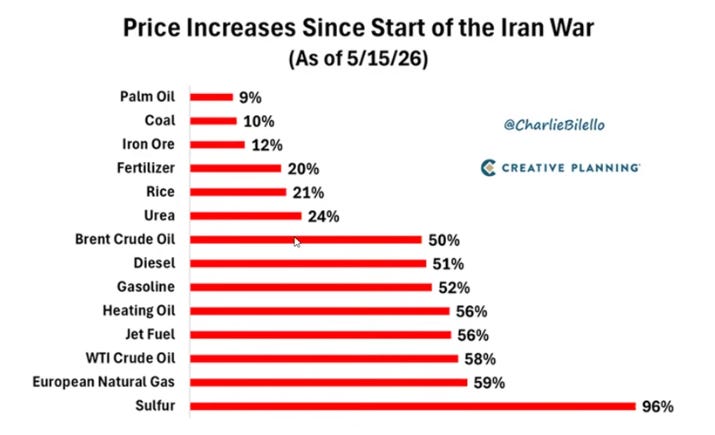
I love this “solution” to the Fed’s inflation problem:
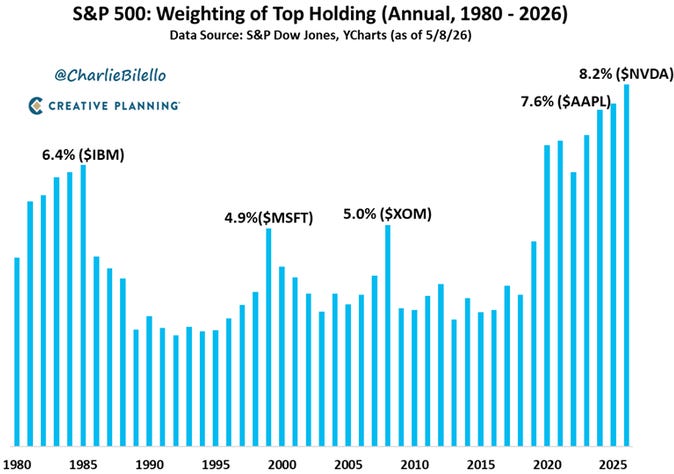
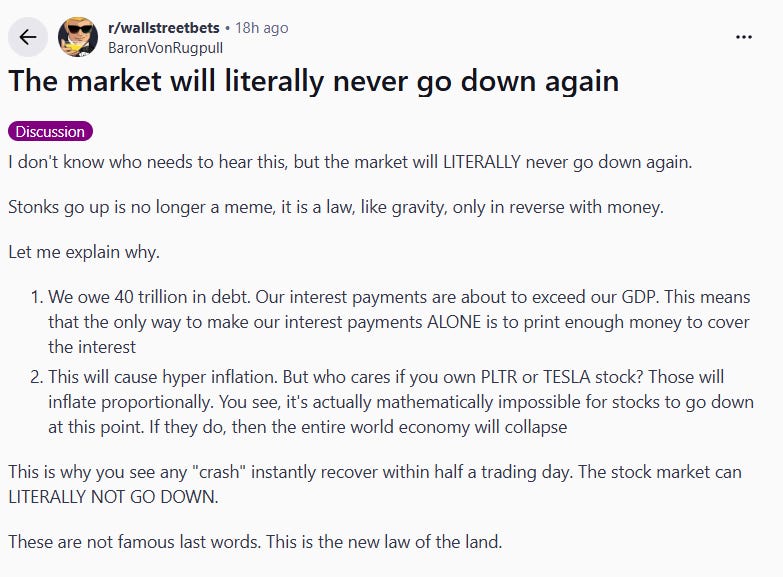
Nasdaq Composite Go Up!
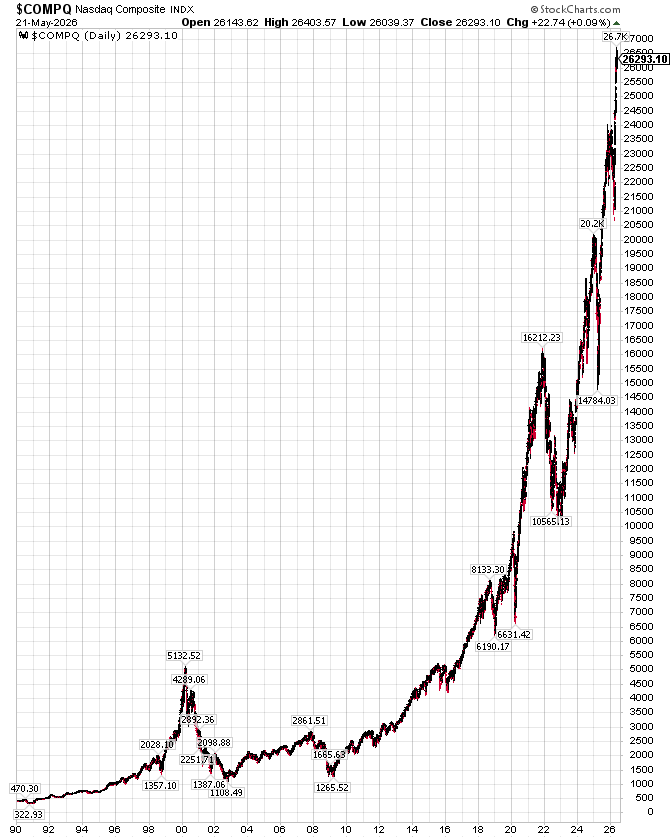
“You know it’s bad when a technician changes [a chart] to log. Yeah, that means it’s bad.”
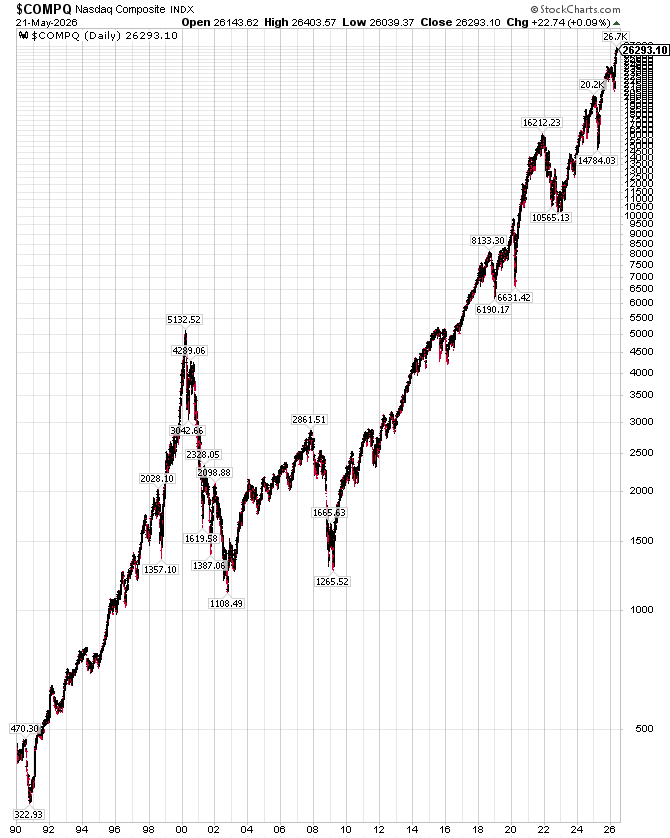
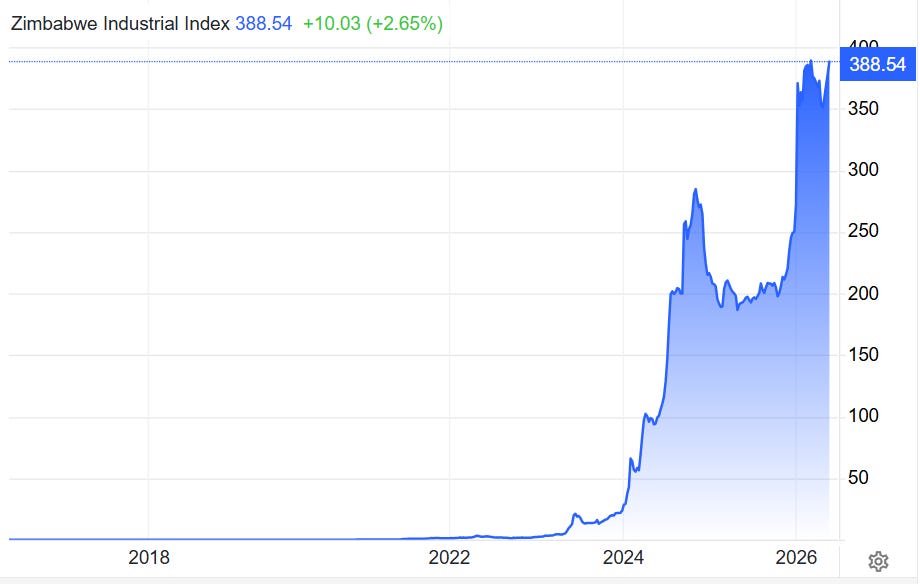
‘’Right now, valuation measures are being thrown out the window,’‘ said Phillip Coburn, a strategist at Warburg Dillon Read. He said that the average price of technology stocks, using a measure that compares price-earnings multiples with earnings growth rates, is now twice what investors deemed reasonable only a couple of years ago.
Nonetheless, he said, money managers are only being prudent when they load up on technology stocks. ‘’Given the fact that I don’t see the end in sight, I don’t think they are being foolish,’‘ he said. ‘’They are being practical, and they are making money for their clients.’‘ …''The massive inflows into the mutual funds are going into a narrow group of funds''
Let’s light this candle!
Stuart was helping Mr. P buy Kmart stock online. Kmart was then one of America’s leading discount retailers. The Kmart Corporation was the second largest U.S. discount retailer and major competitor to Walmart. Kmart filed for Chapter 11 bankruptcy protection in January 2002. Just two years after Stuart helped Mr. P buy shares online it filed for the largest ever retail bankruptcy.
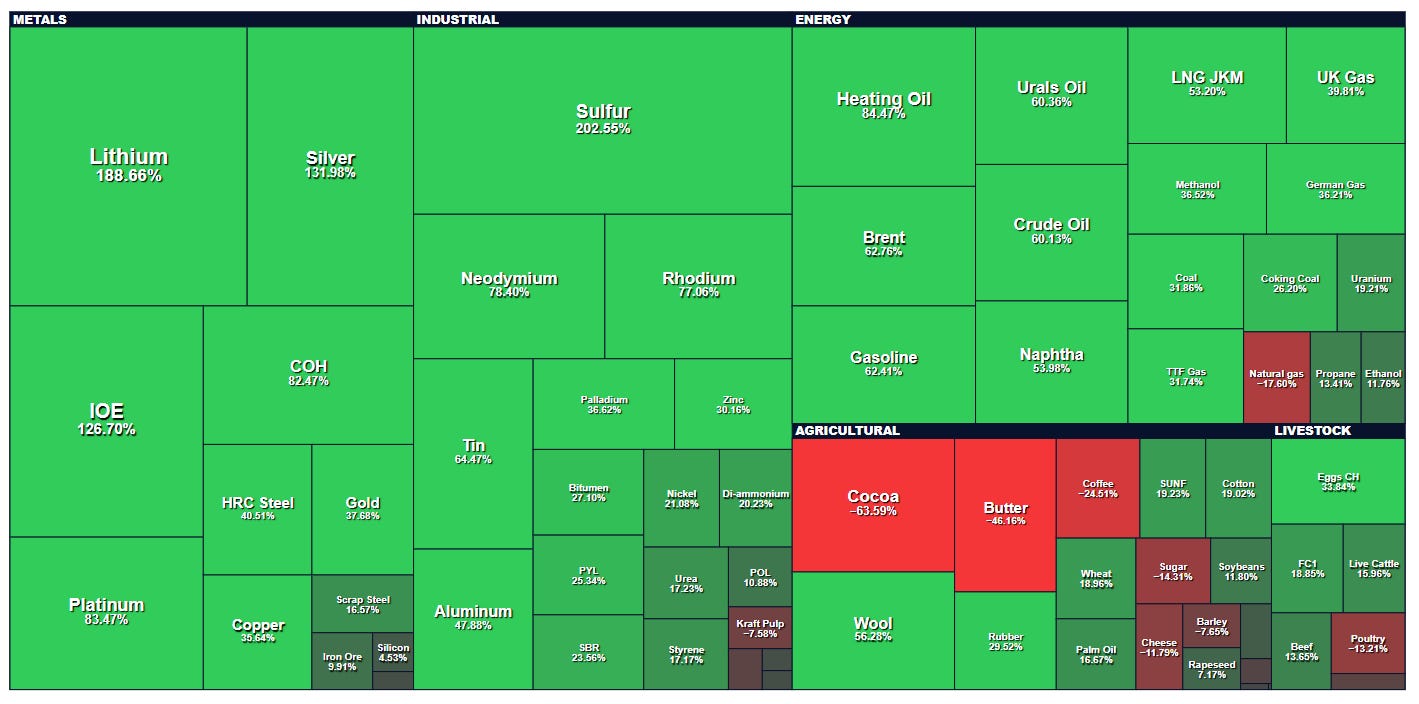
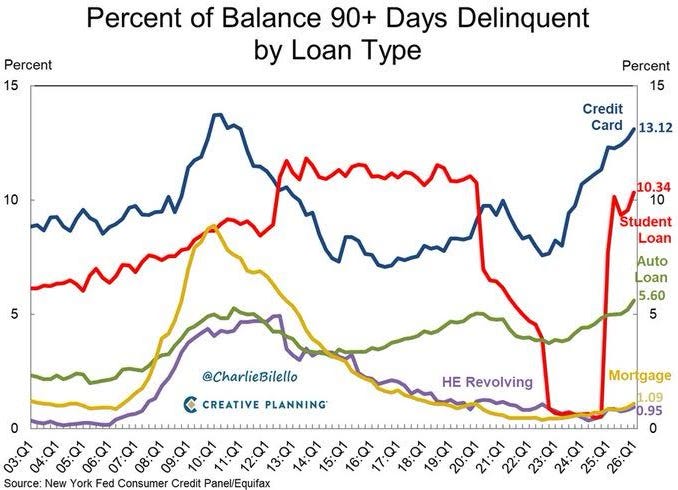
This is year-over-year…
"Nearly four in 10 Americans surveyed by Lending Tree, or 39%, said a car is a luxury they cannot afford."

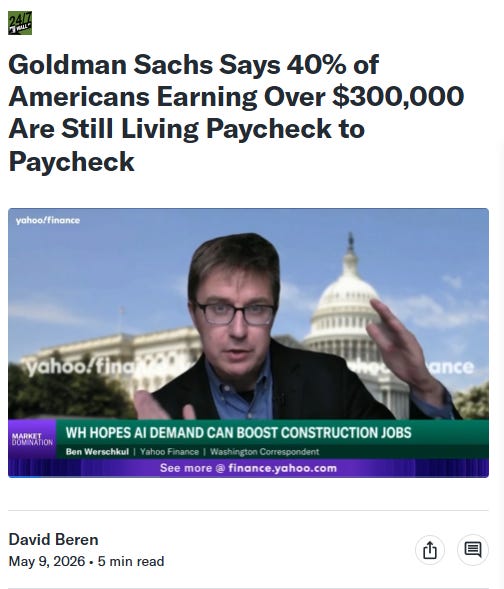
According to SSA, 98.3% of American wage-earners made less than $300k (in 2023, the latest year available).
Keepin’ an eye on this…
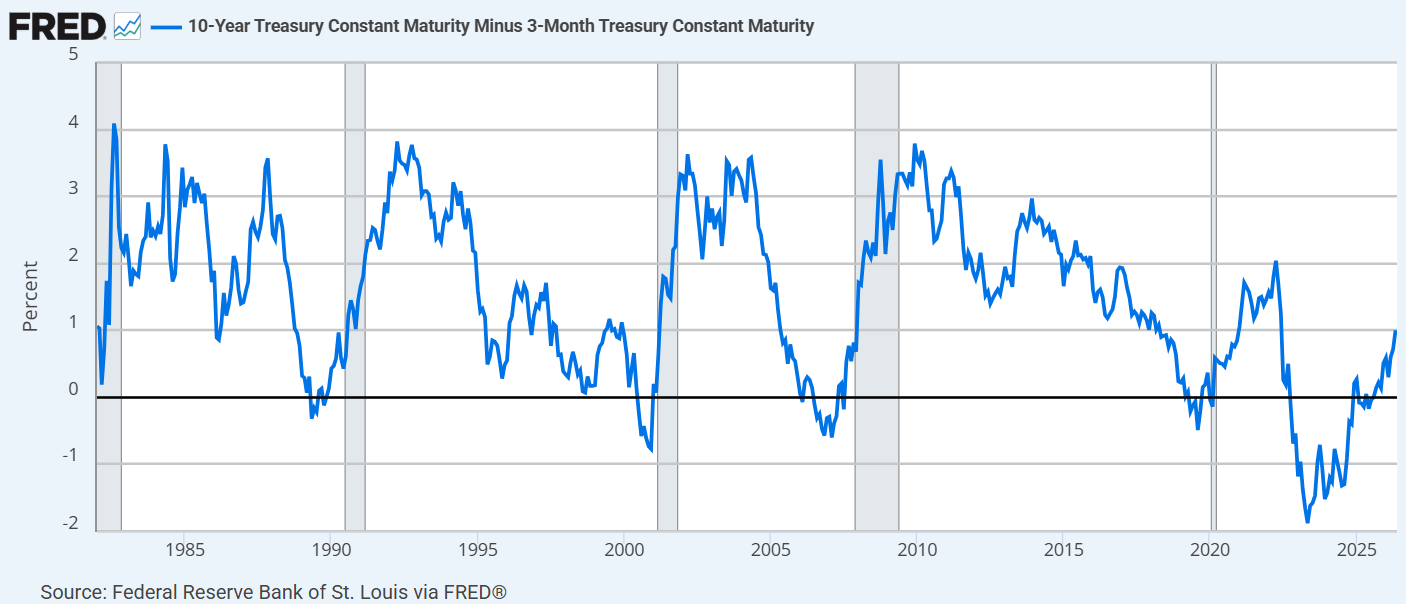
Rates
I do this from time to time. Lately people have been sweating…
Since January 1962, the average 10-year-yield is 5.82%.
The median yield is 5.44%.
Today (May 18, 2026) 4.59%.
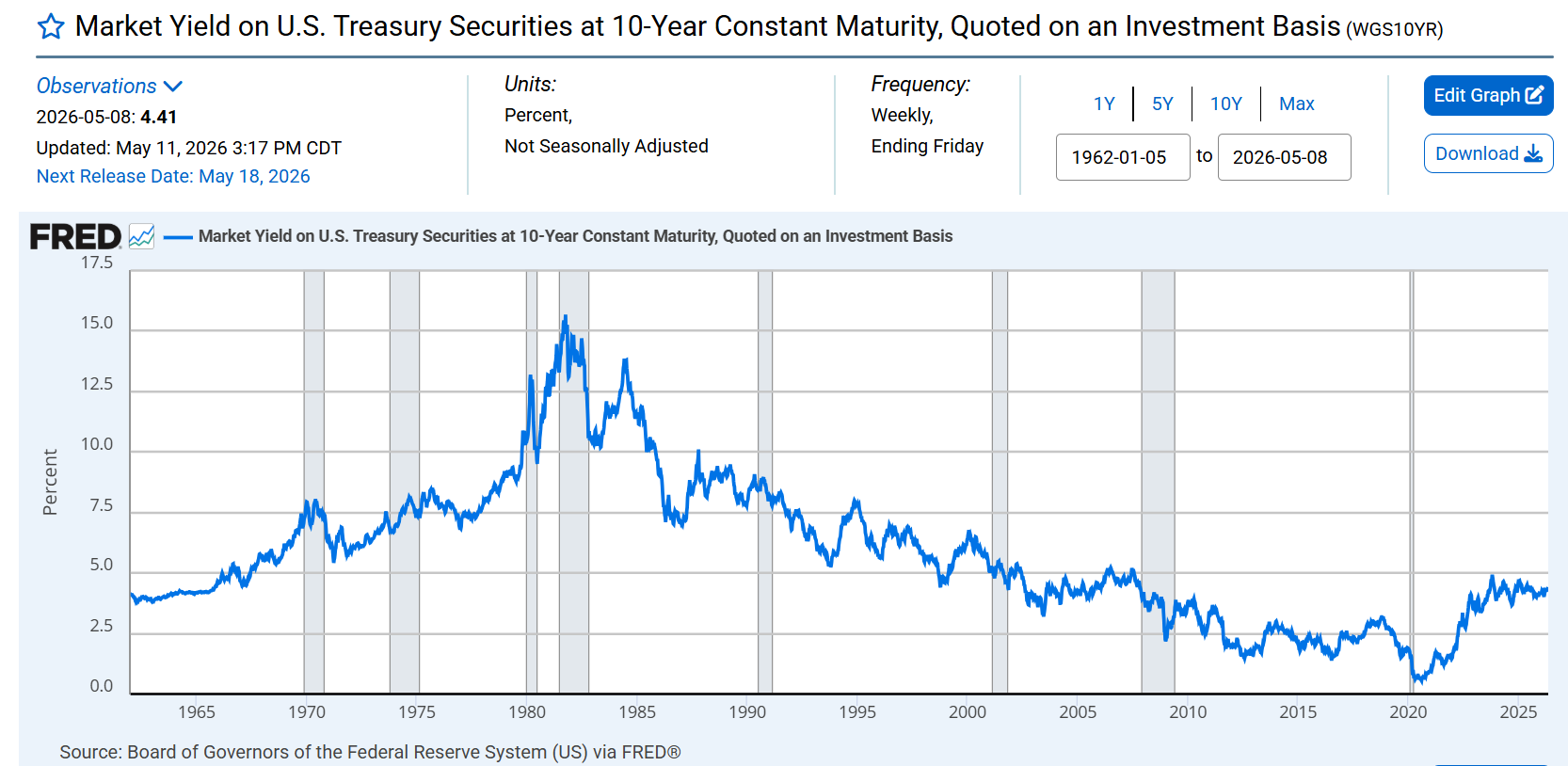
In early October 1981, the 10-year yield hit 15.68%, core CPI was 11.8%.
In August of 2020, the 10-year yield was 0.55%, core CPI was 1.7%.

David Dredge
Definitely one of the smartest guys I’ve run into (and I’ve run into a few).
Here he is with Grant Williams (paywalled).
“History alone is a very poor measure of risk. It only tells you what did happen. It doesn’t tell you what could have happened.”
“The risk becomes this application of leverage around assumed safety and volatility/safety is measured on a historical lookback. So it says the place that’s gone the longest without a fire is the safest. And so you can sell insurance there for really cheap because the measure of insurance is the probability of a fire, not the amount of damage a fire would do. So it’s not measuring the impact of the fire, it’s measuring the likelihood.”
“Central banks should not be central planners trying to optimize some future outcome. They should be risk managers. They should be like the forest manager who’s keeping the forest floor clean, who’s doing controlled burns, who’s cutting fire breaks, et cetera. They shouldn’t be trying to optimize the perfect forest of something that they don’t understand and can’t control.”
“The one thing I think [Warsh] can do and has to do is put the death nail in forward guidance. Why are we sitting here not just not ever adjusting our policy but telling people what our policy will be into the future with no knowledge of what the future’s going to be?”
“If you couldn’t see already in March that this [the Iran War] had a very likely potential impact on direct resource prices, indirect resource prices and second order effects, and if you’re not aware of the long memory implications of having just come through a massive increase in your price level across the entire system, you’re fools. You’re outright fools. And the way they sit and misrepresent, “Oh, monetary policy is not the right tool to manage oil prices, and we’re going to look through the supply shock, and this is temporary, and it’ll come back down. We’re watching for indirect and second order…” Bullshit, bullshit, bullshit.”
“The forest accumulates risk through time. And so you shouldn’t be surprised that there’s fires when lightning strikes. You should have known it was already there. And this is really the fundamental flaw.”
“…this new competition for debt issuance by governments, and after the long period of QE and zero interest rates and massive reserve accumulation and adding leverage to banks in the Basel I, II, III and zero risk-weighted assets and the proliferation of liability-driven investment and this massive absorption until you got to - I can’t remember the number, $17 trillion of negative-yielding debt and zero interest rates and the largest outstanding debt ever at the highest price ever, the mother of all bubbles - something happened and they lost control and so it was really easy. And so everybody blew through 100% of debt to GDP and people were still buying the bonds at zero yields and negative, even though they went through 100% of debt to GDP, and now we can’t do QE anymore because we lost control of price stability, and the banks are all full on bonds that they bought at 1% yield and the yield’s now 4.5%. And they have these massive unrealized losses, and this was the whole premise around, “Who’s going to buy the bonds?” and yet, the guys selling them still need to sell more.”
Williams: Is it ignorance, or is it just the academic condition?
Dredge: Well, they’ve simplified the math down to make it easy. The whole premise of economic math, as Hayek said in his famous Nobel lecture, is “We’ve decided to treat as important that which we can measure.”
“Correlations will spike when you least expect them.”
Hari Krishnan & Cem Karsan
Hari: “Passive share was below 1% in 1994. Now we have varying estimates where passive share may be - 50%, 60% or perhaps even higher if you think of the closet indexers in the market”
Cem: “What we're really talking about - the gamification of the market - the fact that the market itself has become essentially untethered from the fundamental basis of the economy.”
Hari: “One could argue that the S&P 500 is driving all sorts of social changes, whether it's wealth inequality or any number of things, and that the markets are so untethered and unleashed that they're basically driving everything else, that politics are almost a byproduct of what markets do.”
Cem: “To live in this world where we think that markets themselves are not being managed is so naïve.”
Cem: “When the market goes up 15% like it did in two months, a month and a half really, you could argue it's somewhere between $45 trillion and $75 trillion of new collateral was created like that.”
Hari: “The one question I would ask is if, as I believe and you probably believe as well, that the market is a complex system, can you really control a complex system over any appreciable length of time? “
Cem: “Absolutely not.”Cem: “The amount of leverage and passive and structural governmental structures, everything leads into this momentum effect which then just gets eventually too big to handle. And at the end, they try and control and control and control as much as they can, because the risks are too high, and that's where we are in the story. And eventually things have to reverse.”
Cem: “All you have to know is that from 1999 to 2000, that last year, tech earnings grew 30%. Which is the highest growth they ever had, until they went bankrupt,, and then 95% of them went bankrupt.”
Cem: “The way the voting machine and weighing machine almost always come in line is through discontinuity, through a break, through risk, through a deleveraging effect. And there is not some smooth mechanism with which the voting machine and the weighing machine converge. They converge when liquidity dries up.”
Hari: “The numbers we came up with with our parameterization were that at 91%, roughly, passive share, the market could go to zero in finite time…The more interesting case for us was that when the passive share gets to around 83%, volatility can increase uncontrollably at a cubic rate. A cubic rate means very quickly. And when we ran the simulations in the paper, we found lots of simulated paths going down very rapidly after about 12 years and many paths going close to zero. And so the range of outcomes was much wider. The median outcome was lower, and the bad outcomes were much, much, much worse. They actually lost money. And again, this was not to say that this will happen, but that it’s a natural consequence of a set of very humble assumptions that most people, at least quants, would agree with.”
Almost too much stuff to quote. Just listen to it yourself if you’re interested. Pairs well with the Mike Green piece below…
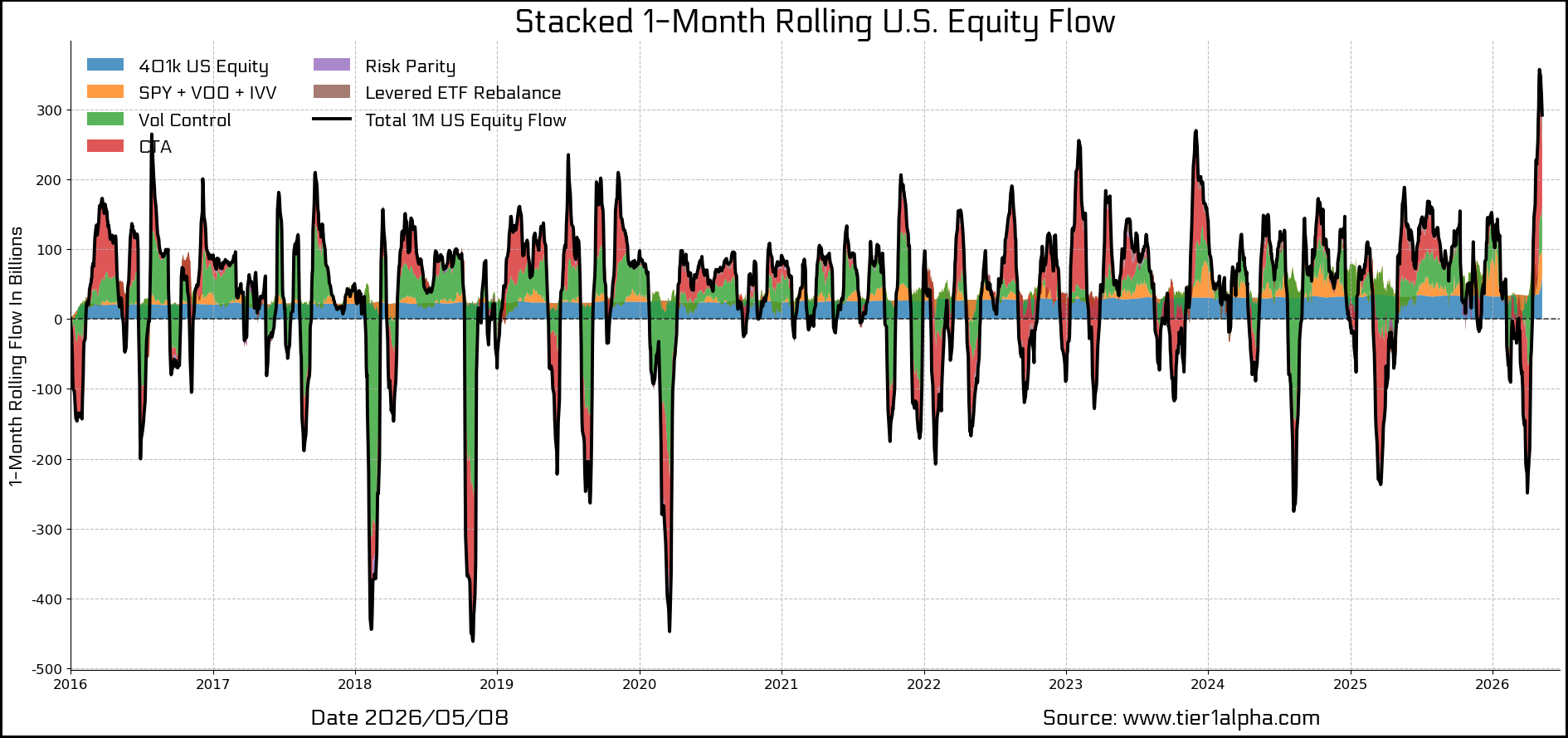
Mike Green: “We have the mindless bid coming from the passive robot where money is flowing into 401Ks on a continuous basis and into retirement accounts.”..
Erik Townsend: “Mike, what you're showing here is basically the biggest inflow ever in history, and you told me off the air, even though this chart only goes back to 2016, you said there is no prior example of a bigger inflow any time in U.S. history ever into the S&P 500 other than the one that's happened in the last month or so on the back of news that we've got a massive global energy dislocation, which hasn't quite hit the tape yet, but we know it's coming because we've used up that six-week lag of delivery times. We're burning into all the buffers of of spare oil that was sitting around in storage. We're about to run out of diesel fuel and jet fuel globally and have a massive crisis on our hands, and that's been - I don't wanna say the cause - but that has been coincident with the biggest inflow into the stock market in recorded history. Explain. It does sound crazy.”
Former FTX Executive Launches a ‘No Loss’ AI Trading Platform
“UpsideOnly, a platform that turns crowdsourced paper-trading strategies into shared real-money profits by executing bets with only the company’s capital. Investors place fake trades that predict the future price of assets like oil, gold and equities, after which an artificial intelligence model chooses the ones that are most likely to result in profit. The company then trades on those forecasts using its own money, and where it succeeds, shares half of the earnings with traders who created the winning signals.”
Matthew Piepenburg
“This isn’t a gold bug kind of scare tactic to warn about the Fed losing control of this so-called yield curve. They don’t really have it anymore, and that’s because trust in overindebted Uncle Sam, that overissued IOU from from the U.S. just isn’t there. That trust has been slowly dying since during 2022 we weaponized the world reserve currency and we flow froze the FX reserves of a major power. The de-dollarization, the BRICs movement - all those things really happened post-March 2022, as I said at the time, and I was not alone. It was a watershed moment for the dollar and U.S. Treasury, and all of this is now playing out America, and the U.S.A. is not winning a lot of hearts and minds geopolitically right now.”
“I think we’re in a recession. Main Street is absolutely quantifiably being crippled, while Wall Street in the top 10% - of which I’m a member - is enjoying the tailwinds of this Fed-driven market. To get the CPI down because Main Street is crippled is hardly good economic news. I still see stagflation coming, because no matter what happens on Main Street with demand, and it’s embarrassing, it’s criminal what we’ve done to the middle class. It’s criminal the level of wealth inequality we see in the U.S. in particular that I’ve watched over the last 20 years. It’s an insider trade, and if you’re not in the trade, you’re not inside it, and most Americans aren’t. It’s criminal. But the bottom line is no matter what happens on Main Street, which I really don’t think politicians give too much of a hoot about, they need to save their bond market. And eventually, regardless of how stressed out or demand-pulled down inflation could be on Main Street, the central banks and the Fed in particular are going to have to expand the balance sheets, become dovish at some point to save the bond market, because the government runs on those IOUs, and they’ll sacrifice the currency to do that. Whether that happens this month, next month, or the end of the year is irrelevant to me. That’s the endgame."
“I love it when they say it’s not really QE, like it’s not really inflation, it’s transitory inflation. It’s not really a recession. We’ve changed the definition midway into a recession. It’s not really QE. It’s just another lie. I mean, even the very CPI scale that we use to measure inflation. Everyone on Wall Street knows that’s as bogus as a 42nd Street Rolex. This is another sign of the desperation of a of a regime or an empire or a system that’s breaking down. Not ending, but breaking down, losing its hegemony. You have desperation, but one of the key symptoms is dishonesty1. The very CPI scale itself is dishonest. The very term quantitative easing is dishonest. The very notion of modern monetary theory as a solution to solve a debt crisis with more debt paid for with money printed out of thin air. These are all dishonest things. And to call QE not QE is dishonest. We’ve had backdoor liquidity through the Treasury General account. We’ve had backdoor liquidity by issuing more from the short end of the yield curve. We’ve
had backdoor liquidity and bailing out the repo markets over and over again since 2019. There’s plenty of liquidity for Wall Street, Jeremy, is what I’m trying to say. It’s Wall Street socialism and main street feudalism.”
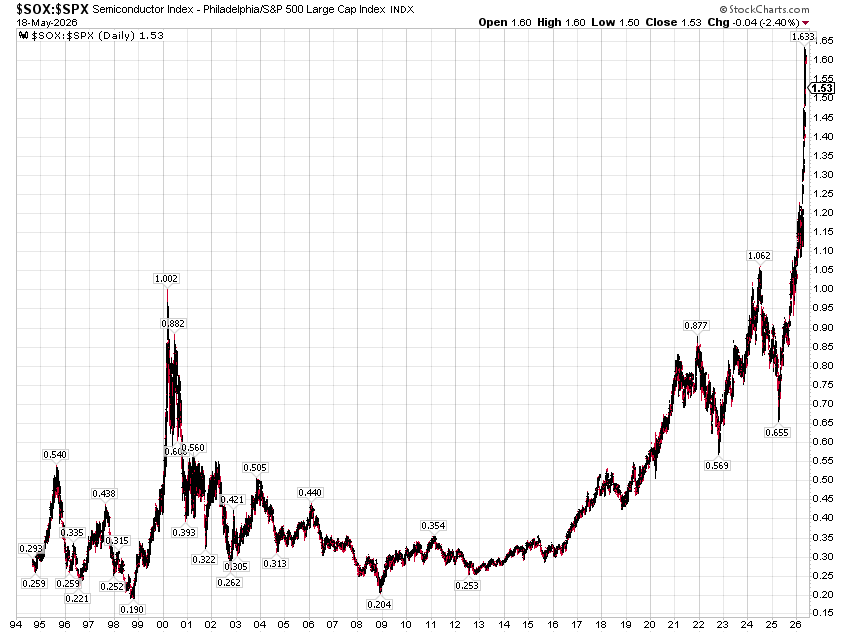
SOX VS SPX
“I’ve heard this before.”
I liked Dan Nathan’s anecdote from this podcast. For some reason his comments were cut from the Youtube video.
Chris Whalen
Warsh wants to go “back to a pre-2008 regime where we had scarce reserves. We’re going to let banks hold treasuries. We’re going to let them use the discount window if they need to, and we’re going to count all of that towards their liquidity requirements. But we are not going to just dump liquidity into the street, which is frankly what the Bernanke Yellen Powell Fed was all about.”
“When FDR seized gold from Americans in the 1930s, the Federal Reserve was the first agency to come and help them, even before the law was passed. So, this is a socialist statist institution.”
“In the first quarter of this year, bank assets grew 8%. Does that sound like inflation is low? Think about that on an annualized basis. We’re talking about a double-digit growth rate for US bank assets. What that means is that they have a lot of money to put to work, but they got no place to put it and they force up asset prices. Why are we lending the private credit? Why are we fueling the the mania and A.I. build-out? It’s because banks have nothing better to do with the money.”
Donald Trump’s Financial Disclosure Report
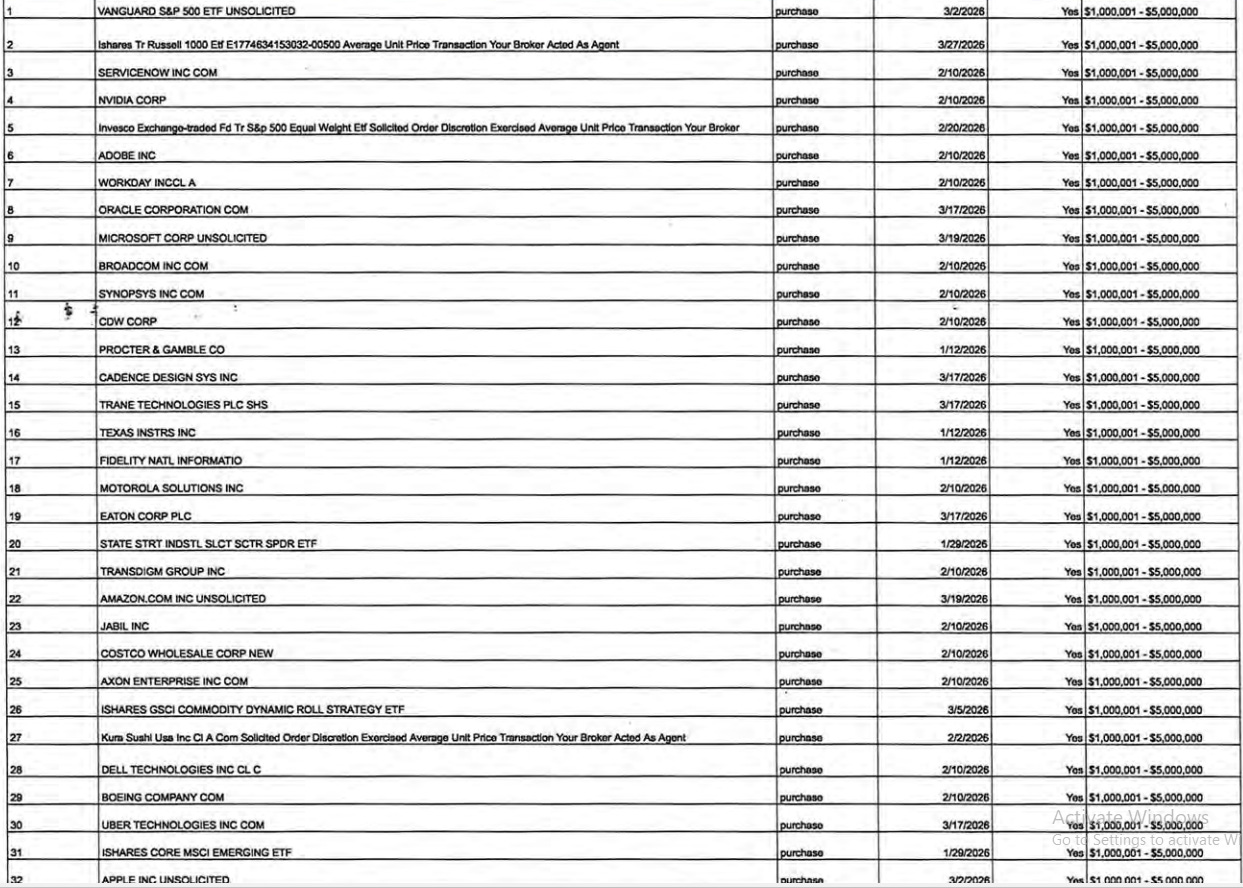
Looks like his bond holdings are here.
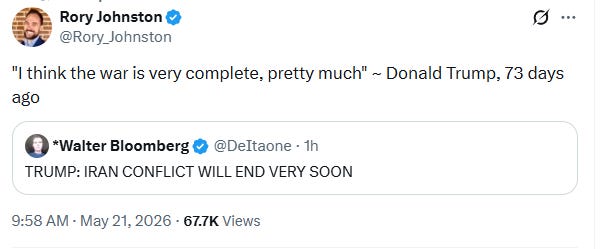
Trump’s also Israel’s best Prime Minister ever.
“One of the big reasons I voted for [Trump] was what he said about staying out of Middle East wars, it was the stupid Republicans, that the Iraq war was the biggest mistake ever made. This is like 10 times worse than Iraq. Invading Iraq didn’t didn’t block 20% of the world’s oil.”
Rory Johnston
“I think Trump expected Iran to look more like Venezuela and now we’re in the situation where it very much does not and Trump doesn’t fully know how to, you know, get himself out of this situation.”

“It’s amazing as a Canadian - I don’t mind saying this - but what a disaster the Trudeau government was for this economy. It’s just shocking.”
“The military cost of the Iran “excursion” or “diversion” for the US alone may be already over $70 billion. The administration is seeking to boost defence spending by 44 percent to $1.5 trillion. The total economic costs, including costs of repairing infrastructure and human damage, interest on debt, and impact on the economy, may exceed $1 trillion. The Iraq war’s total cost is now estimated at $2 trillion or more.”
Thomas Gober
"I would not purchase a life or annuity product or a pension-related product from a private equity controlled or even a for-profit company."
“One company I did the receivership work on in Virginia, they reported a positive $40 million in surplus. Now that’s not a lot of surplus, but it’s a positive number. . The same as of date we found them $490 million below zero. How do you go from a positive 40 to a negative 490? There’s only one way. You pretend you got rid of liabilities through reinsurance, and really, you didn’t get rid of the liabilities. So, the regulator gets in and goes, “Oh my gosh, how could it be this bad?” Well, you thought the reinsurer was truly on the hook, and they’re not. So, remember, the insurance company has to pay your claim even if they’ve reinsured it. When the claim comes in, they have to pay it. Then they can get reimbursed by the reinsurer. But what if you find out the reinsurer is a sham? Those liabilities all of a sudden have to come back onto the balance sheet, and the big black hole grows overtime.”
“In these criminal cases that I worked, these were men who were already wealthy who wanted more.”
“If the regulators at the state level are supposed to protect the policyholders in their state, why are they letting them move the promises to pay to an island country where they don’t have to report the annual statements that they should be filing?…while I can’t tell you how underfunded they are, I can tell you that the few times we’ve actually been able to peer into that black box, it’s been really bad.”
“Private equity is far less regulated, and they put together stuff, they bundle things and call it an asset. They can use the policyholders premiums to invest in that thing. So they could take a bunch of the stuff they don’t want anymore, that maybe has been devalued, but if they can sell them to the insurance company at an inflated value, it stays at that value, because something I call mark to mark to make believe.”
“When I ask an independent Swiss reinsurer, would you take this $10 billion? They’re going to say, yeah, if you’ll send us $10 billion in assets. Now, they might take $9.93 billion, but it has to be commensurate. Needs to be fair and reasonable, and it’s real liabilities. So, they’re going to want real assets, right? If you do that with an independent party, they’re going to expect an arms-length transaction. But when the same executive controls the insurance company and this little secret reinsurer in the Cayman’s, he can say, “I want to move $10 billion in real liabilities to you, but I’m only going to send you $7 billion in assets.” Well, what’s he going to say to himself? Hey, great idea, right? A real reinsurer would say, “No way.” But he says to himself, “Yeah, great idea. Let’s do it.” That moment, you create $3 billion in fake surplus. You subtract $10 billion in liabilities, but you only subtract $7 billion in assets. Surplus, poof, jumps up by $3 billion. They usually would do that in a much smaller amount early on. They might do something where they pick up an extra hundred million, but the next year-end the CFO says, “We still we didn’t gain enough surplus to justify paying a stockholder dividend, and we want to be able to pay those dividends.” So, all they have to do is literally take the contract they already have, change the dates, the dollar amounts, and poof, here’s another $400 million this time. And I can show you. Yes, these companies have gone from small amounts to skyrocketing amounts in a short period of time.”
For more on insurance, watch this:
Bent to Nemeth:
"You've been saying that 29 of the top 30 life insurance companies in America are technically insolvent if you strip out one accounting trick..."
She paid an insurance company $99,000 to generate retirement income for life. Then it collapsed.
PHL Variable Insurance Co., a private equity-owned life insurer, collapsed in 2024 and is heading for liquidation. Benjamin’s account is frozen, and 100,000 other PHL policyholders face a $2.2 billion shortfall…the collapse of PHL illustrates how state regulators are failing to protect consumers…“The regulators are not just a little bit wrong. They are so far off that it’s catastrophic.”…PHL also conducted complex and confidential reinsurance deals with affiliates…
Only when investigators dug through the PHL wreckage did they make a grim discovery, documents show: An asset backing a 2019 reinsurance transaction and subsequently valued at $450 million was worthless…“The failure of PHL is the perfect example of what happens when an insurance company hides a black hole on its balance sheet,” said Thomas Gober…Connecticut officials said this month that policyholders are likely to receive 34% to 57% of their claims from PHL in a liquidation of the company.
Gretchen Morgenson is great.
More here: Annuity Collapse Shows Why Insurers Are a Growing Danger in 401(k)s
Joe Bergquist
“Basically the banks lend the money to the NDFIs [non-depositary financial institutions] and then the NDFIs lend that money to other people. Could be consumers, could be other businesses, could be anything and everything you could think of. The problem is that the banks are basically blind to how is the NDFI underwriting their loans, and who are they lending that money to, and therein lies the problem. Banks might underwrite the hedge fund or the private equity firm that they’re lending the money to, but they have no idea what that firm is then doing with the money as it gets lent down the daisy chain so to speak. So that’s the issue.”
“If anybody sees the last private credit episode that I just did, I talked about how two more companies are in big trouble, and how the dollar amounts are progressing from millions to hundreds of millions to - wait for it now - billions of dollars, right? But hey, everything that happens, it’s all one-offs. Everything’s a one-off. How many loans have to fail before it stops becoming a one-off?”
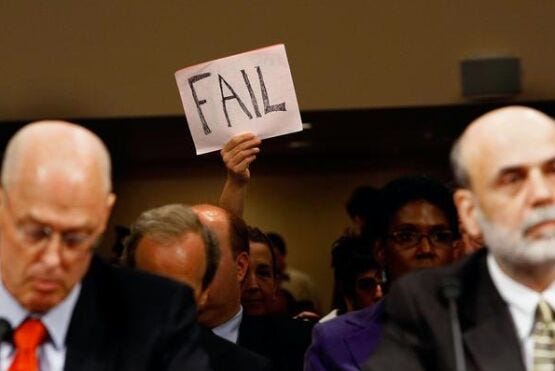
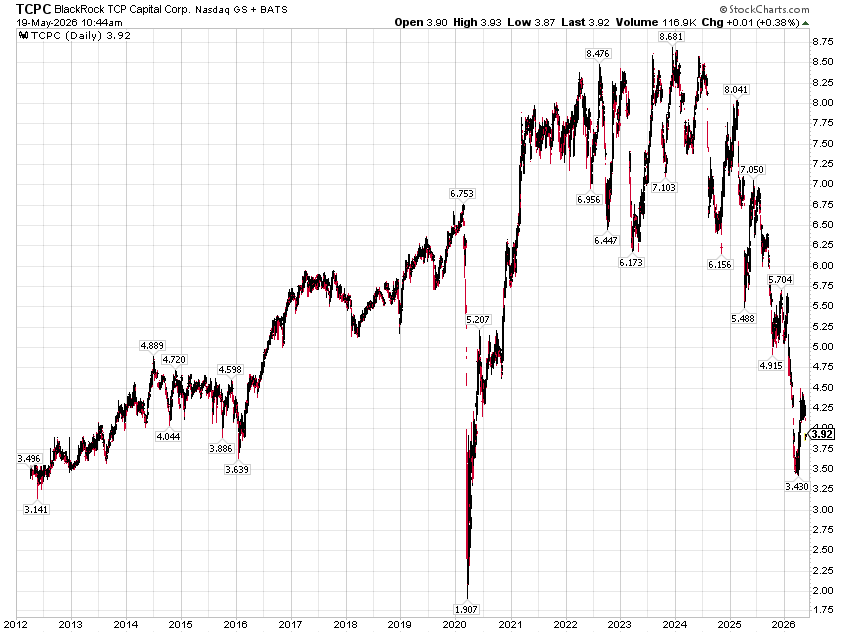
Federal prosecutors probe BlackRock private-credit fund
“Federal prosecutors are probing a BlackRock private-credit fund that surprised investors with a sharp write-down of its loan portfolio earlier this year… The Manhattan U.S. attorney’s office is investigating the valuation practices of BlackRock’s publicly traded TCP Capital fund”
KKR Private-Credit Fund Takes $560 Million Loss
The write-down—equivalent to about 10% of the fund’s net asset value—is one of the biggest indicators so far of underlying problems in a large private-credit fund. Defaults in the fund jumped to 8.1% in the first quarter from 5.5% in December, KKR said.
The $12.3 billion fund—a business-development company called FS KKR Capital decrease; red down pointing triangle—has been under pressure since last year, when it disclosed its largest investment was underwater. The stock tumbled further this year when big loans to software maker Medallia and dental service company Affordable Care went into default…
To support the ailing fund, KKR will buy $150 million of new convertible preferred shares. It will also launch a tender offer to buy $150 million of common shares at $11, slightly above Friday’s closing price. The fund itself will repurchase another $300 million of common stock in the open market.
Via Grant’s:
Margin debt supplied by broker-dealers topped $1.3 trillion for the first time last month, up 6.8% sequentially and 53% year-on-year per data from FINRA. Similarly, aggregate leverage among hedge funds grew more than 30% across 2025 according to the Federal Reserve’s most recent Financial Stability Report, while Robinhood’s customers expanded their margin balances by 114% over the 12 months through April. “One of the telltale signs of an asset price bubble is high margin debt among institutional and retail investors,” Josephson wrote. “Check.”
AI-related capital spending from Alphabet, Amazon, Meta, Microsoft and Oracle are set to reach $800 billion in 2026, roughly double that of a year ago and nearly matching the group’s projected cash flow from operations.
Next year’s projected budget from that quintet stands at $1.1 trillion, equivalent to 3.3% of gross domestic product. For context, the Congressional Budget Office pegs calendar 2027 defense spending at 2.7% of output (that figure excludes the upsized military outlays requested by the Trump administration).
While the spending spree has proved a boon for Wall Street, as a glance at the Philadelphia Semiconductor Index price chart demonstrates, unwelcome macroeconomic side-effects are on display. To wit: the Core Personal Consumption Expenditures Price Index grew at a 4.3% annualized pace over the three months through March, up from 2.4% three-month annualized figure in November 2025. As Pimco economist Tiffany Wilding pointed out Wednesday, that metric – ubiquitously described as the Federal Reserve’s preferred measure of inflation – now tops the Consumer Price Index by about 60 basis points, reversing the typical 30 to 40 basis point discount seen over the prior 40 years.
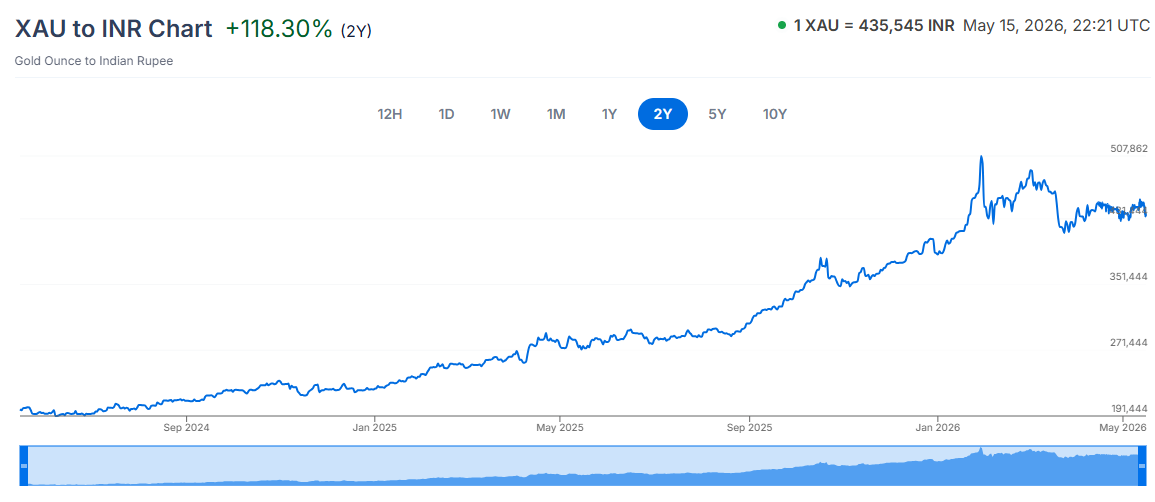
India is taking drastic steps to shore up the beleaguered rupee, ratcheting import tariffs on both gold and silver to 15% from 6% to curtail capital flight…Indian households held some $3.8 trillion of the precious metal as of last fall, analysts at Goldman Sachs calculated in October, a sum equivalent to nearly 90% of national GDP (gold has since appreciated to about $4,700 per ounce from $4,000). More recently, investment demand registered at 82 metric tons over the three months through March, the World Gold Council likewise relays, up 52% year-over-year to surpass jewelry-focused consumption for the first time ever.
For What It’s Worth…
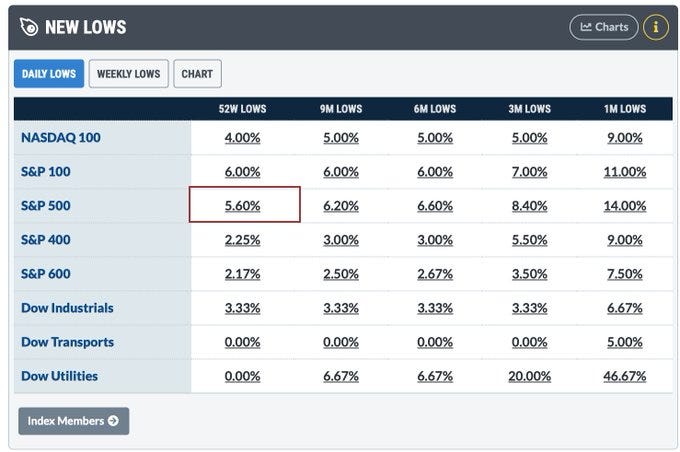
“This will be the 4th time the S&P 500 has hit a record high while 5% of its members fall to 52-week lows.
1. July 1929
2. January 1973
3. December 1999
4. Today”
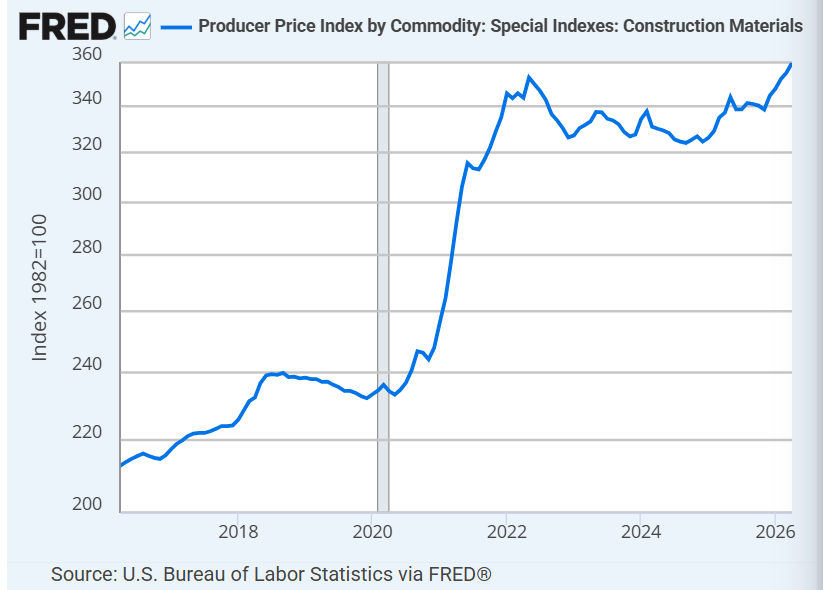
“Construction material costs continued climbing in April, extending a sharp escalation that contractors and developers have tracked since the start of 2026. Associated Builders and Contractors reported Wednesday that construction input prices rose 1.7% month over month and 6.2% year to date…The pace of escalation has accelerated quickly.”
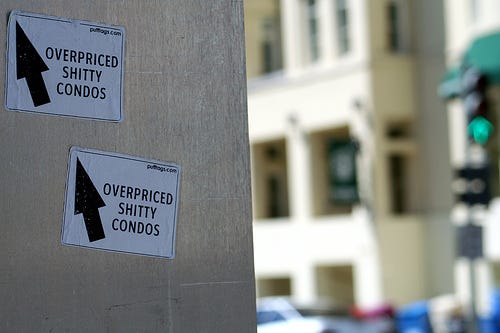
Why L.A. condo sales have slumped to a 20-year low
Perhaps because Karen Bass is mayor?
The number of condo units sold in the first two months slid to a more than 20-year low, according to figures from real estate data firm Attom. The median price of a condo fell nearly 5% in February compared with a year earlier, the property information provider said. Cooling condo sales may be an early sign of broader weakness in the market…
Condos are particularly tough for builders to invest in because California law allows homeowners associations, or HOAs, to sue developers for construction defects for up to 10 years after a building is completed.
It is common for an HOA to sue the developer as the 10-year statute of limitations nears, often for what developers consider minor or perceived issues. Because of the high litigation risk, the insurance premiums that developers pay for condo projects are often three to five times higher than those for an identical apartment building…
None of the six Southern California counties from Ventura County to San Diego County tracked by Attom saw median condo prices rise year over year. The biggest drop was 8.6% in Ventura County in February from a year earlier.
So how big is this problem, Anton?
Interview with commercial real estate lender Anton Mattli.
“It’s deceptive, right? Because when you read the news, and when you look at foreclosures and all that, it doesn’t look like there are that many, because everyone has been willing to kick that proverbial can down the road month after month and year after year, whether it was still lenders, or whether it was the sponsors. And as a result, it it hasn’t been as what we have seen during the GFC where everyone, whether it was on the residential side - where obviously it was the the big blow up - but even on the commercial side, lenders were willing to foreclose much faster back then than they are today. So as a result, it’s not that much visible. However, behind the scenes it’s just broiling everywhere, right?”
Multi-Family
(I don’t know these guys and am not sure who I am quoting here…)
“A lot of his peers were experiencing distress, hemorrhaging portfolios back to lenders. Scott Everett (S2 Capital) found a pretty novel way to hang on to some of this stuff. He convinced a bunch of his investors to let him roll some of the holdings, about 10,000 units or so, into a private REIT. And the idea was a permanent capital structure. We can get Fannie debt. We can wait for things to work out. We can improve NOI and we can make the economics work. Didn’t work that way though.”
“There’s a lot [of multi-family distressed debt] out there, and it’s starting to get transacted on. We’re coming up on five years from 2021. A lot of the debt has 5-year terms, and we’ve been talking about it for years. Like when’s the distress going to hit? And I think it’s starting to.”
“According to Bloomberg, commercial real estate lenders are finally forcing a reset. After years of extending loan maturities and waiting for interest rates, office demand, and valuations to rebound, banks and debt funds are increasingly selling distressed CRE debt at steep discounts or taking control of troubled properties outright.
The shift marks a decisive break from the industry’s long-running “extend and pretend” strategy, where lenders delayed recognizing losses in hopes that property fundamentals would recover. According to MSCI, distressed commercial real estate debt totaled nearly $132B across US property sectors in Q1 2026, though workouts of troubled loans outpaced new distress for the first time since 2022…
Bloomberg reports that lenders including Goldman Sachs, Deutsche Bank, and Ready Capital are becoming more aggressive about disposing of non-performing loans, even when doing so requires significant markdowns…
Shanghai Commercial Bank reportedly sold debt tied to a stalled Manhattan condo conversion at 335 W. 35th St. at roughly an 85% discount to the loan’s payoff amount. In Los Angeles, Netflix is reportedly negotiating to acquire the Radford Studio Center at a steep discount to its $1.85B 2021 valuation after a lender group led by Goldman Sachs seized control of the property.”
Melody Wright
[About a recent housing conference…]
“There’s so many people that really think we have a housing shortage. I stood on stage and I said, “If anybody out there thinks that we have one, I’d be happy to take them on a little tour.” And there were no takers.”
“When you go to FRED, you know, the Fed’s data site, the people that supply [housing data] to the Fed is not some independent agency. It’s realtor.com.”
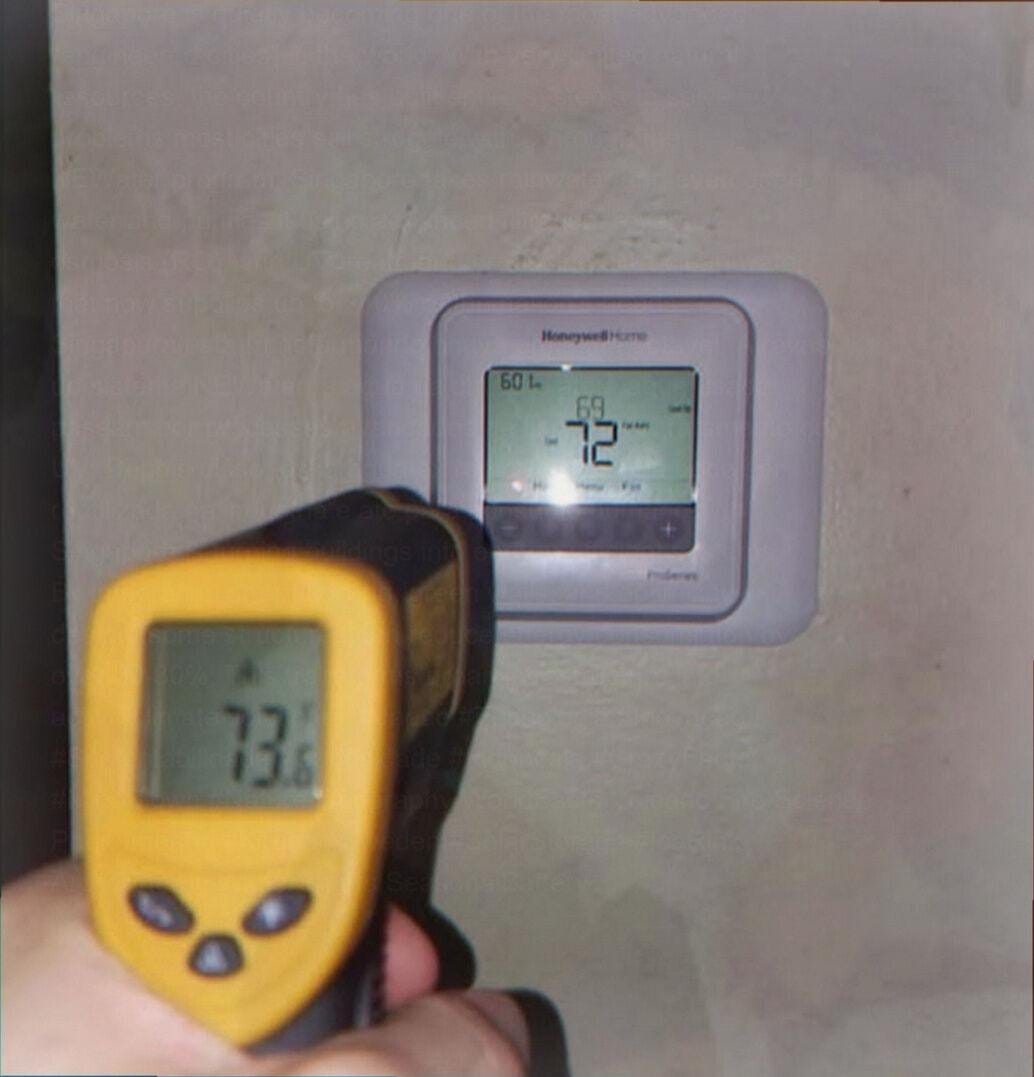
“Heat pollution from data centers can boost air temperatures in downwind neighborhoods by as much as 4 degrees Fahrenheit, researchers at Arizona State University report in a new study conducted in the Phoenix metro area.”
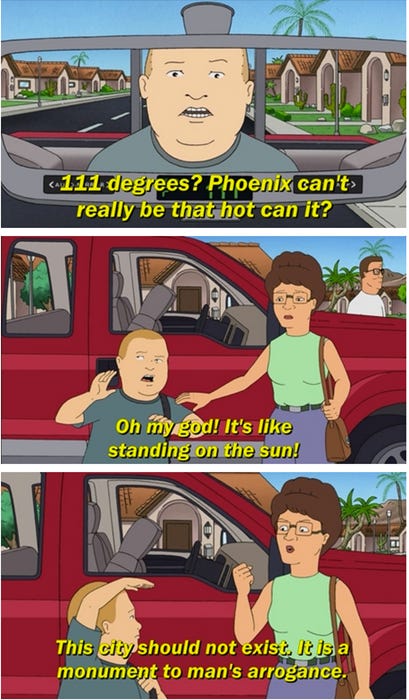
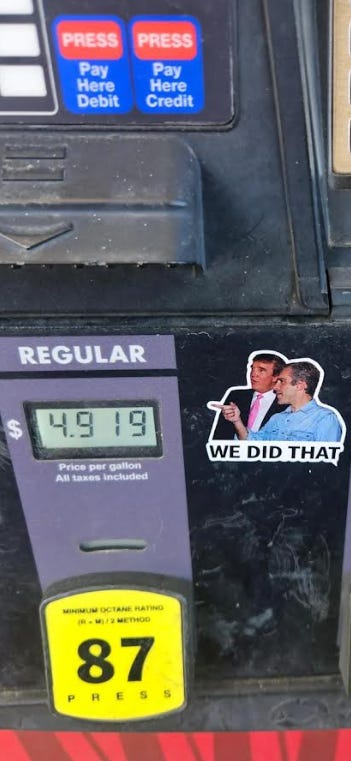
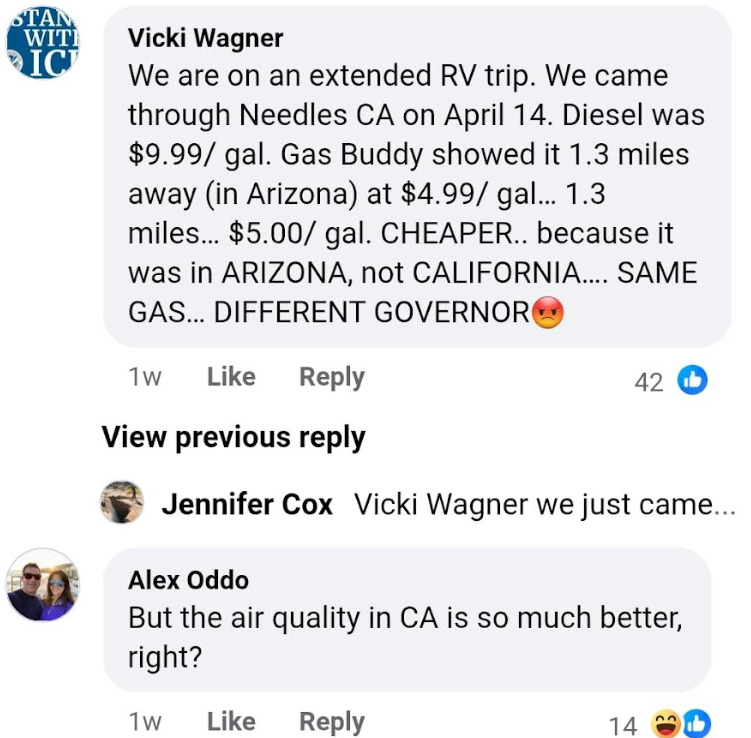
Obviously this is not California. The gas is way too cheap:
Empty Waymos invade Atlanta neighborhood, circle cul-de-sac for hours with no passengers
“I think yesterday morning, we had 50 cars that came through between 6 and 7.” Residents on Battleview Drive said they started seeing the autonomous, driverless cars about two months ago, but the groups and large numbers of Waymos just circling in and out only started the last couple of weeks…“We had, at one point, eight Waymos that were stuck trying to figure out how to turn around…” The Waymos are empty and not picking up anyone, and parents are worried, saying it’s not just excessive, but dangerous.
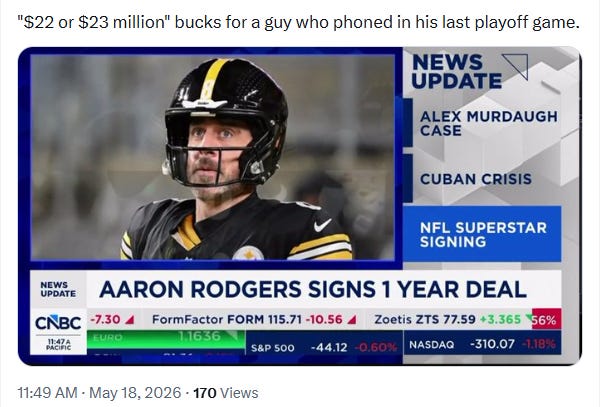
Sinister Forces: Twenty Years Later
More on Peter Levenda’s Sinister Forces here from last year.
I came to this project as a child of the 1960s: Vietnam, the assassinations, Watergate, Irangate, Koreagate, all those political scandals and fractured timelines. Now look at us. We have people in Congress talking about UFOs and demons, UFOs and angels, about a massive epidemic of child abuse and human trafficking, Epstein’s island, cover-ups that would make Nixon blush, graft and grift on an epic scale … and the sneaking suspicion among a growing segment of the population that all of these seemingly disparate events are somehow linked in one grand – if not Satanic – design.
I had already examined these links, as early as volume one of Sinister Forces, the volume subtitled “The Nine.” I demonstrated weird but undeniable, documented links between the Kennedy assassination and a group of mystics around a séance table in Maine in 1953 … between the Kennedy assassination and the 1947 UFO phenomenon … between the Kennedy assassination and a strange underground church to which, even more strangely, I belonged in 1968-1970…
Readers have complained that Sinister Forces does not offer a theory to account for everything. That, for instance, I do not come out with a position on the Kennedy assassination. That is because no mundane explanation could take into account the plethora of coincidence, synchronicity, and just plain weirdness that surrounds the events of November 1963. There is no single explanation that covers all the bases. Did Oswald act alone? That very question misses the point I was trying to make in Sinister Forces.
The assassination was prefigured years before Jack Kennedy was even born. It came from the same bizarre source (a Belgian mystic and Nobel Prize winner) that would give us Bluebird as the name of the first CIA mind control project in 1950. The people in the periphery of the assassination had used a séance to contact mysterious forces aboard a UFO in low Earth orbit in 1953. Other people believed to be involved in the assassination were part of the original 1947 UFO flap in the Pacific Northwest. Fred Crisman – central figure in the Maury Island Affair of 1947 – was interviewed by the Jim Garrison office in New Orleans for his role in the assassination, since he was the first person called by Clay Shaw after Shaw was arrested. And this is only the beginning. There’s much more…
The UFO angle – which was ignored, not known, or more likely suppressed back in 1963 – suddenly comes forward in mainstream media and even in the halls of Congress. A cabal of wealthy pedophiles, bored billionaires, psychotic politicians, and other disreputable types frolicking on a remote Caribbean island is front and center in the news. Topics that were considered fringe and frankly insane fifty years ago are now mainstream. What was described in detail and with delicate care in Sinister Forces has now become matter of fact and government disclosures.
One might say that Sinister Forces is your Michelin Guide to the modern, admittedly fucked-up, world we now live in.
But it’s a big book. Massive. All three volumes are now printed as a single tome. You could open it up anywhere and start reading, but where’s the fun in that? (Well, okay … maybe it is fun …!)…
I call Sinister Forces a “grimoire of American political witchcraft” because that description is as close as I could get to the reality. It is a kind of book of spirits, a Key of Solomon reinterpreted for a secular sorcery; a Malleus Maleficarum of American politics.
“People say there’s not evil out there. Everybody has self-worth. That’s not true. I believe people can change. I believe generally that people are good, but there is evil. And there is evil in these people’s eyes, man. They’ve got that look. And you just know that, you can just feel it.”
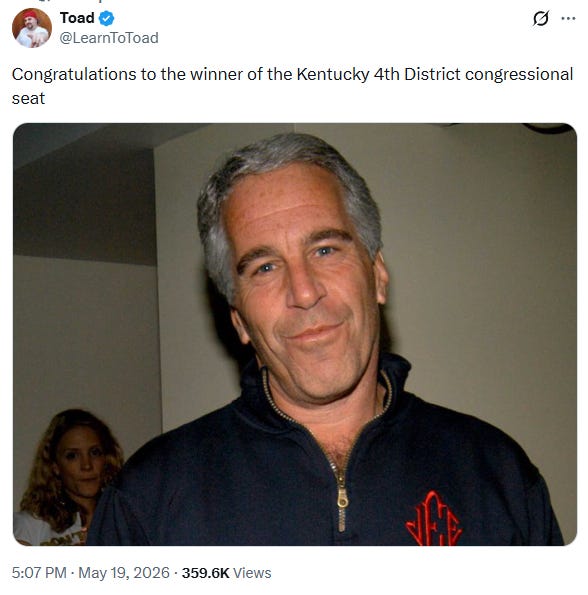
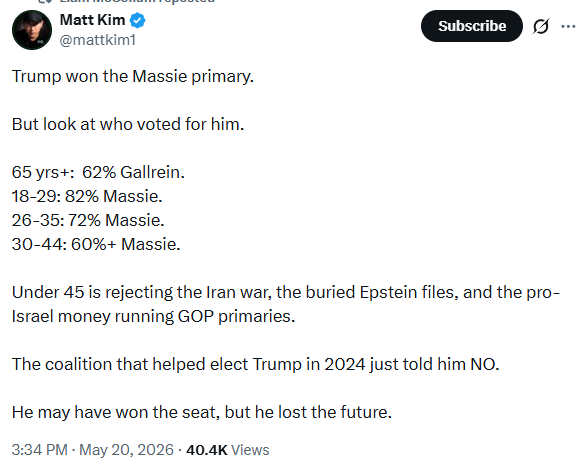
For 10 years I've been amazed at the almost complete lack of introspection from both parties on how a sleazy game-show host became President.
It's good to see a "liberal" like Cenk Uygur post this.
It'd be nice if more on the left and right woke up.
Here's my autopsy of the 2024 Democratic campaign. What cost Democrats the election, in order of importance:
1. Biden's ego. He wouldn't get out of the race despite dementia and terrible polling numbers. Then he demanded that Kamala Harris be loyal to him, even though he was enormously unpopular.
2. Kamala Harris was a terrible candidate. Hard to win when your candidate can't speak in clear sentences.
3. Horrible to nonexistent primary process, where all good candidates are shut out, and Democratic leadeship anoints the worst possible candidate.
4. They wouldn't do huge, podcast interviews. Cost themselves hundreds of millions of dollars in free media. If you can't make your own case, then you can't win.
5. Harris kept bragging about how many corporate CEOs supported her campaign. And immediately backtracked from her initial, economically populist policies.
6. Instead of pointing out how Trump could turn into a warmonger because all his top donors wanted him to start wars for Israel, she wrapped herself around Dick Cheney and Liz Cheney, verifiable warmongers.
7. The border.
8. Some extreme culture war issues that were not popular with majority of Americans.
9. Embracing Israel, after they had already committed a genocide and were deeply unpopular.
10. Listening to any Democratic consultant. They've never been right my whole life. Democrats keep hiring the same losers and wonder why they keep losing.
Bonus one:
Listening to idiots in DC. If you want to be popular in the rest of the country, go to a cocktail party in Washington - and do the exact opposite of what everyone in the room says.
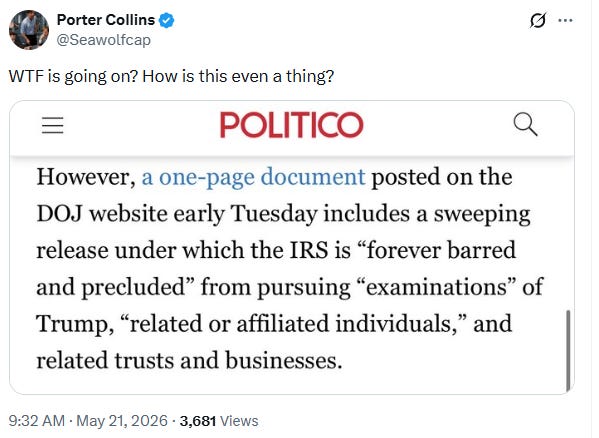
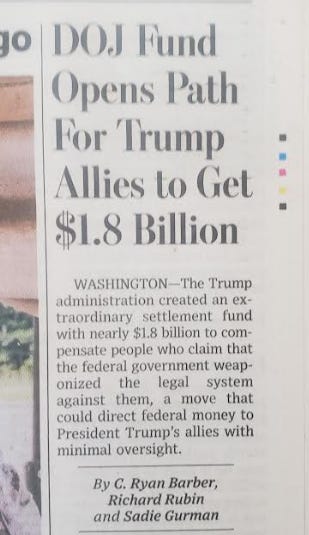
“…the Trump administration disregarded readily available defenses to a lawsuit filed by the president against an agency he controls. While the Justice Department has said that Mr. Trump will not receive money from the new fund, critics have slammed the arrangement as a corrupt attempt at paying Mr. Trump’s political supporters…”
So people who work for Trump are going to give friends of Trump $1.8 billion of taxpayer money?
This is fine. I’m okay with the events that are unfolding currently.
This sentence made me grin: "When a guy starts bragging about paying for sex in Colombia and Thailand, certain assumptions are made..."
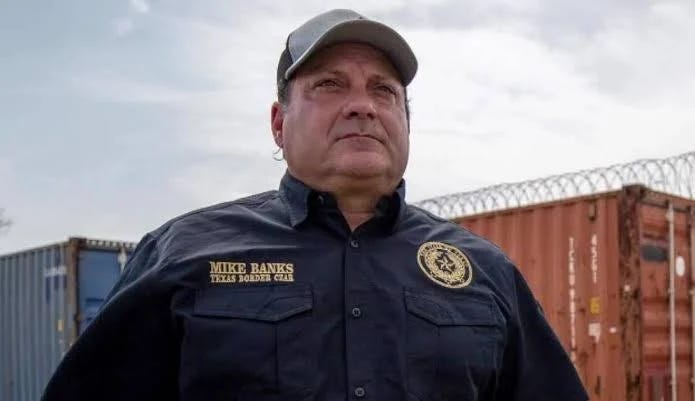

His comments here are very reminiscent of some of Tony Deden’s.
"Jay Powell faced ... the worst inflation in 40 years"
Powell didn't "face" the worst inflation in 40 years, he _created it_. All inflation is 100% due to Fed money creation and nothing else.
Prices may fluctuate, but that's not inflation. Inflation is literally identical to debasing the currency, which is the mission of the Fed.
One of your best compilations IMO. Thank you.