
Problems
Chained trimmed mean supercore sticky PCE

“The chief source of problems is solutions.”
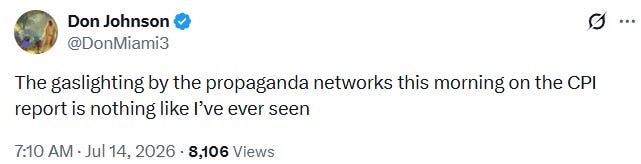
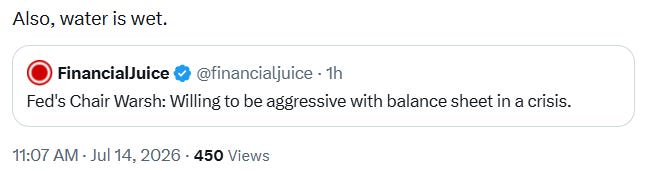
Warsh is a fan of “trimmed mean PCE.”1

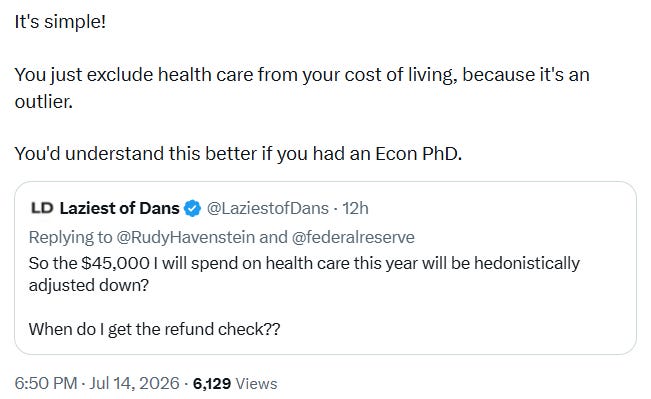
After listening to Warsh, when I pay my bills this month, I’m going to remove the price outliers, so I won’t pay my health insurance or pocket calculator bills.
Trimmed mean PCE is a concept so stupid only a Federal Reserve staffer could come up with it.
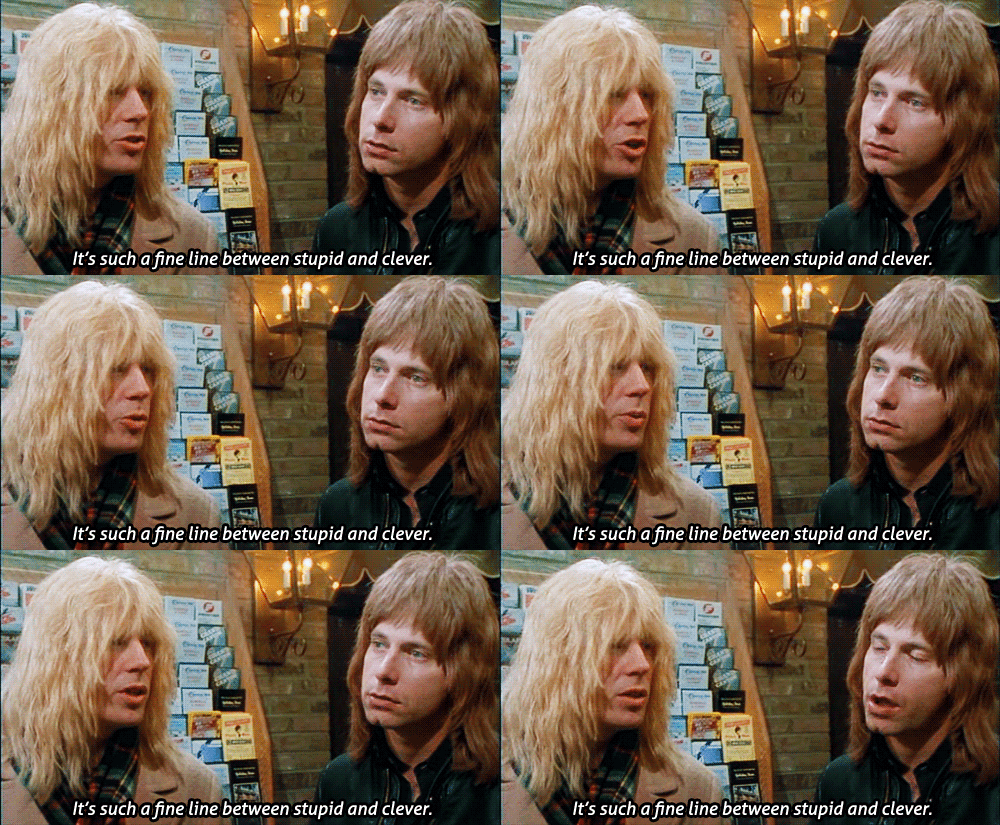
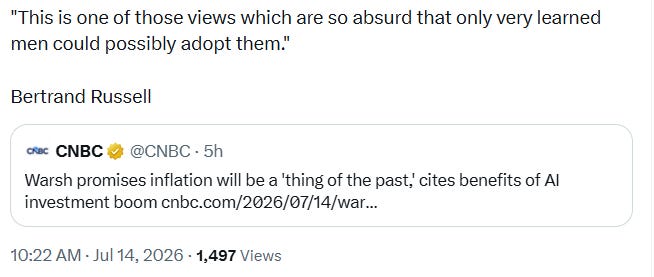
"Without education, we are in a horrible and deadly danger of taking educated people seriously.”
- G.K. Chesterton
On the bright side, very happy to see William White on one of Kevin Warsh's "task forces" - "Inflation Frameworks."
I've quoted White for years, notably here, here, here, here, and here. He's a rare central banker who's not a complete dipshit.

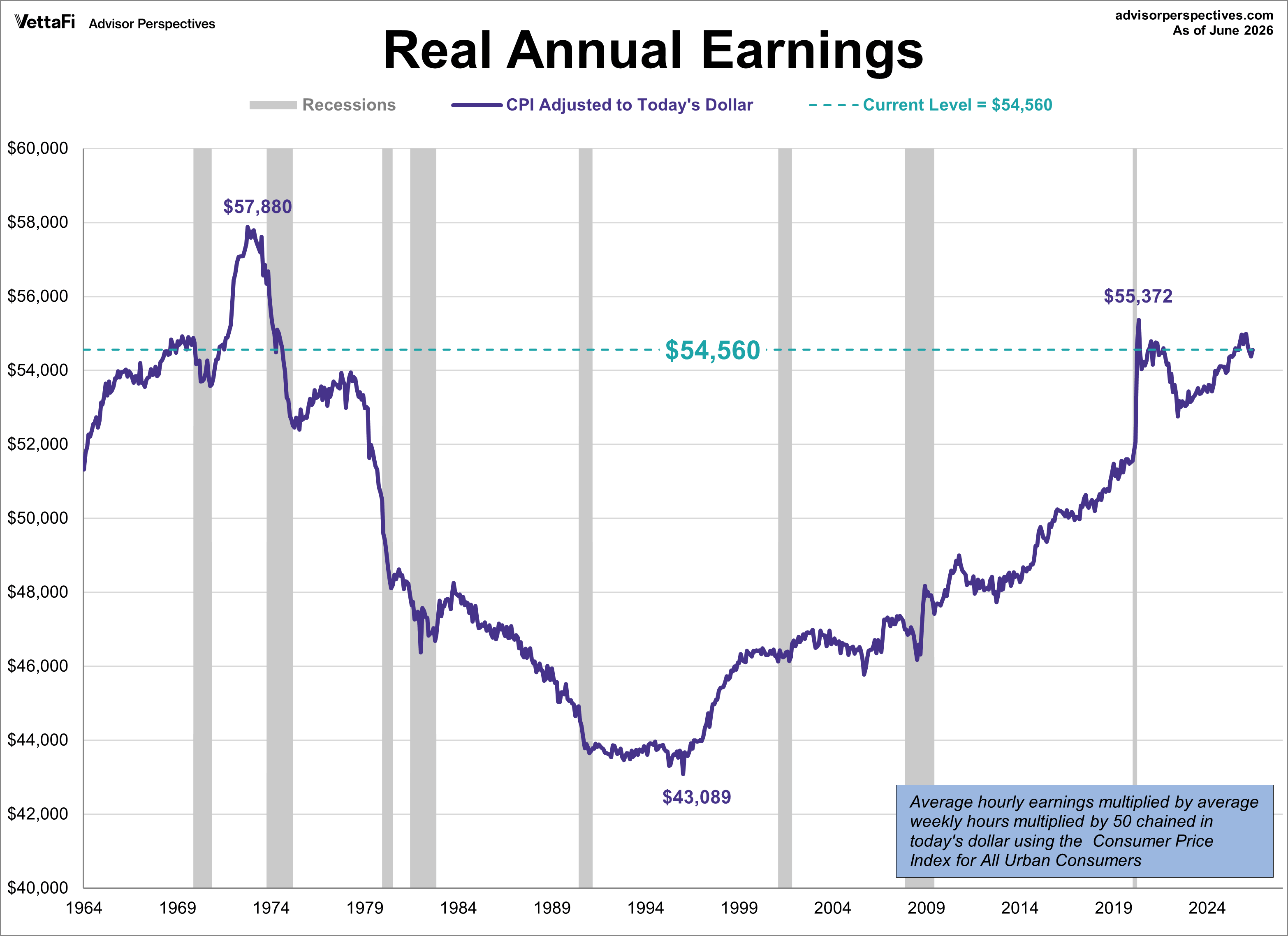
Real Annual Earnings (if you believe the CPI)
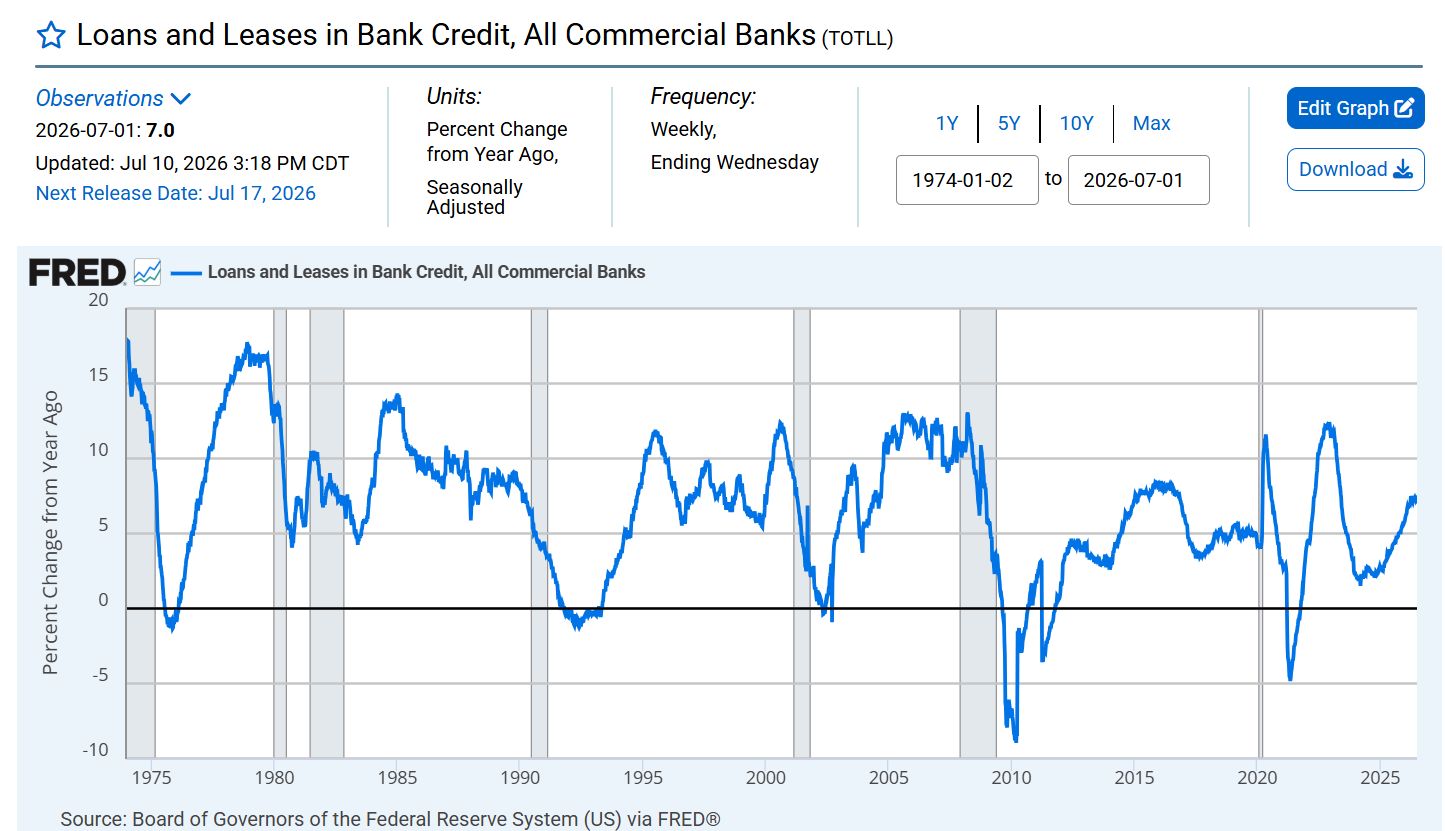
Thinking of proxies for CPI, as Grok tells me, “growth in TOTLL (Loans and Leases in Bank Credit, All Commercial Banks) is, in effect, money creation — specifically, the creation of broad money (deposits) by commercial banks.”
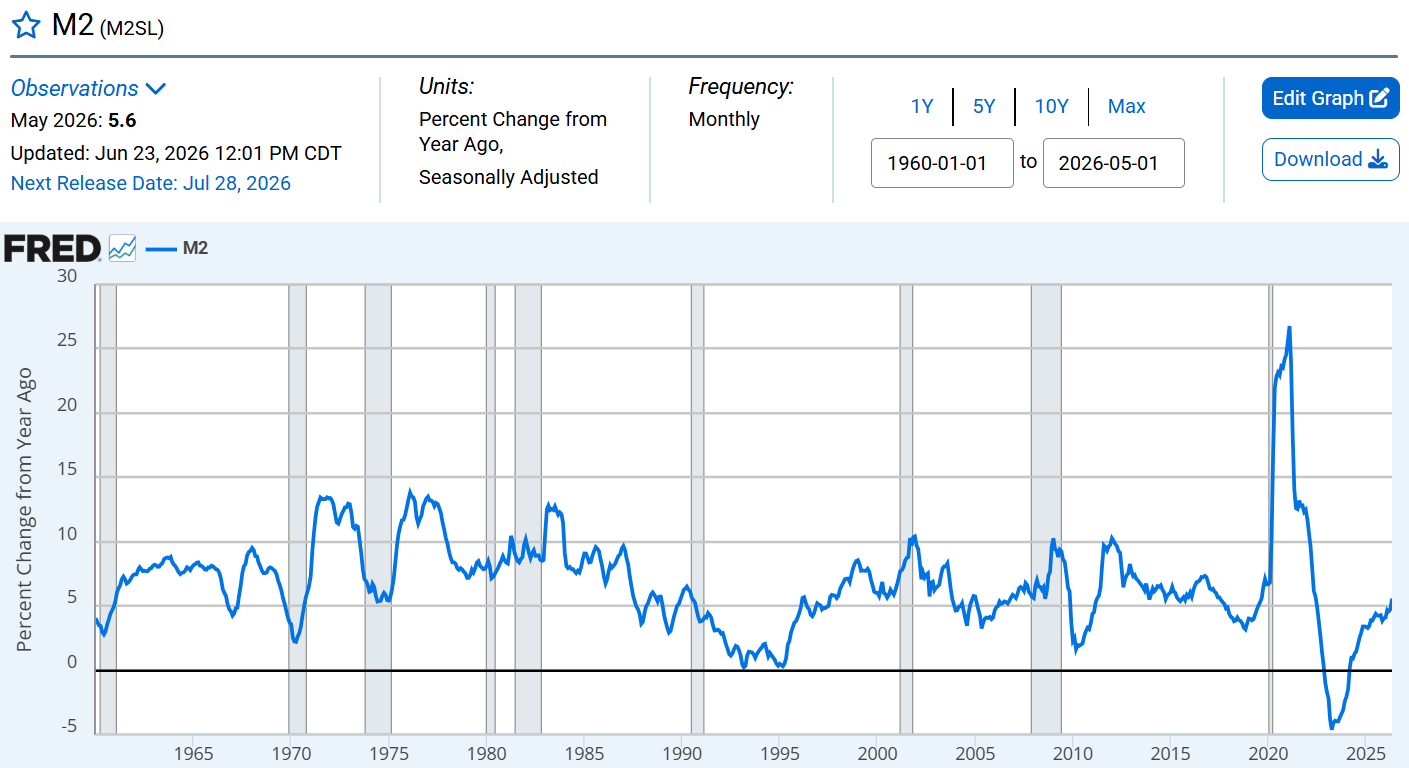
I don’t know. I don’t have an Econ PhD.
Seven percent, or 5.6%, seems a lot closer to real world cost of living than the CPI or the PCE.
I’m reminded of this from a couple years ago from Steve Bregman:
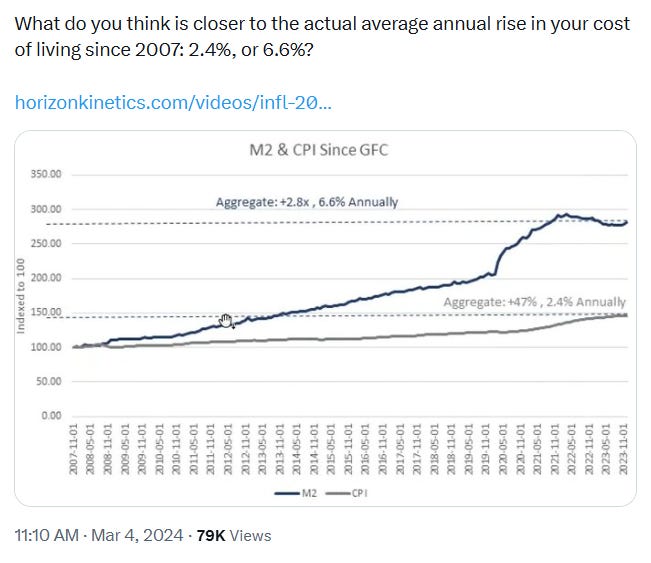
This is sobering, using the official numbers…
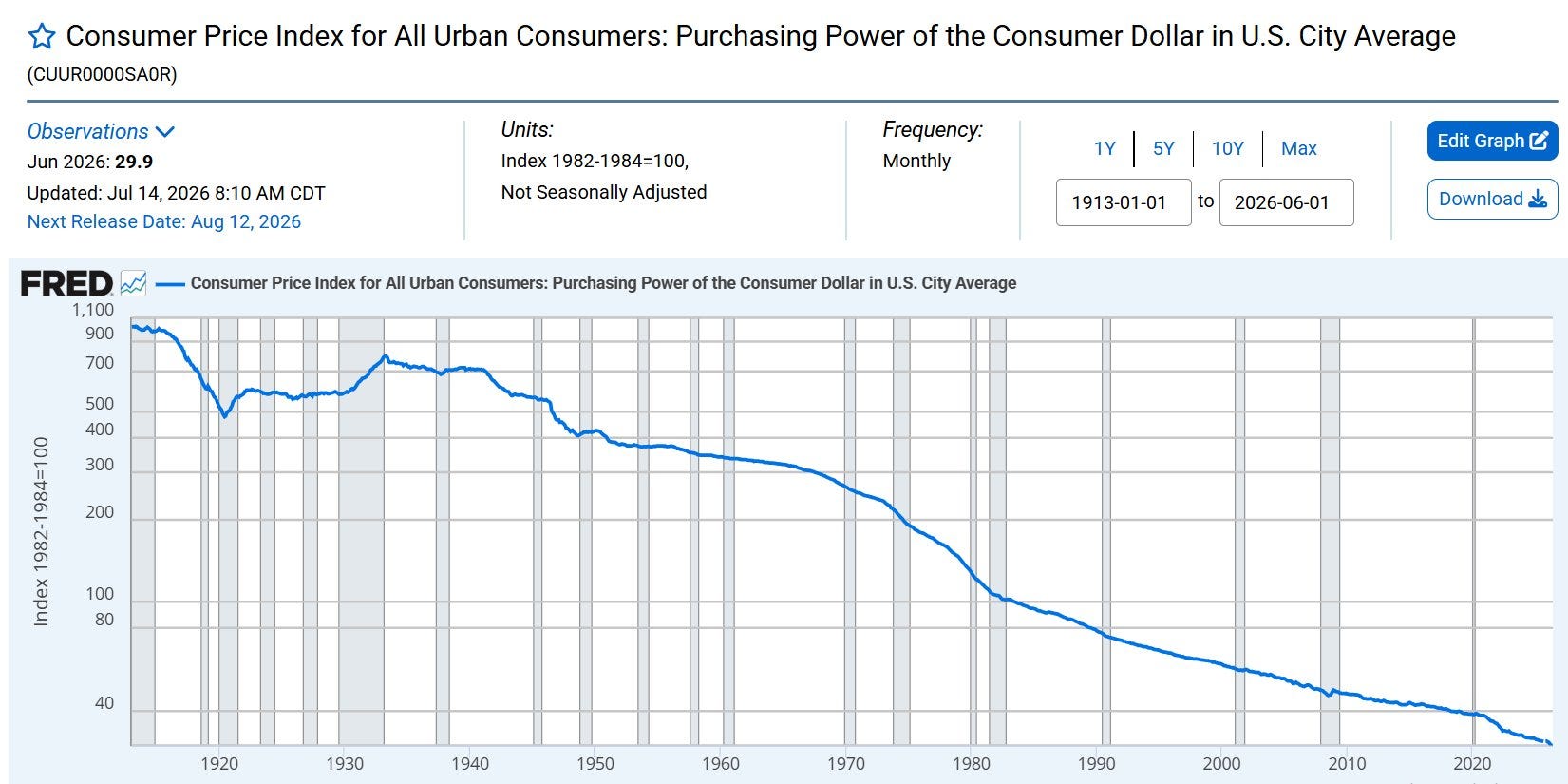
But no worries - Kevin Warsh is fine.
David Dredge
“They went along at roughly two percent CPI, which is the red dashed line, for a very long time. Of course, in the midst of that those tiny little blips, temporary times led to zero interest rates, QE, throwing everything but the kitchen sink at it to try to offset any sort of efficiency gains for productivity - can’t allow it. But then they took the lid off with this average inflation targeting. And I wrote that month, The Beginning of the End, way back in August, and that’s just taken the cap off. And now it’s very hard to control it.”2
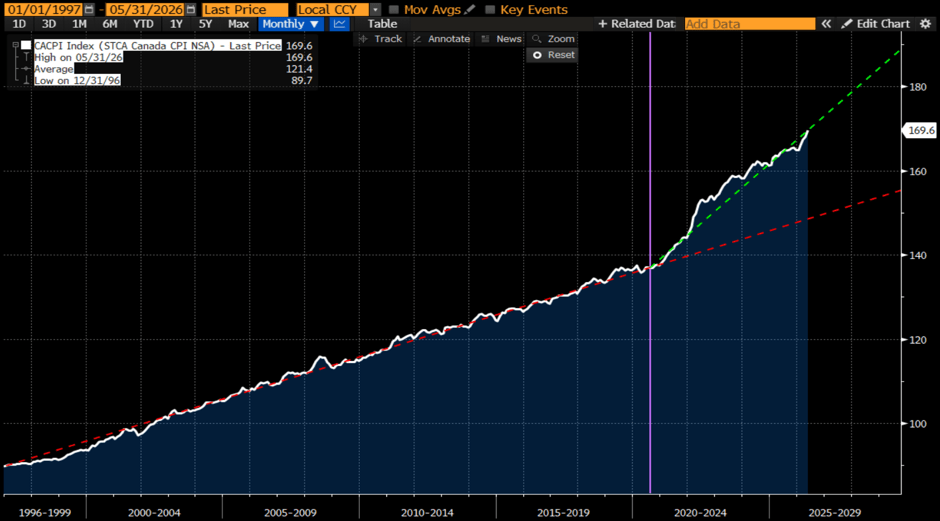
“This is an argument that I have with Bill White and other friends, Russell Napier, who say, ‘well, financial repression3 is the only solution.’ I’m like, no, financial repression is what got us here. Financial repression worked just fine in the fifties when the baby boomer population pig in the python was just barely in the jaws of the python, and all of that population’s future tax paying and savings was in the future, but now that’s in the past, and they’re not paying taxes, they’re retiring, they’re dissaving, and the population cohorts behind them - and not just in the U.S., but throughout Europe and Japan and North Asia and China are shrinking at pace, and you’re now having to subsidize the retirement costs because you’ve debased their savings through forcing people to save in bonds that didn’t keep up with the cost of living.”
Great description of how “the bond markets became completely detached from price sensitive participants”:
“We humans know more than we can tell. We have what Polanyi terms ‘tacit knowledge.’ We know how to ride a bike, but I couldn’t write down the physics formula and explain to you how it works. But we know it. Well, LLMs, I coined the reverse Polanyi paradox. LLMs can tell more than they can know. They can tell you anything. They’ll provide a rational answer to every question, but they actually know nothing, right? Because they’re just putting the most likely word after the previous most likely word and giving you the average of their dataset of knowledge, and again, this is Sharpe world, this is modern portfolio theory, efficient-market hypothesis, everything optimized to a historical frequency, but when in non-ergodic4 paths, it’s not frequency that matters, its magnitude that matters.”
“The Olympic hockey, when the U.S. won, where the goalkeeper made forty-one saves, kept them in the game so that Jack Hughes could score one goal in extra time - that’s how you win the game, and if you go and look, after the game the Canadians were all crying, ‘We dominated! Look at the possession of the puck. We made more passes than they did - well, that’s not the objective of the game. The objective of the game is to have a goalkeeper that gives you the ability to attack.”
This is why I was almost hoping Argentina would beat Spain at the end in a shootout.
Dredge has a new piece out entitled “Forward Guidance, RIP.”
Jim Chanos
The Dotcom Bubble “pales in comparison to what individual companies are raising in this cycle on data centers and A.I. buildout that may or may not be profitable…We’re in a period now where everything is being valued as if it has worked, or it will work, right?”
Carson Block has some interesting comments about SoFi’s accounting:
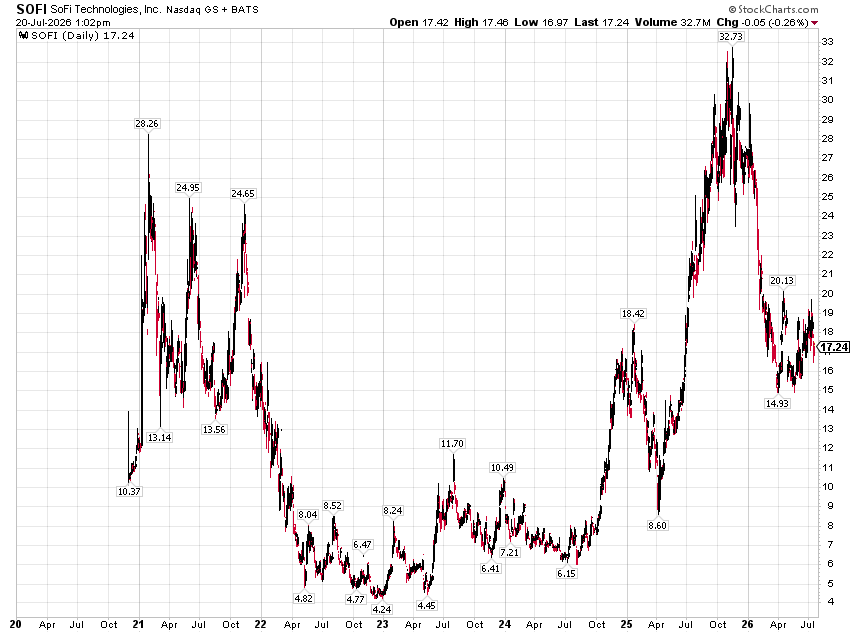
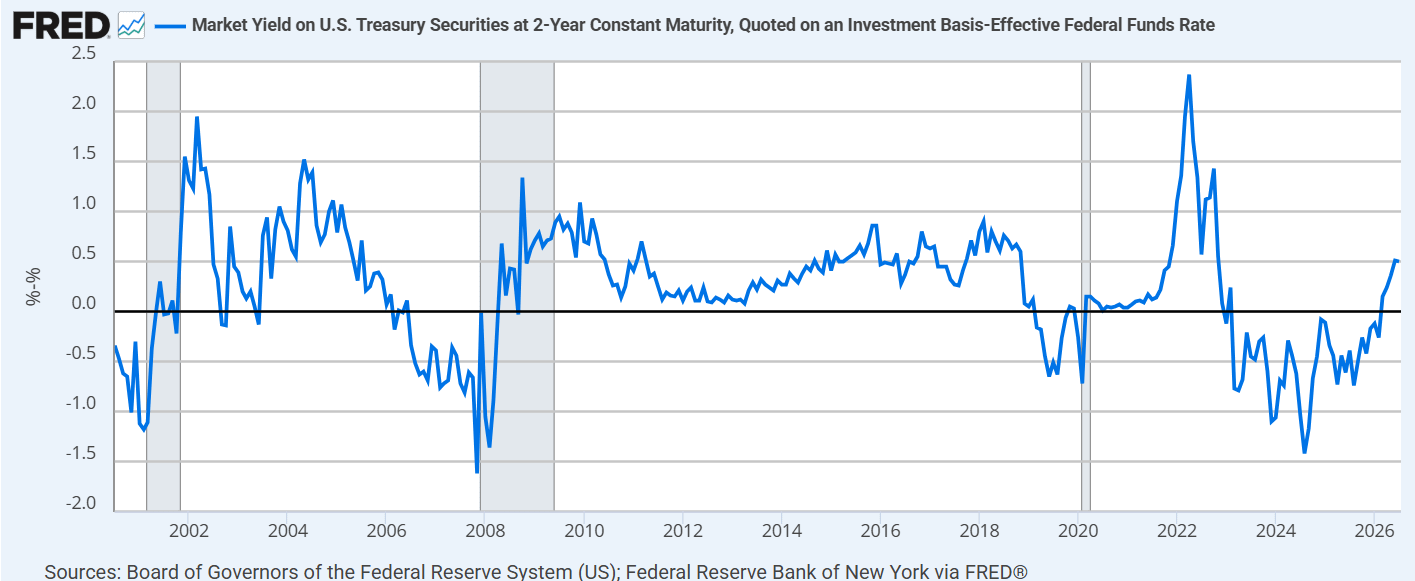
Not sure what this means but the 2-year yield is back above the Fed Funds rate…
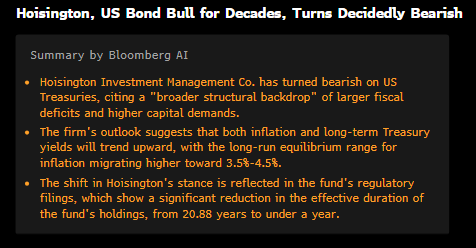
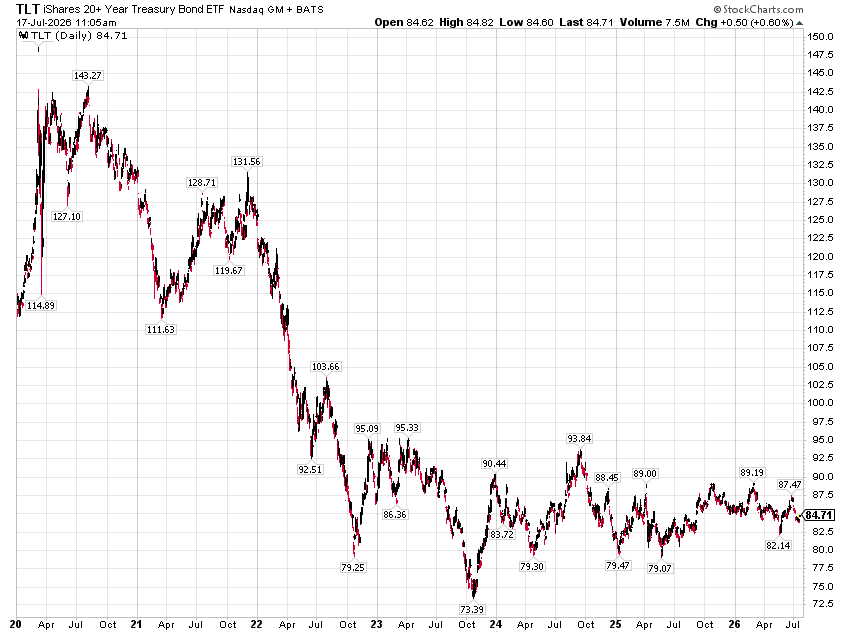
Lacy Hunt gets bearish on Treasuries, about 5 years too late…
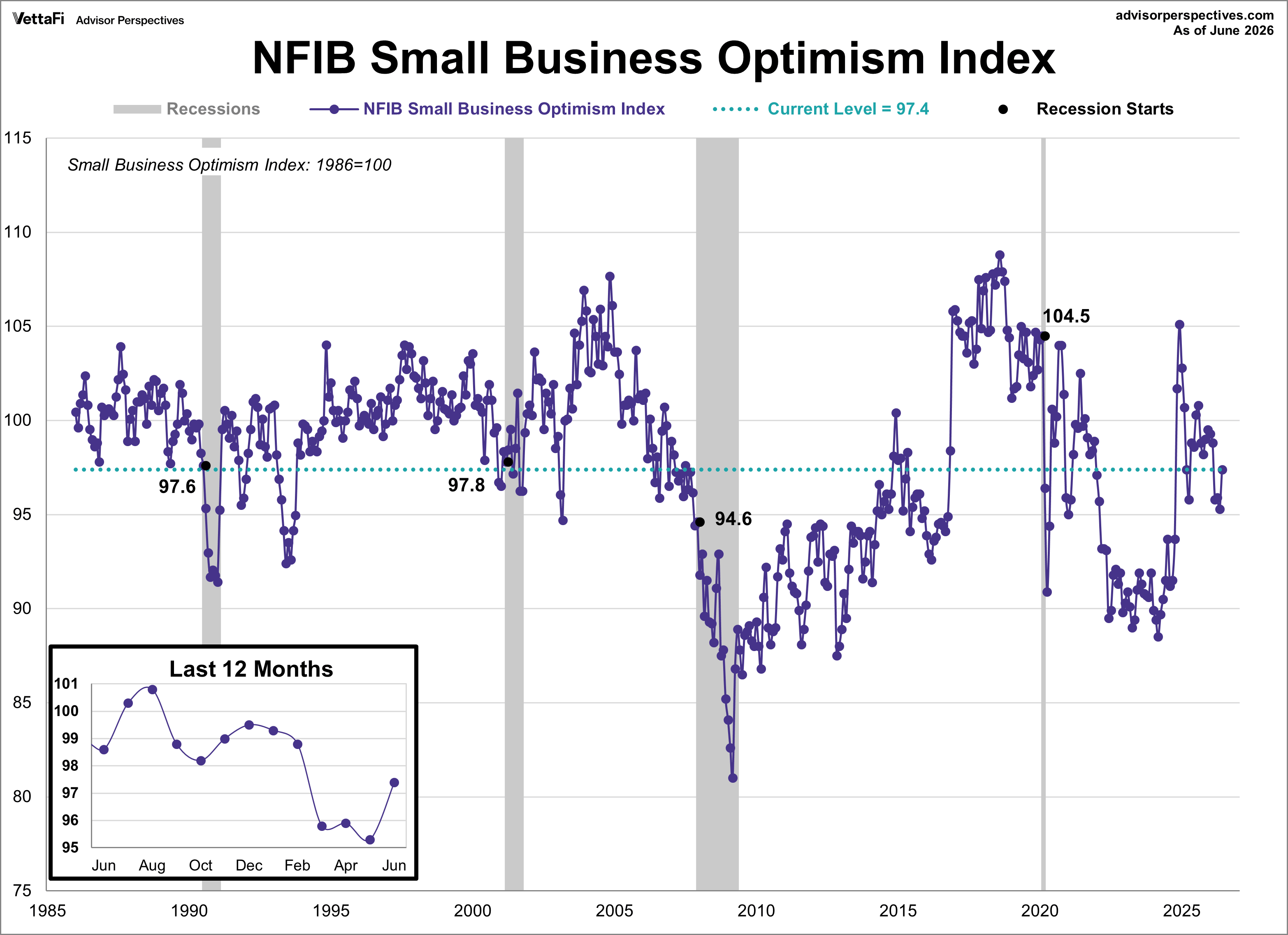
Green shoots?
Sorry kids, but remember - inflation is cooling!
"Home prices across the U.S. surge to all-time high"
The median price of existing homes in June was $440,660, up 1.8% from $432,700 a year ago, according to new data from the National Association of Realtors (NAR). Home prices have risen for 36 straight months.
“Housing affordability remains low under slowing wage growth and stronger home price growth,” Ershang Liang, an economist with PNC Economics Research, said in a report.
Some other highlights from NAR’s latest housing snapshot:
Median price for existing single-family homes: $446,400
Median price for condominiums and co-ops: $380,000
Median price for single-family homes in the U.S. Northeast: $564,800
Median price for single-family homes in the Midwest: $346,600
Median price for single-family homes in the South: $377,700
Median price for single-family homes in the West: $633,600
The latest data underscores the affordability crunch facing many homebuyers. Home prices have climbed for decades, with the only major drop coming during the epic housing crisis that triggered the 2008-09 financial crisis. But costs skyrocketed during the pandemic as the Federal Reserve slashed interest rates to support the economy.
Today, even modestly priced homes aimed at first-time buyers are beyond the reach of most Americans. Fewer than 4 in 10 non-homeowner households can afford a typical starter home priced around $200,000, according to LendingTree. Households need an annual income of roughly $117,000 to afford the average home, real estate firm Redfin has found.”
According to the A.I., “The latest U.S. median household income nationally is $83,730 (for calendar year 2024).”
“Starter homes” near me run well over $1 million. The median household income is about $80k.
Michael Krein and Bill Bymel. Two real estate vets talking short sales, foreclosures, house flipping, DSCR loans etc. e.g.,
Bill Bymel: “Lenders - and obviously when we say lenders, we’re talking about the GSE’s, because they are the largest lenders - they own or ensure the vast majority of the residential mortgages in this market. They’re looking for every solution possible other than foreclosure.”
Michael Krein: “Private lending to me is just hilarious, or I don’t know what the word is I should use here. So you’ve got these loans that banks cannot make, but these private firms can. So the private firms will make the loan, then the private firms are well capitalized and have assets. So they go borrow the money from the banks. So indirectly JP Morgan is still exposed to this private market because it’s their money going through somebody else.”
Creditors of Patrick Drahi’s Altice telecoms empire have accused part of the billionaire’s business of defaulting on more than €2bn of debt…A group of creditors owning about €8bn of top-ranking debt at Altice International sent a notice of default on Tuesday to the company, which controls Drahi’s Portuguese, Dominican and Israeli telecoms assets…Drahi, a Franco-Israeli telecoms mogul whose sprawling group borrowed more than $60bn of debt in an era of cheap money…

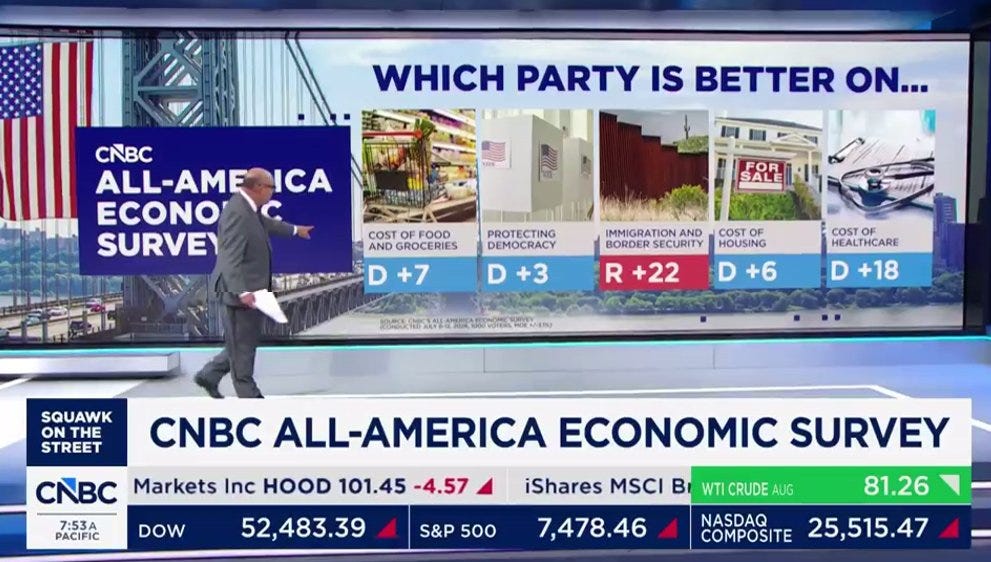
The Democratic Party really screwed up with their ridiculous open borders policies.

"Protesters breach security at Buckingham Palace, display Jeffrey Epstein picture in throne room"

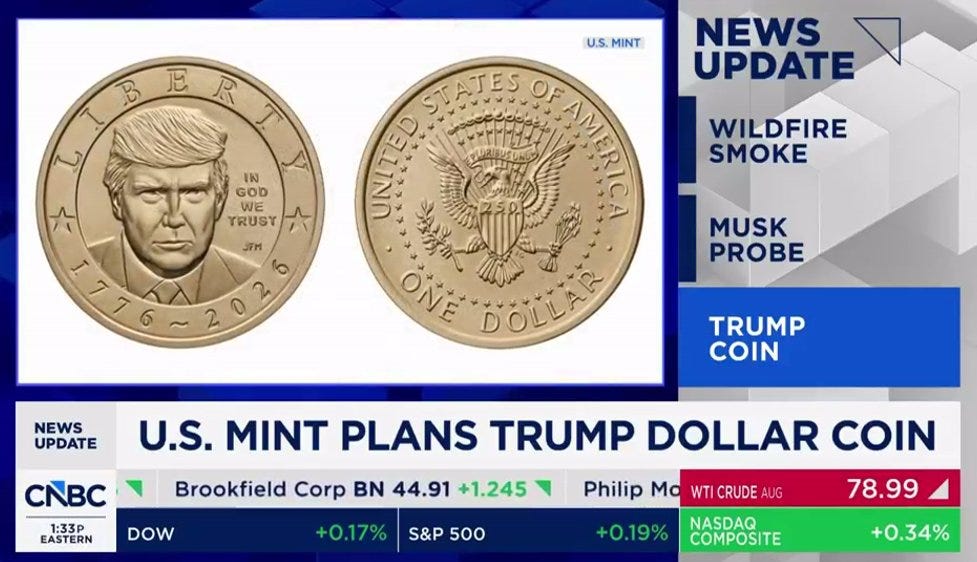
"It'll have a gold-like finish, but won't be made of the precious metal."
An apt metaphor for Trump.
President Ronald Reagan's 1982 diary entry on the Israeli bombing of Beirut:
Met with the news the Israelis delivered the most devastating bomb & artillery attack on W. Beirut lasting 14 hours. Habib cabled—desperate—has basic agreement from all parties but cant arrange details of P.L.O. withdrawal because of the barrage. King Fahd called begging me to do something. I told him I was calling P.M. Begin immediately. And I did—I was angry. I told him it had to stop or our entire future relationship was endangered. I used the word holocaust deliberately & said the symbol of his war was becoming a picture of a 7 month old baby with it’s arms blown off. He told me he had ordered the bombing stopped—I asked about the artillery fire. He claimed the P.L.O. had started that & Israeli forces had taken casualties. End of call. Twenty mins. later he called to tell me he’d ordered an end to the barrage and plead for our continued friendship. Spent rest of day meeting with Congressmen on Tax bill.
“If you look at what China has done since the start of the Hormuz crisis, it’s a little bit of a war games or a trial run of what they would do in the event of going into Taiwan…it’s like a signal to the world that this is what China looks like if we’re starved of imports. We’re fine, and you guys have a real big problem.”
Oil analyst Rory Johnston echoes Adam’s point above:
“China was building SPR stocks prior to [the Iran War], but we weren’t exactly sure how big. We weren’t exactly sure why. One of the initial thoughts was China’s always been interested in strategic stock building, particularly for energy. It’s always been terrified of this so-called Malacca dilemma, that someone could blockade the strait of Malacca, and all of a sudden China’s screwed in terms of its dependence on seaborn oil and energy imports. So what if they have been building up this resiliency, in the future event that they want to invade Taiwan ,which would is the kind of classic trigger for believing that they would get cut off from the global system. Maybe this was actually the world’s biggest dry run, that they weren’t exactly sure how well the system would work that they had built up, and how would they ever have a natural experiment that looked like them being blockaded on energy in the event of a Taiwanese incur recursion. Well, you know, closing the straight of Hormuz is a pretty interesting natural experiment. So maybe this was them saying, well, let’s not let a good crisis go to waste. Let’s see how this system works. And if that is the case, the system worked stellarly well, and I think that’s very concerning for global strategic policy makers, given that China has proven its capability to weather an energy shock well beyond any of what we could have imagined.”
Jeff Currie
“Volatility discourages investment because you cannot predict the future.”
“Liquidity drives everything and the liquidity is very bearish right now.”
“Trump is going to have to be aggressive about taking back the strait, because ultimately, who’s Iran’s number one supporter? It’s China, so China controls the strait, China has 20 million barrels of refining capacity, against the U.S. is 17, but it controls processing of every single commodity out there. Now you’re going to let them control the strait? So they control all the world’s critical
minerals, the atoms, they control all the world’s molecules. They control the chips if they take Taiwan. So they control everything that’s important physically on the planet earth. How can you let that happen?”
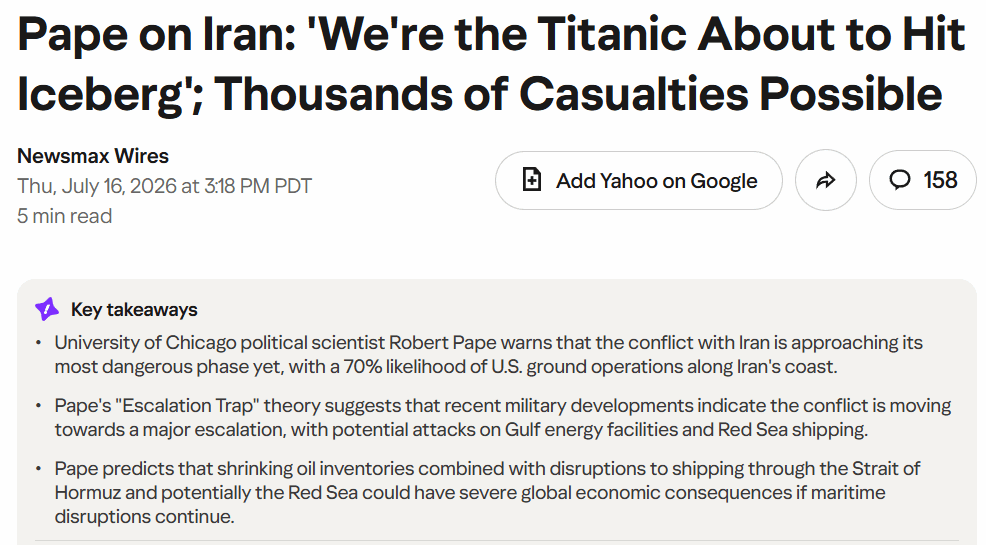
“I was just on a call with who I think is one of the best oil traders out there. He said, ‘I’ve never been this bullish.’ This time there’s no TACO for Trump…the bottom line, whether if it’s Trump or Putin, they’re both in a escalation trap. I know. Read Robert Pape…you can’t go back to your your constituency and tell them you cut such a bad deal, so, you’re forced to escalate. You escalate until you can’t escalate anymore and you go back. That’s the track. You just keep going back and forth, back and forth. And ultimately, by the way, with LBJ in Vietnam, it was finally the Democrats who took him out in the end.” - Currie
So I looked up Robert Pape…
I learned about onions from Jeff Currie:
“Mister Thorn once cornered corn and that ain’t hay” sang Ella Fitzgerald, in the year that two speculators cornered the market for onions in Chicago. It was 1956, and Sam Siegel, a Chicago trader, and Vincent Kosuga, a New York grower, had managed to buy up most of the onions in the city using futures contracts.
In a variant of the scam played by Eddie Murphy and Dan Aykroyd in the film “Trading Places”, Siegel and Kosuga first drove the price up by keeping their onions off the market. They induced a group of onion farmers to buy a large part of their inventory at a high price in a scheme to continue propping up the market value.
Siegel and Kosuga then reneged, taking advantage of the increased supplies of onions flowing to Chicago from the rest of the US, attracted by the high price. They used their physical inventory to “short” the market, driving the price down.
Contracting to deliver onions in March at US$1.02 which in the end could be bought for 10 cents – less than the cost of the bag they came in – they reaped a profit of 92 cents a bag. The speculators made a fortune and many onion farmers went bankrupt.
In response to the subsequent outcry, partly from the double-crossed accomplices, congressman and future president Gerald Ford promoted the Onion Futures Act, which means that onions are the only commodity in which futures trading is banned by law in the United States.

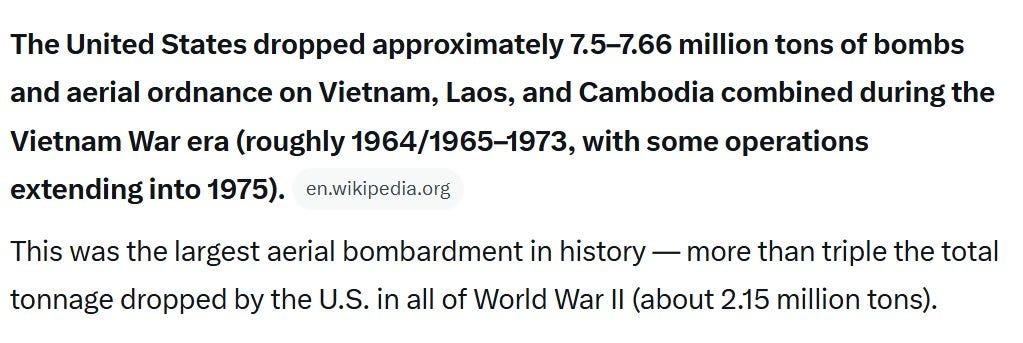
We also sent over a half million people to fight, and lost over 58,000 killed and 75,000 permanently disabled, and for what?
But keep bombing, gang.
From April 2025:
The pointless bombing of Yemen is a demonstration of a militarized U.S. foreign policy that has become detached from the political, geographic, and economic realities of the modern world. The U.S. cannot readily invade and occupy Yemen, and it is unlikely to end the Red Sea blockade by force. Performative bombing strikes aimed at arousing patriotic fervor in a war-loving U.S. electorate are inflicting gratuitous harm on thousands of Yemenis while increasing the probability of a wider Mideast War.
Inflicting death and destruction on foreigners to no avail is not considered a problem in Washington; it is considered an accomplishment because it serves those who benefit materially and politically from foreign wars, and it feeds the appetite for violence of an ill-informed public.
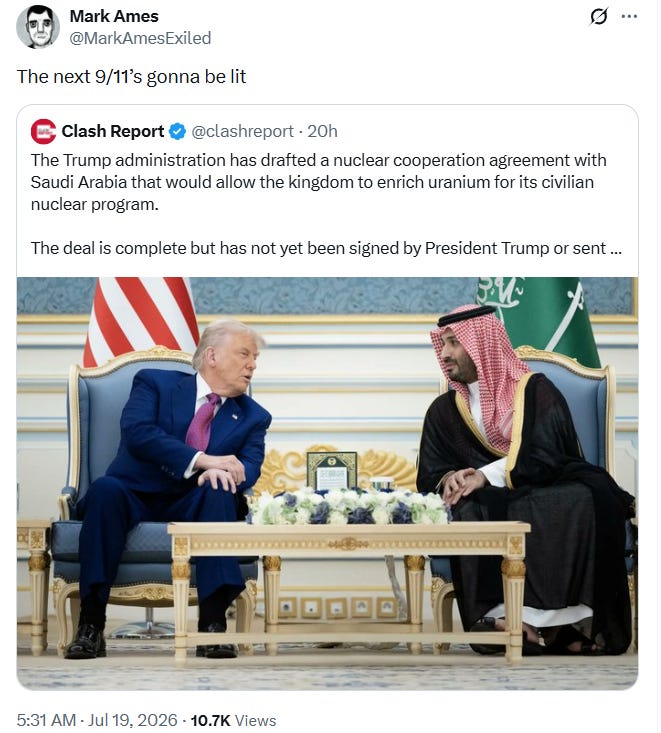
I guess Pakistan already has nukes, and they’re crazy.
The best Iran War summaries I’ve found come from the NakedCapitalism site.
e.g., the latest:
Iran War: Brief US Pause Followed by Renewed Strikes as Iran Intensifies Attacks on Bases and Kuwait Desalination; Continued Speculation About US Operation
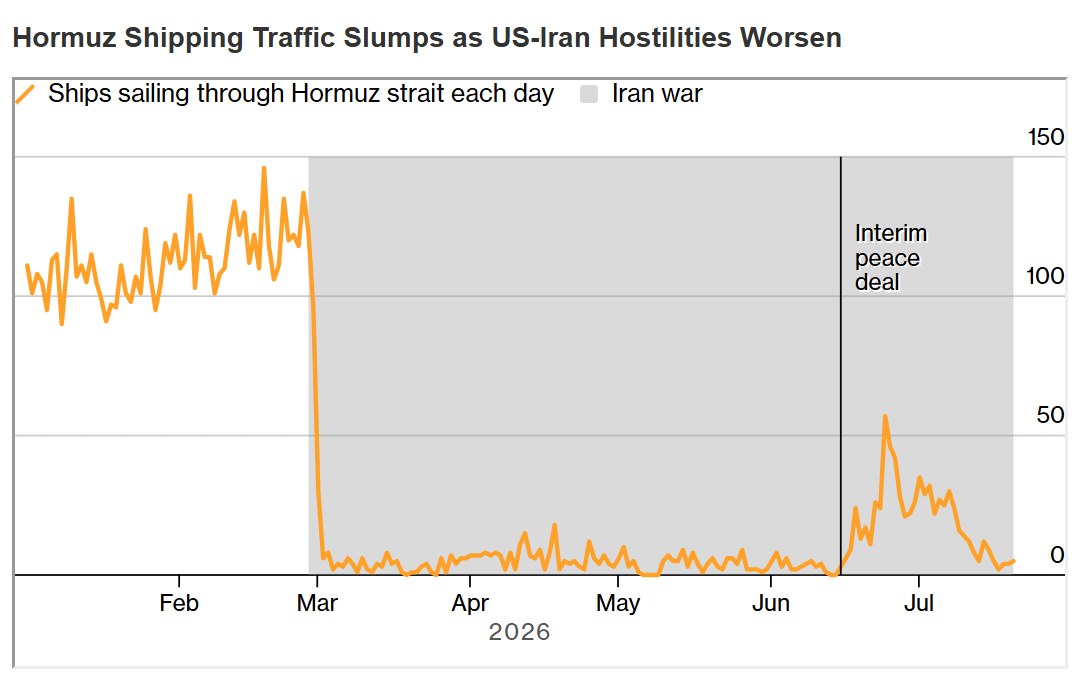
As Adam Townsend put it, “Welcome to Hell”:
“For all that Zuma is a hard rock album, Young lets his lead guitar loose on only two of the tracks. Lou Reed commented that the playing on ‘Danger Bird’ was the best he’d ever heard, and though that perhaps overstates the case, it’s certainly a remarkable performance. It is as if Young is playing almost in slow motion, straining and stretching notes to produce a venomous intensity. “Though these wings have turned to stone,’ he sings, ‘I can fly, fly, fly away,’ and as you feel the weight of the damn things you also know deep down that somehow or other this ponderous juggernaut is going to make it back up into the air.”
David Downing, A Dreamer of Pictures
“The Trimmed Mean PCE (Personal Consumption Expenditures) inflation rate is an alternative measure of core inflation calculated by the Federal Reserve Bank of Dallas. It cuts out the “noise” of extreme price fluctuations by removing the most volatile itemized price components each month before calculating the average.”
Dredge mentions Edward Hurst, discoverer of “The Hurst phenomenon (also called long-term persistence) is the observation that natural time series often display long-range dependence, meaning consecutive data points do not act completely independently. Instead, they cluster in trends (e.g., wet years clustering together), violating standard randomness models.” It’s an interesting topic that is worth investigating further.
Low interest rates and high inflation.
“In a non-ergodic world, the path you take matters, and a single bad event can permanently eliminate your ability to keep playing.”
There's a famous picture of a city square in Vienna in 1914. The square is packed with ecstatic Viennese celebrating the outbreak of the greatest war since Napoleon ruled the continent.
I always wondered how you get a population to the point where they celebrate the outbreak of something like that but I'm starting to get it...
Incidentally, someone later found a young Hitler in that picture smiling like Ronald McDonald, slapping his knee with excitement.
Chained and am getting ready to be trimmed--thanks for the heads up